A storm a day

That’s what the “Severe Weather Alert” for my part of the world says is coming. The first one, a wee stormette, is supposed to breeze through tomorrow, but isn’t expected to drop much rain. But then, on Sunday, a big one moves over us … and then another on Monday, and then Tuesday, and on like that until Friday. A storm a day.

Which, um, explains why my hands and wrists feel like they both have bellyaches today.

I think I’ve mentioned before how badly we need this rain – and even more, snow – here in California. We’re incredibly lucky; we haven’t had to do much water rationing so far, in spite of the drought moving into its fourth official year. It could be much worse. Nevertheless, a series of good, moisture-laden storms coming in off the Pacific to soak the northern part of the state is very good news. We’ve already had a nice series of storms in early December – remember my freakish 18 inches of snow? – and last week, we had several days of good, soaking rain here and snow higher up the mountain. It hasn’t been very cold, however. Days have topped out in the mid-to-high 50s.

And now this new system with its “storm a day” attitude is spiraling in. It will be quite a lot colder. We’ll have lots of rain and lots of snow. I’m almost afraid to hope for it, but could this mean the end of the drought?

Oh yes, please.

Of course, with the barometric pressure boinging up and down, down and up , my joints are probably going to be screaming at me. Never fear, dear joints. In fact, chill, OK? I have my Thermogloves right here. I have plenty of warm blankets. I have a heating pad and I know how to use it. A paraffin bath for angry hand-dipping, too. We have three cords of stovewood, and with Matt and Cary living here with us this year, I’ve got a couple of strong young people around who can do the heavy work of carting in wood and stacking it by the stove for use. I won’t have to struggle with it alone.

I am grateful.

My plans today include a trip to the grocery store to stock up on perishables, and then to the computer store for an external hard drive (My puter is telling me it’s internal drive is just about full, which sorta blows my mind, but that’s another post). So I need to do some backing-up, and then get on the phone with Dell if that doesn’t do the trick. Wish me luck – I’m off!

Storm’s a-comin’, honey!

Breakfast today …

… was a bowlful – about a cup – of pre-cooked quinoa, bulgur wheat and steel-cut Irish oatmeal, nuked until steamy. Mr Wren, the dear, likes to mix things up. He also has no sense of proportion, so we have a huge container full of cooked grain cereal in the fridge that needs to be eaten soon. I whittled about an eighth off the top this morning.

Normally, I eat just Irish oatmeal with a teaspoon of brown sugar/Splenda blend, a generous shake or three of Saigon cinnamon and a scant splash of evaporated milk. This, I’ve learned over the last year, is a delicious, filling, low fat, slow-carb breakfast. It’s wonderful on cold mornings. It sticks to the ribs and provides a nice, slow-burn energy boost. I usually make about four cups at a time and refrigerate the leftover cereal, which microwaves well. Since I don’t like it every single morning – I eat an egg with whole grain toast or toast with a slice of Tillamook sharp cheddar on the non-oatmeal days to avoid breakfast boredom burnout – four cups of oatmeal lasts me about a week.

But yesterday Mr Wren got up wanting hot cereal and, being himself, wasn’t satisfied with just oatmeal. So he got out the Dutch oven, pulled a bunch of different grains, and made himself some. Lots of it. Now I’m helping him eat it before it goes bad. Cary and Matt don’t eat hot cereal at all. They’re both grown-ups, but they prefer Lucky Charms and Cap’n Crunch.

I despair.

I’m writing about this because, like a lot of people who’ve worked 9-5 most of their adult lives, I’m terrible about eating breakfast in the morning, regardless of whether it’s a nutritious one or one that just puts me into sugar overload. When I was working every day, I simply couldn’t make time for brekky before I started my 50-minute commute down the mountain at dawn. And, I was never hungry at that time of morning. I’m one of those people whose metabolism doesn’t really wake up until about three hours after the alarm goes off. That meant that at 8:30 or 9 a.m., I was suddenly, stomach-growlingly ravenous, but way too busy to stop and eat a nutritious, time-consuming breakfast.

So instead, I ate the cookies or donuts, sometimes both, that my colleagues and I frequently brought to the office as a form of tasty sustenance and bribery.

Eighty pounds later …

Back in my slender Germany days, we’d do things a bit differently. I mostly didn’t eat breakfast back then, either, which meant a long stretch of empty-stomachness until 11, when I’d take off like a flash for a slice of pizza and a Diet Coke in the Burger Barn. There weren’t any grocery stores or donut shops handy along the route to work in the morning, and the commissary didn’t open until 10 a.m. But about once every two weeks, my colleagues and I would pick a day and we’d all, German and Americans alike, bring Frühstück foods to the office on a day when we knew the boss would be out. Sneaky, weren’t we?

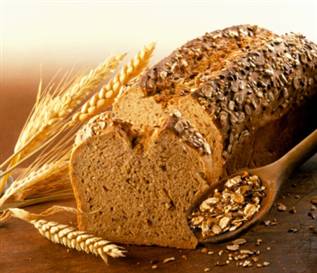
Everyone brought something – crusty, chewy, sliced bread, Brötchen ( plain German bread rolls, deliciously crispy and golden on the outside; soft, white and fluffy on the inside), several different types of cold cuts, cheeses of all varieties, some sliced, some spreadable. Jam. Pastries. Fresh fruit. Soft dairy butter. Orange juice.

And then we’d crank the poor old office coffeepot into overdrive.

Naturally, people from other offices on the U.S. Army post would stop by our office for this or that – we were Army  Public Affairs, after all. No problem – or kein Problem, as my Germany colleagues said – we invited them all to join us. It was always quite a jocular little breakfast party. If Fred (the fortuitously absent boss) knew we were using the big conference table in his office as a breakfast spread in his absence, he never said a word. But we never even considered asking him to join us, as he’d have nixed the whole thing.

You see, Fred always ate his breakfast before he came to work. It was always a big, hot breakfast, one of his “things.” His wife made it for him, and he ate it while he read the day’s Stars & Stripes. I kid you not – he made sure we knew about it. Fred was a nice but rather humorless man. He didn’t have a lot of imagination and was obviously bored to tears. I figured he was just serving out his time as a high-ranking civilian, waiting for the dayl he could retire on his comfortable government pension .

Oh, boy. There I went, off on a tangent.

OK. Back to it: my point was that while I’ve always been bad about making a healthy breakfast part of my day, I do it now. I think my health has improved because of it. Part of the reason I’ve been able to change my habit is that I’m not working outside my home these days, so I don’t have a long, crack-o-dawn commute to face. And while I’m looking for full time employment again, that’s one thing about it I don’t look forward to. I’d grown to hate that long drive at the beginning and end of each workday. I hope I can find work a lot closer to home this time.

But even so, nuking pre-cooked cereal is something I can do. It’s quick. Eating it doesn’t take long. I can even bring it to work with me and nuke it there, if there’s a microwave handy. I don’t mind eating at my desk – but these days, I want to make sure what I’m eating is good for me and isn’t going to add to my middle-aged spread.

There. I did it! I wrote a post mostly about nothing, just for the fun of writing, and got to take a nice little trip back down memory lane in the process. The only trouble is that now, I’m craving Brötchen. Guess I’ll have to google up a recipe …

 Have a great day, everyone!

Buckle Me Up: No more invisible RA

I wish there were  real, flesh-and-blood human beings who also have rheuma in my community. Because I’d like to get to know those people. I’d like to talk to them, compare notes. Find out how they cope with the day-to-day “aches and pains” of the disease. I’d like to commiserate with them and exchange ideas on ways to deal with the “aches and pains” (read agony) of rheumatoid arthritis.

But it appears they don’t really exist. As I go about my days I don’t see other people limping along on painful feet. I don’t see people fumbling their wallets at the cash register in the grocery store, trying to slip the debit card out of it’s too-tight slot with hands and fingers stiffened and rendered breathtakingly painful by rheumatoid arthritis. I certainly never see anyone else struggle to put a jacket on because of an RA-impaired shoulder joint, or try to put food in a mouth that will open only an inch or two because the joint that hinges their lower jaw to their skull is inflamed and exquisitely painful upon movement.

No. I don’t see any of these people or any of these conditions. I only experience them myself.

But I read that there are about 2 million people in the U.S. who suffer with RA just like I do. I’m No. 1,457,932 in that exclusive group, I guess. I don’t have a card, so I can’t be a card-carrying member of the Hey-I-Have-RA Club, but according to the Wise Statistic Keepers, I belong to the club anyway.

Two million American men, women and children share this rotten disease with me. Yet I’ve only met one of them personally. That was 20 years ago in Bremerhaven, Germany, when I lived there. That man had it mainly in his spine. I was married and he was always trying to hit on me, so it was uncomfortable talking with him, but he absolutely recognized – and empathized with – my pain. He suggested alternating hot and cold packs on sore joints as a possible method for relieving my pain. It sometimes worked for him, he said.  I’ve tried to follow his compassionate advice (when I can bear the cold-pack part) ever since.

He and his wife were transferred to Italy not long after I met him. At the time, I was relieved, but I’ve often thought of him since then. I’ve wondered how he got along, whether the warmer, drier climate in Italy relieved any of his pain. I hope it did.

When I’ve admitted to others that I have rheumatoid arthritis (perhaps they asked, solicitously, why I was limping so heavily) a frequent response is “Oh! I know what you mean! I have arthritis in my knee! Isn’t it a bitch getting old?” And then they launch into their experience with their painful, creaky knee. I listen respectfully. I know osteoarthritis hurts, too. A lot.

But really, they don’t have a clue.

I wasn’t “old” when I was diagnosed with RA. I was just 31. I was a young mother whose career was just starting to take off. I’m “old” now (whatever that means), but I sure wasn’t back then. Rheumatoid arthritis isn’t a “wear and tear” disease, a natural (if annoying) part of growing older. RA is an autoimmune disease. That means the body, which is profoundly confused, attacks its own joints as if they’re foreign invaders. The body is out to destroy itself in order to save itself. Go figure.

Rheuma attacks randomly, carrying out clever ambushes so diabolical and unexpected that the Special Forces could learn stealth tactics from it. The inflammation and pain it causes can range from mild to horrific. It can cover that range during the same day, or perhaps over several days. Or a week. Or longer. The pain can hit more than one joint at a time. It can move around. Today my left knee hurts. Tonight, it might be my right shoulder, or my right ankle. Maybe both. Maybe neither. I never really know what to expect.

Try explaining that to skeptical family members and co-workers.

Sometimes RA only slows me down a little. Other times it literally disables me, giving me an unwanted glimpse into my own future. Gee, thanks, I think. I really wanted that image of myself gliding down the mall on a chunky little motorized scooter, my fat, flabby, polyester-clad arse spilling off both sides of the saddle. Yeah. Thanks so much.

Such images give me real motivation, however, to move my body as much as I can. I don’t want a future of RA-imposed weakness and obesity, a life where my only real pleasure is eating. The very idea appalls me. So in spite of the pain – or perhaps, because of it – I do what I can to prevent that particular image of the future from coming true. I mind my calories, eat healthy foods and exercise for flexibility and to maintain my independent mobility.

Yet it’s possible that RA will disable me anyway. I’d prefer not to think too hard about that.

Even though these fears and experiences, this daily pain and stiffness, these frequent schizoid sneak attacks my body wages on itself are shared by 1,999,999 other Americans and many more millions of people all over the world, I deal with my day-to-day, intimate and personal case of RA utterly alone.

How can that be? Why aren’t there local support groups for people with rheumatoid arthritis? How come there are no special exercise classes, or classes on how to cope better with the disease available? Why aren’t they part of every town’s park and recreation program, available for free or for minimal cost? Why, in the last century and during the first decade of the new millennium, hasn’t medical science found cure for this disease? Why don’t people know what it is and what it’s not? Why is it so hard for me to find others who also suffer with RA?

I don’t have answers to those questions. But I’m working on starting up those classes I just mentioned. I’m going to do it myself. I’m at a point in my life where I won’t mind getting up in front of a group, talking about and demonstrating ways to cope with RA. I want to do this. I want to help others who are struggling with this disease find some comfort and camaraderie. I want them to have hope.

The flesh-and-blood people who have RA in my community are invisible, just like me. But if I have anything to do with it, we won’t be for much longer.

~*~*~*~*~*~


Did I mention hope? Well, here’s some: A new advocacy and charitable nonprofit organization that will work for people with autoimmune arthrits is forming right now. Read on:

What if autoimmune arthritis conditions were universally understood? What if you never again had to hear, “you’re too young to have that!” or “why don’t you take some aspirin to make the pain go away?” or “but you don’t look sick!”

 Wouldn’t it be nice if people understood that “I’m too tired to go” meant you were experiencing obnoxious, debilitating fatigue that is not necessarily remedied from rest or a good night’s sleep? What if there were in-depth, age-appropriate exercise programs available where you live that catered to different levels of disability and fitness preferences?  How much better could your health be if there were partnerships with retailers who would offer discounts on healthy foods or fitness facilities that would minimize monthly payments for autoimmune arthritis patients?  What if there was a global database of sufferers, family members and caregivers who had the ability to form friendships in order to deal with the daily struggles of disability?

Hopefully beginning in 2010 these wishes will start to become a reality.

The “Buckle Me Up!” International Autoimmune Arthritis Movement (IAAM) is an up-and-coming, worldwide nonprofit which will focus exclusively on helping the autoimmune arthritis sufferer*.  The mission: Eliminating autoimmune arthritis, and diminishing the disability associated with it, by raising global awareness and improving the quality of life for those who have it through education, partnerships and support.  The IAAM is a nonprofit formed by autoimmune arthritis sufferers, run by autoimmune arthritis sufferers and, therefore, will continue to address the problems faced by autoimmune arthritis sufferers.

The IAAM is not in competition with any existing charity.  In fact, part of the mission is to partner with existing organizations to assist with autoimmune arthritis awareness efforts.  Recently the IAAM joined forces with the Arthritis Foundation and are working on partnering with other arthritis-based charities both nationally and internationally. 

Founder Tiffany Westrich is personally working with the Arthritis Foundation’s “Let’s Talk RA” program to restructure the 2010 strategic planning, in which IAAM will maintain an intricate role.

In addition to partnerships, a primary focus of the movement is to make a lot of noise, verbally and visually, by re-branding the misconceptions of the term “arthritis.”  Examples include the published web-commercial series, “A Day with RA”, showing the realities of living with an autoimmune arthritis disease; developing the first official autoimmune arthritis charity bracelets; and being featured on MyRACentral.com and WebMDtv’s “RA in the News” (Summer 2009).  

The IAAM hope to continue this level of exposure in all autoimmune arthritis arenas, including creating web-series awareness commercials for each autoimmune arthritis condition.

If all the autoimmune arthritis sufferers around the world come together, we can make this a reality.  But first, we must raise money to finance the legal fees and start up costs to become an official nonprofit.

Today, many autoimmune arthritis blogs (just like RheumaBlog, which you’re reading now)  are joining forces to reach out to our community of sufferers for help. The IAAM is asking for $1 donations to assist with nonprofit start-up costs.  Every dollar earned will bring all of us who cope with autoimmune arthritis one step closer to being understood.

 To view a complete list of start-up costs and to send your $1 donation, please visit www.BuckleMeUpMovement.com/donate.

 Note: This piece has been cross-posted in my other blog, Blue Wren.

Starting out with mindfulness

The truth from my bathroom scale tonight.

Nine pounds.

Sigh.

Yes, nine pounds is better than ten pounds, or Oh. My. God twenty pounds.

Where did those heavy-bottomed nine pounds come from? I’ll tell you.

They started on Thanksgiving, when I made many, many delicious things with real butter and real cream, because foods taste so much better that way. From Thanksgiving until now there has been a cinnamon cake. A cranberry-pecan tart. There have been cookies. Peppermint bark and Lindt truffles and candied fruit slices. Crackers and chips. Sliced salami and cheeses of various savory colors and textures. Chocolate mousse with whipped cream. Hazelnut cocoa, steaming in the mug. Oh, and breads. Rich, soft breads, toasted with jam, or buttered and mopping up gravy.

And all this plenty because the end of the year was upon us. Solstice. Dark days. Darker, longer nights. The promise of ice and cold to come.

But now, the year has turned. We have a fresh page! The days are getting longer. Just by a minute or two each day, but that’s enough. Longer days, shorter nights. Before we know it, it will be spring. Then summer.

For now, though, it’s still cold. Snow is waiting in the wings, preparing a surprise.

I’m celebrating this new year with mindfulness. Mindfulness is my watchword for The Year 2010.  I now put aside the childish, joyous gluttony of the past month or so and embrace the real joy of being healthy and strong, full of energy and light. I know how to do this, how to eat well so I can be well. It’s time to renew that pleasant effort.

I am nine pounds backwards today. But it’s all right. They’ll be gone before long and I’ll be back at my old end, with momentum built up for a new beginning. Slowly, gently, there will be less of me. And less. And I will be lighter. It will be hard to stay on the ground. I might float away …

On the cusp of a new year …

I’ve been contemplating what to write regarding the looming New Year – and new decade. Not being much for resolutions (why add to the already-weighty load of everyday guilt I carry around when I inevitably break them?) I’ve wondered what wee bit of wisdom I might offer to the blogosphere.

I’m still wondering.

See, I don’t feel very wise. Sure, I’ve accomplished a few things this year I’m pleased about – a respectable weight loss, an increase in exercise, keeping a neater home – but these are little things. If I’m a cog in the Great Wheel of Life, I’m a very, very small – if occasionally squeaky – one.

Yet 2009 has brought some good things into our lives. Some of them have been world-shaking changes. Hope has generally been in greater supply since January 1 a year ago. That’s a very good thing. Not least of those changes is the indisputable and historic fact of an African-American president.

But even in the face of the hope electing President Obama represents, 2009 has been a bitterly hard year. Many, many hardworking Americans abruptly lost their livelihoods, or their homes or their nest-eggs when the bill for the power-drunk, spending-like-there’s-no-tomorrow Bush years came due and we discovered that all our wealth was nothing more than ephemeral digital data. Fairy dust. It vanished, suddenly and profoundly, into the ether and our real-world economy came crashing down around our ears.

I was the editor of a community newspaper for most of the 2Ks; I watched with a sort of horrified fascination as the price of homes in the local real estate market ballooned way beyond their actual value; watched as young thirty-somethings with small children poured into the community, snapping up houses that were so pricey you could only assume they had wonderful, fairy-tale jobs that paid them in the high six figures. It was amazing. Surreal. I watched – and reported – as powerful, local developers built more and more McMansions, schools and retail centers; watched as the small, bedroom community my paper served sprawled out over the once-pristine, rolling foothills; watched with wry skepticism as everyone suddenly drove cars that cost as much as houses once had, many of them humongous, gasoline-sucking SUVs or those ultimate symbols of ostentatious waste, Hummers.

And all that in the face of oil prices that were rising almost daily, making each stop for a fill-up more painful for those of us without those fairy-tale incomes.

There were already some ominous – if mostly ignored – rumblings in the foundations when I was laid off, a sudden and frankly, unsuspecting victim of company “downsizing” at the very end of 2006. I was shocked and hurt to be cut out of my livelihood so coldly and finally, as if I was nothing more than numbers on a spreadsheet. To my chagrin, I discovered that was what I was to my employer.

Well, I was tired. Burnt out. So I rested for a while, trying to find my new place in the world. I did some freelance writing. I worked on the novel I’d always wanted to write but never seemed to have the time for when I’d been employed. I worked on my house. In between times I looked for a new job, but I wasn’t terribly disappointed when my efforts came to nothing. I still had my savings. So I used them. And used them.

And used them.

By the end of 2007 I was still unemployed. Things were starting to look very dicey, and to my dismay, there just weren’t any jobs available in my field within reasonable commuting distance from my home. Freelancing was not paying the bills. My savings were dwindling; I was now forced to dip into my retirement fund.

By the middle of 2008 I had to concede defeat and apply for unemployment. By that time, although the nation was still not quite ready to admit that we’d built our entire foundation on dry sand with chewing gum, tissue paper and wishes, there were even fewer jobs and many, many more people competing for them.

I don’t need to go into what happened after that. We’re all living in the profoundly changed America that the Great Recession brought down on our heads. I was recently approved for my third extension of unemployment benefits; it humiliates me, but I’m very thankful it’s available for when we need it most.

A few hours from now I have a job interview. I’m certainly qualified for the position, but I’m competing with much younger people these days – a humbling fact that has been drummed into my psyche – so I’m not setting my hopes on it. At any rate, the job won’t pay much. I’ll be lucky if I can take home roughly the equivalent of my dwindling unemployment benefits, and since it’s a 32-hour-per-week gig, the company doesn’t have to offer health care or any other benefits. I’ll be back to working hourly, my days as a salaried worker far behind me.

Oh, well. It’s a job. I hope I get it. In the meantime, this ongoing change in my economic life has made me much more mindful of – and thankful for – the really important things: Love, family, dear friends, and good health. Life is truly what you make of it.

I value all of you, my fellow travelers along the RA road, more than you know. Thank you all very much for the kind words of support you’ve given me over the last several months. I’m looking forward to continuing the conversation.

So, finally, here’s my New Year’s wish for 2010, the hopeful start of a new year and a new decade: May we all have a joyful, healthy and prosperous new year, a year full of love and good fortune. May the changes that are taking place in our lives, our country and our world continue to be positive and lasting, even if slower than we’d like. And may we all have peace and be of good will toward each other, today, tomorrow and forever.

Happy New Year! And don’t forget to wish on the Blue Moon tonight!

A trip back in time

My muse has deserted me today. I keep starting this post, then deleting it in disgust. Boring, I think to myself. Blah!

But I do want to post something. So I went back into the archives in my other blog, Blue Wren, and looked at what I’d written at this time last year. And there was this account of a longago ski trip in the Austrian Alps … It’s was, at the time, meant to be a first installment, since it’s a lonnng story. But I never wrote the second part. Frankly, I forgot all about it. Heh.

So, I’m reposting it here. And today, I’ll write the rest of the story …

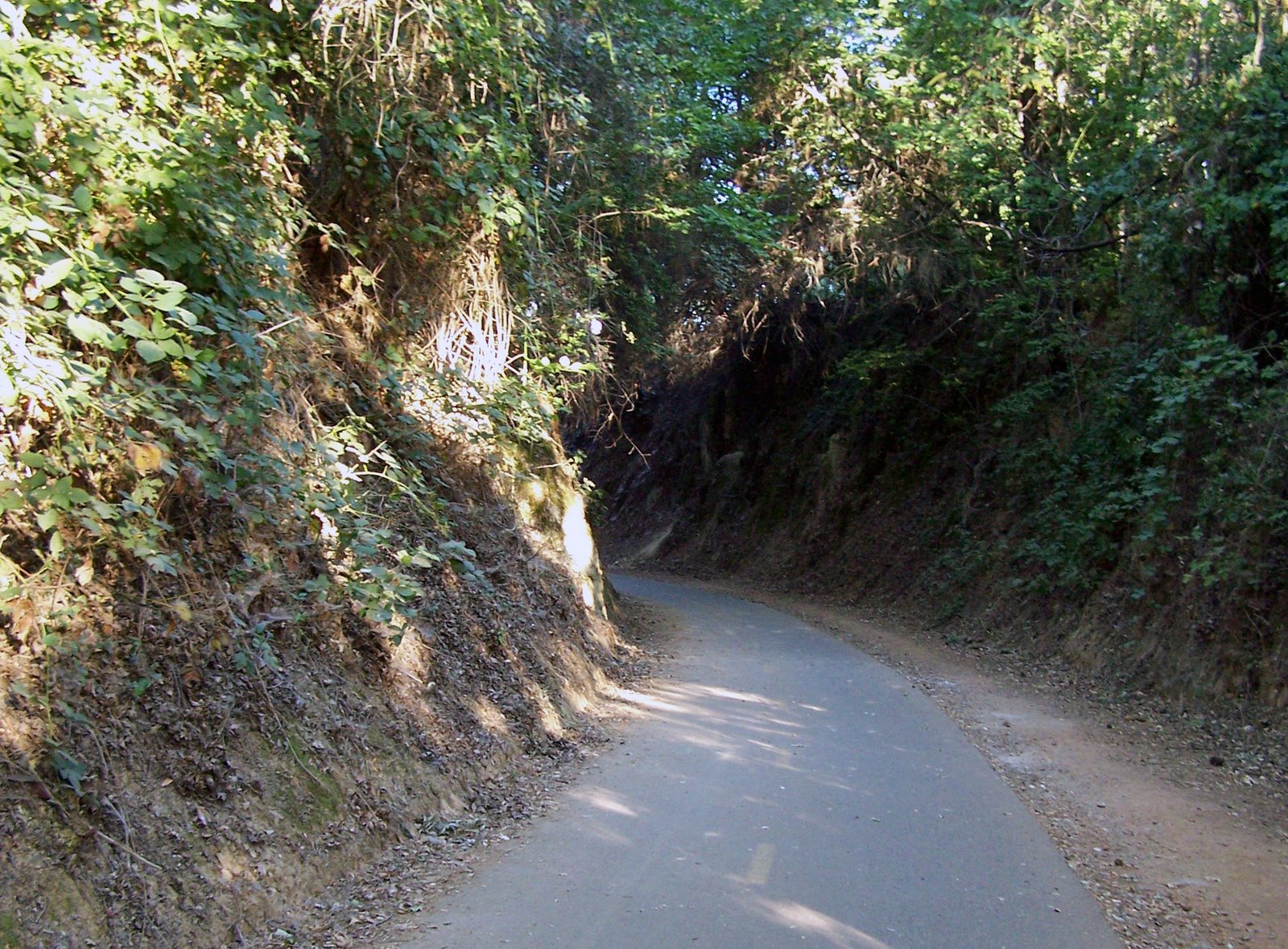
The snow has stopped for now. It’s cloudy, but there’s some blue sky and a little sun. The forecast calls for a little more snow today. Tomorrow should be sunny, and then snow again on Thursday.

As I shot this photo out my kitchen window, the scene – snow, branches, evergreens, blue sky and thin white clouds – brought up some memories. So I made myself a cup of coffee, cleared the hot ash from the dying woodstove fire and started a new one. As I watched the hungry flames lick around the dry wood, I let my mind wander …

It was January, 1988. I was working as a civilian writer/editor with the U.S. Army Norddeutschland Public Affairs Office in Bremerhaven, Germany. Winter in the north of Germany is a long, drawn-out season, filled with frigid wind, rain, occasional light snow and ice. Lots of ice. By this time, after living there for two years, I’d learned the hard way how to dress for the weather, and every morning was a ritual of donning a hat, gloves, a thick wool coat, a knit scarf and warm, sheepskin-lined boots over several layers of clothing that included ski socks and at least one sweater. I carried my dress shoes in a tote to change into once I’d reached the relative warmth of my office.

I’d made a good number of friends since arriving in Germany, and a couple I’d grown close to suggested that we get a group together and go skiing. Now, Norddeutschland is flat as a pancake, except for the dikes that hold back the North Sea, and there’s not enough snow to ski on, really.

So I asked, innocently enough, “but where?”

“The Alps!”

The Alps. I’d heard of them, of course. I’d seen stunning pictures of those snowclad, craggy peaks and swooping valleys. I’d even seen Clint Eastwood in “The Eiger Sanction,” though it wasn’t exactly encouraging, all those climbers falling off the mountain and all. But my friends were insistent. Civilian DoD workers, they’d lived in Germany for many years and were avid skiers. They were tired of the wind, the rain, and the flatness of the terrain. And they convinced me that not only could this be done, it would be a blast.
So we put the word out. Before long, we had a group of 12 who wanted to go skiing for a week in the Alps and had both the money and the vacation time accrued to do so. Somehow, it became my job to organize the ski trip – find the right place, make our reservations and get everyone lodged, figure out the train schedules and set it all up.

I should say here that at this point in my life, my only experience on skis consisted of one horrifically cold, school-sponsored, day-long ski trip to Mammoth Mountain when I was a sixth-grader. I learned to snowplow, but once I fell down, I stayed down. I just couldn’t get the hang of standing up again on skis unless I took the damned things off. In addition, I’m afraid of heights.

The big day arrived. We met, the 12 of us, in the wee hours of the morning at the Bahnhof in Bremerhaven, loaded down with suitcases, skis, poles and ski-boots. We were headed for St. Veit, Austria, via Bremen, Franfurt, and Munich in West Germany, and then on to Salzburg, Austria. At each station we’d need to change trains.

It had all looked pretty easy on paper. In practice, it was chaos. Changing trains was a only minor hassle in Bremen, which has a medium-sized train station and only six or seven platforms. It helped that my friend R and her husband T, both of them ex-CIA agents, spoke German rather well. We humped our gear off the Bremen train to another platform and waited for the Frankfurt train to arrive. When it did, we all climbed on, found our compartments and got our tangle of gear stashed, and settled down for a pleasant ride to Frankfurt. We even indulged in a nice, hot breakfast with lots of strong coffee in the dining car. Yes, they really did have white tablecloths and roses on the tables.

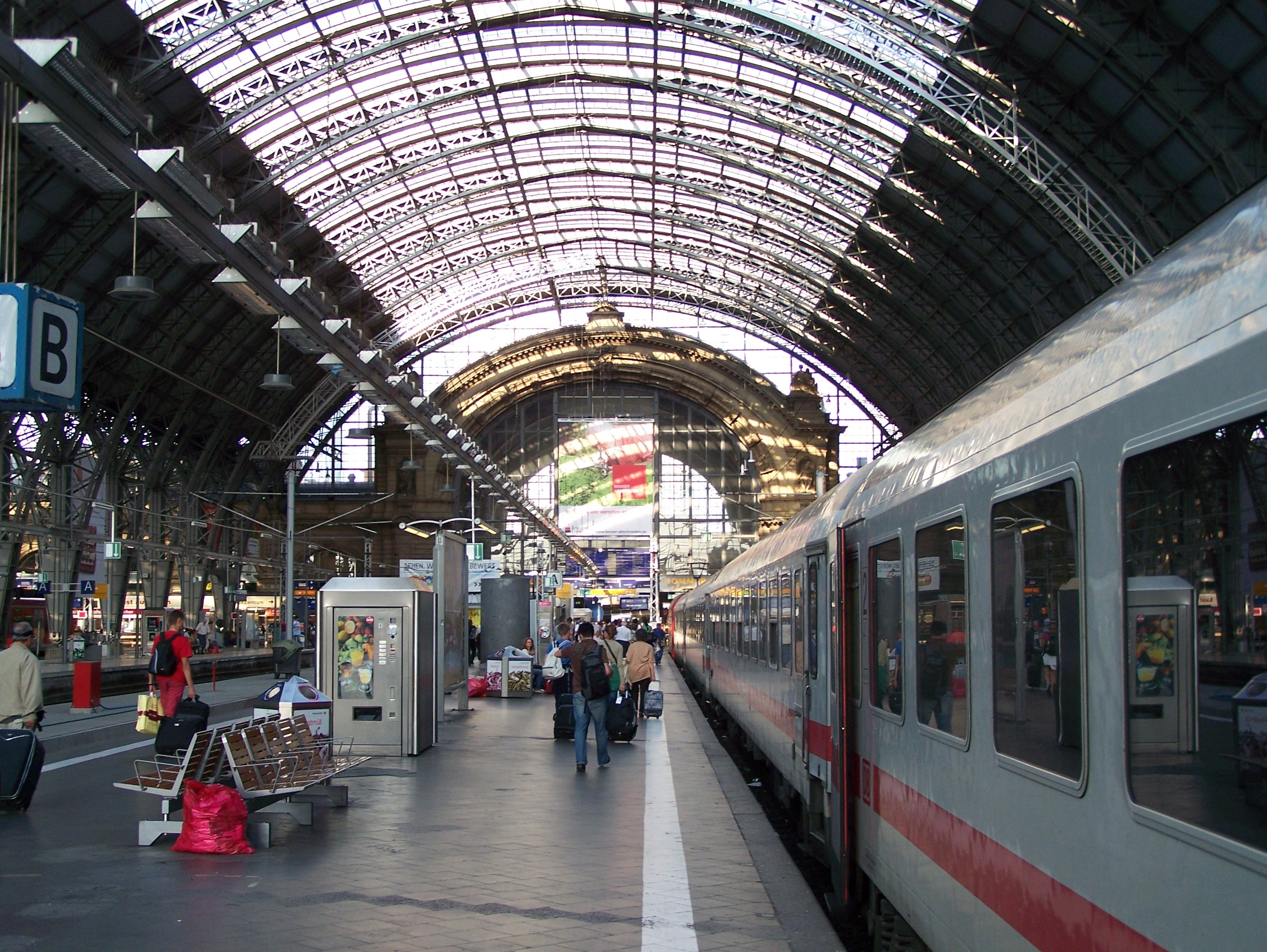
The afternoon transfer at Frankfurt to the Munich train was pandemonium. We had a very short time to make our way, carting all our stuff, to the new platform and train. And the Frankfurt Bahnhof is huge – a crowded, noisy hub with what seemed like hundreds of platforms, row after row of shining trains, and thousands of people of all colors and nationalities. The train we were booked on, of course, was at the other end of the station. We made it, but barely, and by the time we found empty compartments and storage, everyone was puffed, sweaty and tired. There was talk of driving the whole way in caravan next time, if there was a next time.

We had enough time for plastic-wrapped sandwiches off a cart and a rest between Frankfurt and Munich. Spirits, both emotional and literal, were raised. The transfer at Munich was much simpler – we didn’t have so far to hike to find our train and by now, we’d worked out a system for dealing with skis, poles and luggage. On we went to Salzburg.

The whole journey, so far, had been lovely – the Germany countryside is picturesque and colorful. But now, the scenery turned beautiful. The hills and meadows, with their small villages, were glorious, dusted with snow, and of course in the distance there were glimpses of the famous Alps. The sun was headed down the sky by the time we arrived in the city of Mozart and the Von Trapp family, and changed trains one last time.

This final train was a local, a milk-run train that stopped in each little burgh along the way. The snow cover grew thicker. Finally, we reached our destination station. I can’t recall its name now, but it wasn’t St. Veit, as St. Veit didn’t have its own train station. We unloaded once again. This was a very small Bahnhof, with just one track and platform, and a tiny, empty hall. Except for the stationmaster and a bundled-up woman behind the magazine and candy counter, the 12 of us formed the entire crowd. It was breathtakingly cold.

We’d booked our week with SiegiTours, a ski school, resort and lodging operation in St. Veit. Within 15 minutes two vans arrived at the station to take us there. We all piled in and off we went, winding along narrow mountain roads that were clotted with snow and ridged with ice.

When we reached the village of St. Veit it was dark, but the fronts of the chalets and the village square were all lit up, including the magnificent, 1000-year-old church that dominates everything. All around us rose the Austrian Alps. Snow stood two feet deep. Icicles hung from the eaves and underfoot, the pavements were treacherous.

I felt like I’d died and gone to heaven.

Stay tuned …

A special gift

I’m one of those maddening people who, when you ask them what they want for Christmas/birthday/Mother’s Day say, “Oh, I don’t know. I don’t really need anything …”

And I’m (like all those other maddening people) perfectly sincere. I really don’t need anything. There are things I want, but that’s different. Frivolous. I don’t like asking for things that I want but don’t need. And I’m especially careful about asking for expensive gifts.

There was a time, not so long ago, when I never even had to think about that last – there wasn’t enough money in our bank account at any given moment to even consider a gift that cost over $25. But today, even with the poor economy, I have to be mindful because my sweet Mr Wren generally isn’t. He doesn’t buy a lot of things, but when he does, he tends to go overboard.

When he asked me what I wanted for Christmas a few weeks ago, I gave him the stock answer. He rolled his eyes – just like I do when people give me that response. Come on, I always think, help me out here! They don’t. And I didn’t help Mr Wren, either.

Fast forward to Christmas morning. Here we all sit in the living room, each one of us with a small pile of gifts. We start opening them. I get a beautiful, sparkly bracelet from Cary and Matt. A comfy warm-up suit in royal blue (my favorite color) from my mother (and it fits, which delights me later in the day when I try it on, as it’s in a normal size, not a “big woman” size).

I pick up the wrapped gift from Mr Wren. It’s smallish. Solid. I shake it. Nothing moves. He sits there next to me, grinning. “Open it,” he says. Matt and Cary stop opening their presents and watch. They’re grinning too.

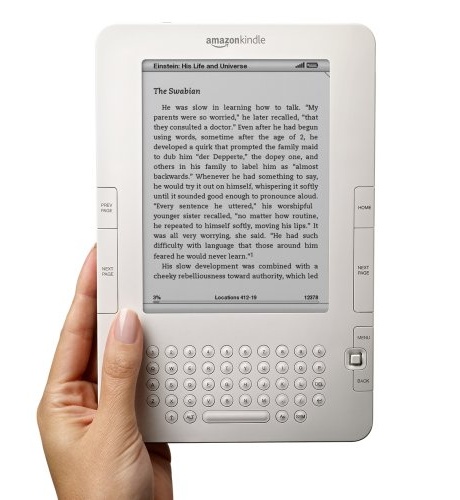
What in the world? I think, and I tear off the ribbons and paper. And … OMG. It’s a Kindle.

I have always, since I was very small, loved to read. And I love books. I love the heft, the feel, even the smell of books. I love thinking about the process – of the author hunched over a desk, writing, lost in her imagination; of the publisher reading the manuscript and deciding the story is worth publishing; of the editor and author working together to clean and hone and polish the words so that the reader forgets she’s even reading; of the graphic designer choosing the font and style and perfecting the appearance of the book; of the typesetting, the huge presses, the book-grade paper, the ink; of the end-papers and the binding. As a reader, opening a new book is the first step of an adventure to me. If it’s a good one, I can fall right into the page and lose myself.

There really is little in this world that I love more than reading a good book.

But rheuma has taken much of that pleasure away from me these last two years. I can no longer comfortably read a book for very long. My hands throb and ache. It’s an effort of will to grasp it, even if it’s not very heavy. My fingers are fumbly, making it difficult to turn the pages. As a result, I do a great deal of my reading on the computer these days. But it’s not books I’m reading – instead I read blogs, news sites and other sites that catch my interest. None of them are stories. None are fictional, springing fresh from a writer’s imagination. Being unable to experience that particular form of creativity has saddened me, but I’ve accepted it.

I’ve found that I can listen to audio books if I’m driving, but in just about any other situation I can’t keep my mind on the reader and the story. I’m too distractible. I get antsy. I’m constantly losing my concentration and having to rewind and listen all over again. This destroys the continuity and annoys me – mostly at myself.

About six months ago I read a blogger’s post about the Kindle. He was considering getting one, but was holding off because like me, he loves books. He loves the physicality of books. And yet, he wrote that he could see the draw of an electronic reading device. No need to buy and find space for more bookshelves. Digital books were less expensive than the ones made of paper and ink. He wouldn’t have to lug a 450-page tome around anymore. There were upsides to getting an e-reader even though he found it disturbing to let go of traditional ink, paper and fabric books.

I found myself agreeing with the entire post, but for me, getting an e-reader wasn’t even something to consider. They were far, far too expensive, for one thing. Amazingly, prohibitively expensive. And because I love my books, I really couldn’t imagine trying to read them on an electronic screen, minus the solid weight of the book in my hands, even as sore as they were.

I told Mr Wren about that blog post. I mentioned my frustration with rheuma making holding a traditional book too painful for me, but how I found both the techie coldness and the high cost of an e-reader sort of off-putting. He listened. Nodded.

And he remembered.

So I am now the surprised owner of an Amazon Kindle e-reader. And you know what? I absolutely love it. It’s so light – it weighs only 10.2 ounces — that it’s no problem to hold. I can (and have) increased the size of the font to accommodate my middle-aged eyes and find pressing the flat buttons on the side of the device to turn pages forward or back an almost automatic response to reaching the end of a page. And to my delight, not only are e-books much less expensive than their paper-and-ink counterparts, there are hundreds and hundreds of them that are free. Anna Karenina, anyone? Pride and Prejudice? The Invisible Man?

I am so happy with this gift – and Mr Wren’s sweet thoughtfulness – my eyes tear up every time I think of it. He spent wayyyy too much on this gift, but I’ve already forgiven him. He made this Christmas a particularly special, very merry one for me. Mr Wren gave me back my books.

The holiday is almost here …

Sure and it’s late as I write this. Nearly 11 o’clock. Tomorrow is Christmas Eve. I still have a little shopping left to do – I feel bad having left it so late, but money has been ultra-tight and I can’t spend what I don’t have. Now, however, I have a little to work with again, so … the dreaded Day Before Christmas shopping excursion is in my immediate future. That is, first thing tomorrow morning. Soon as the stores open, I’m there. In and out. I have a plan, Stan.

Wish me luck.

Also on my list of Things to Accomplish: A stop at the grocery store for the things I forgot when I was there yesterday. Grrrr. Once home, I need to do some sweeping, vacuuming, and dusting. Then I’m thinking of making cookies. Sugar cookies, in gingerbread-man and star shapes. Sprinkles on ‘em. And then snickerdoodles, because we love them like no other.

OK, maybe just the snickerdoodles.

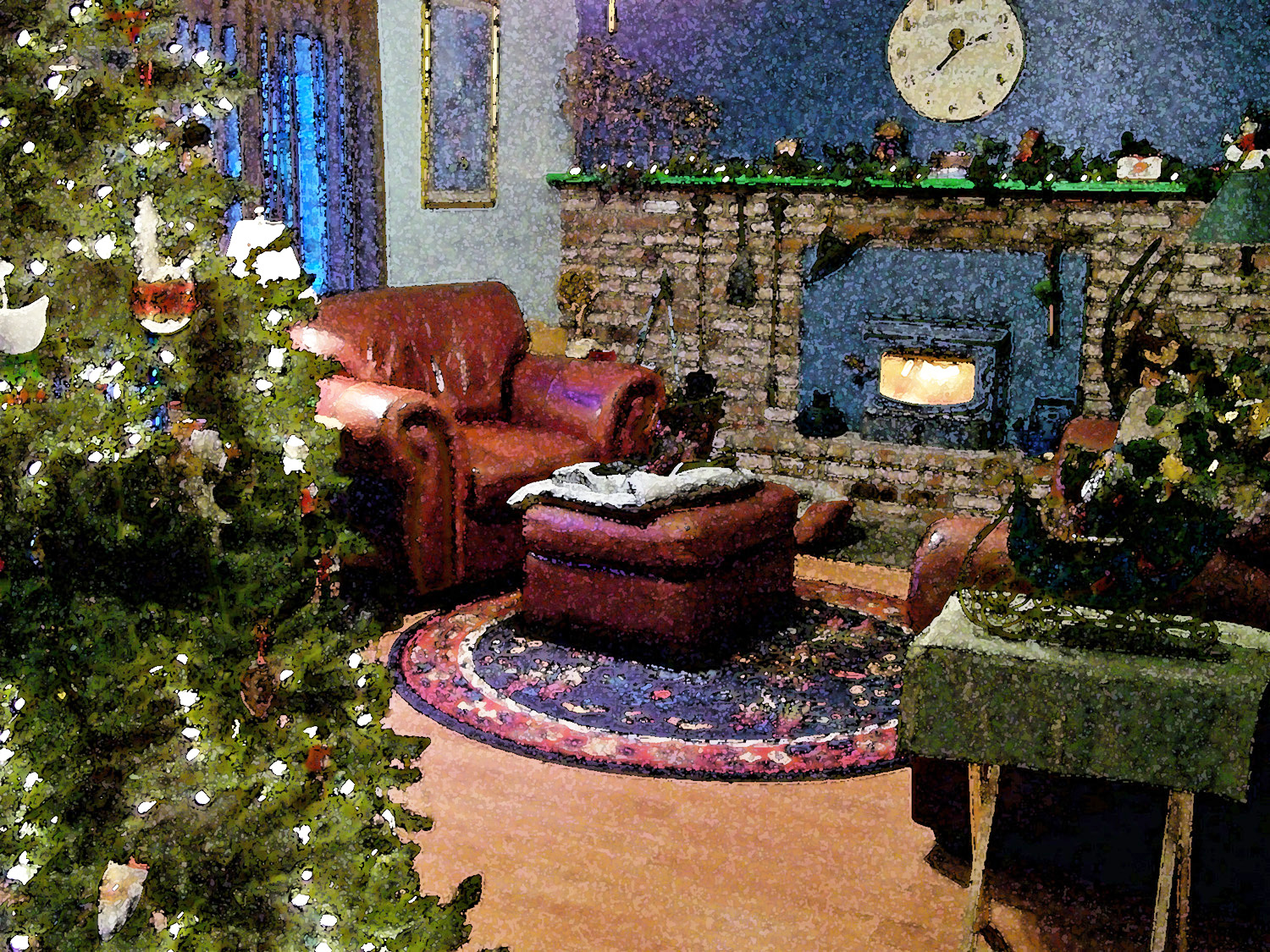
While they’re baking, there are presents to wrap and put under the tree.

Ours will be a quiet Christmas Day, just me and Mr Wren, Cary and Matt, the dog and the three cats. My mother is spending the holidays with my sister and nephew in New Mexico this year. Odd as it sounds, this is the first year in many that the Wren family is staying home.

The fun part? I love to cook. Thanksgiving and Christmas were made with me in mind, I’m convinced. So we’re having a Christmas goose, and I found a recipe for Yorkshire pudding I want to try. I’m roasting cauliflower (surprisingly delicious) and trying a new recipe for Brussels sprouts with a maple glaze. We’ll have mashed potatoes and stuffing and gravy. And for desert, a cranberry tart.

My day is cut out for me, isn’t it?

I’m not sure how my hands are going to hold up for all this. Nor am I sure I can get through it without some strategic, wee lie-downs for refueling purposes here and there. And if I can’t get it all done, well, that’s life. I’m not going to sweat it.

The day AFTER Christmas is a special one this year. Matt and Cary are leaving early in the morning to drive to Ukiah and pick up Matt’s son Phoenix. He’s a sweet, beaming boy of 11, my almost-grandson. It’s been so long since I’ve had a child to buy Christmas presents for! I’m afraid I went a little overboard, but I suspect he’ll forgive me.

So on Saturday I’m making a big pot of soup to eat with crusty bread. We’ll have the four of us, plus Phoenix and Matt’s parents for a light dinner and desert – Chocolate mousse. Because I want to.  ;o)

And then Phoenix will spend the rest of his winter break with us. I hope we’ll have a little snow so he can build snowmen and have some snowball battles. Isn’t that what going to Gramma Wren’s house is all about?

OK. Yes. I’ll go to bed now…

Riled up

I was reading a doctor-blog last night. (I know, I know. Do I have a life? Well, yes. But we all have our quirks. Sometimes I wonder whether, if I’d had better grades in high school and a little more encouragement, I might have actually become a doctor. I’ve been fascinated with the idea for a good part of my adult life. But I digress…)

This particular doctor, a primary care doc if I remember correctly, wrote a post about obesity. Having been up that particular road not so very long ago, I was interested in what the doc had to say on the subject. I sort of knew, but sometimes there are delightful surprises hidden in these blog posts, nuggets of hard-won wisdom and sparkling little jewels of reality that show up these doctor-writers as human like the rest of us. I settled down to read.
The post started out as expected with a graf focused on the current “obesity pandemic” here in the U.S., complete with statistics. Good enough. We are facing a real problem with this in America – we’re a pretty sedentary lot, living as we do mostly in the ‘burbs without any need-compelled hard labor to help us burn off the effects of too much high calorie, sugary, easy-to-get food. The solution to the problem is clear: We need to eat a lot less of those calories and move our bodies a lot more. Simple, right?

Well, yes, in theory. Hard to do in real-life.

The doc’s post was going right along with the status quo thinking in regards to obesity at this point. But then she suddely zig-zagged off the road into the trees.

First, she condemned the fashion industry for using tall, skeletal women to model clothing and the entertainment industry for glamorizing female actors who have the body fat of greyhounds. I was all for that. These ideals simply aren’t realistic for most women – we come in all shapes and sizes, and skeletal isn’t really the healthiest one to strive for. Size 0 dresses? Ridiculous.

You go, doc, I thought. Tell us how it is!

And then, just as I was getting ready for her to blast away at all this pressure our society puts on women to be “perfect,” this doctor flip-flopped, opining calmly that clothing in a women’s size 14 was just wayyyy too big. That what could possibly be wrong with striving for a size 6? It was actually just about right, she wrote. (Note: Audrey Heburn’s famous Little Black Dress in the film Breakfast at Tiffany’s was a very petite size 6. The beautiful Miss Hepburn was a tiny woman.)

Yes, a presumably sane,  female doctor of medicine wrote this.

Well, my jaw dropped. I felt my face go hot. And I immediately started to feel guilty because, you know, I wear a galumphing size 14 these days. I’m one of the lumbering elephants this doctor was calling out in her post: a fat, couch-potato lump of flabby American female.

I took a deep breath. No. This was … wrong. I forced myself to dump that painful, useless guilt. I might wear a size 14 today, dammit, but I wore a size 22 at this time a year ago. It took me about 20 years to get that heavy, gaining a few pounds one year, a few more the next. I’d given birth to a daughter and been diagnosed with rheumatoid arthritis during those years, but I’d never just sat around in front of the tube scarfing up bon-bons.

In fact, I’ve been mindful of my weight since I was 13 years old. I’ve been “on” a low-fat diet for most of my life, though obviously I strayed now and then. Who doesn’t? The thing is, until recently, I was under the impression that a high-carb, low-fat diet was good for you. Pasta=energy, right? Athletes eat it all the time, and they’re not fat! Far as I was concerned, the real culprit was fat in our foods.
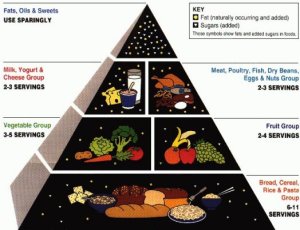
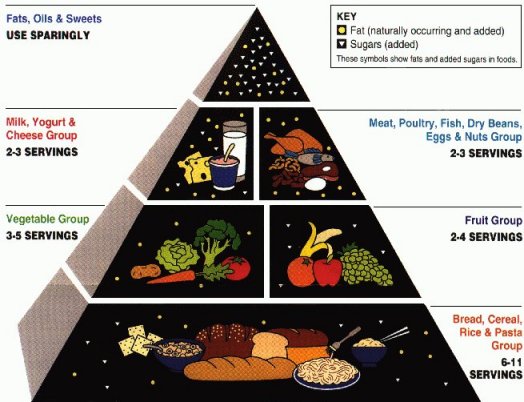
I believed, faithfully, in the FDA’s food pyramid. You know, the one that showed breads, grains and cereals at the bottom of the pyramid, indicating that our diets should consist more of those than anything else.

As a result, even though I used minimal olive oil when I cooked, ate little butter, cut out red meats, ate only wheat bread in sandwiches and paid attention to the fat content in my foods, I still gained an extra 80 pounds over two decades. Part of the reason I gained was that I didn’t exercise enough. I’d never been even close to “athletic” and I disliked exercise, associating it with PE class as a kid, where we were graded on our competitive physical abilities. I was a klutz. I wasn’t particularly strong or graceful. PE was a daily embarrassment. Why would I want do something that mostly humiliated me? Once out of school, I was glad no one could force me to play field hockey or do calesthenics any more.

As an adult I ended up flying a desk, my butt firmly planted in a chair. I was a graphic artist and a journalist. I was very good at both. I had skill and talent, and I worked hard. I’d come home whipped at night, even though I’d done little in the way of anything physical. I’d come home and take care of my family, cook, do laundry, and neaten up the house. And while I’ve never been big on watching television, once the chores were done I’d spend my evenings curled up on the sofa with a good book. Sometimes there were … chips.

But back to the point. This blogging doctor stated that a woman’s size 14 is too big. That a woman who’d wear that size is too fat. That instead, the woman who wears less than half that size is acceptable. Average. Ideal.

Well, doc, I gotta tell you. I’m pissed. It took me a long time to drop four sizes, though not nearly as long as it took me to gain them. If I hadn’t done my own research into nutrition and weight loss, I don’t think I could have done it. I had to learn some things, like the way “enriched” white flour turns to sugar in our bodies. The way nearly all our processed foods contain high fructose corn syrup as one of the first five ingredients. The way the portions we’re served in restaurants are massive, giving us more calories in one meal than we need in an entire day. The way all those sugars we eat, knowingly or not, teach our bodies to hoard fat and crave more sugar – and in doing so, screw up the body’s ability to produce and use insulin. And the way that diets themselves teach our bodies to go instantly into starvation mode, slowing our metabolisms until the good times return.
No doctor ever told me any of that.

No wonder I got fat. Even if I’d exercised more, I probably would have, since pasta, enriched flour bread and white rice made up the larger part of my diet. I had no idea I shouldn’t eat processed foods.

In the end, losing weight required totally cutting anything “white” out of my diet – flour, rice, and sugar. Potatoes. Enriched flour, I discovered, simply meant that they’d taken the germ and hull off the grain before grinding it – and then put the lost nutrients back into it without the healthy fiber that the germ and hull would have provided in the first place. All those years of eating “healthy” wheat bread with enriched flour meant that I’d been eating a substance that turned directly into sugar once I digested it.

Crud.

So even though I’d taught myself before I was 16 not to enjoy sweets too much; even though I had nothing even resembling a “sweet tooth,” I still became obese, thanks in great part to the hidden, added sugars in my diet. Even though I used minimal fats when I cooked and stayed away from fried foods when I went out, I still became obese. Even though I rarely bought cookies, crackers or other junk foods, I got fat. In fact, everything I ate was full of things that would make me get fat regardless of my caution. And I did.

With RA and a new diagnosis of pre-diabetes hanging over head, I switched to whole-grain everything. Whole grain bread. Whole grain pastas. I read labels compulsively (it took me twice as long to shop for half as much food). If the label said “enriched flour” I didn’t buy it. If it had HFCS within the first six ingredients, I put it back on the shelf. Because of this I stopped buying processed foods. If it came in a box and was easy to prepare, it probably had enriched flour and HFCS in it. It probably had more salt in one serving than I’d need in three days. Reject. I bought fresh vegetables. Fresh meat. And my cooking became very simple. I grilled the meat, using no extra fat. I ate salads and steamed vegetables. I learned to cook and ate a lot more fish (rather than fish sticks), which fortunately, I like very much. I’d never liked milk much, but I did like it in my coffee. I switched to soy creamer for that, and if I ate cold cereal, I’d use soymilk. I tried to switch to low-fat cheeses, but they tasted so awful I couldn’t stick to it. I ended up eating full-fat cheeses – but as a once or twice a week treat, in small quantities, rather than as a daily part of my diet. I ate more fresh fruit and didn’t bother with the canned varieties. I discovered delicious steel-cut oatmeal, quinoa, brown basmati rice, Splenda, and the satisfaction of a crunchy handful of almonds rather than a napkin full of Fritos. Finally, instead of giving myself the same portion at dinner time that I gave my 6-foot-2 husband, I gave myself a good third less. Then half. I got used to not being full when I finished a meal.
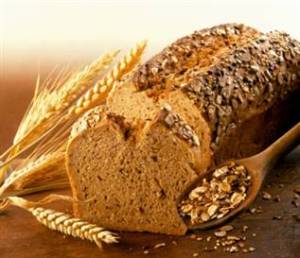
And I lost 50 pounds. I wear size 14 pants. I don’t cut my own breath off when I try to tie my shoes. I can walk up my driveway without becoming breathless, and I can walk five miles (if I have the time free) without killing myself. Hell, I can walk three miles in 45 minutes, and while I feel like I’ve exercised, I’m not worn out. As long as my hands aren’t hurting too much, I can get a decent aerobic workout at Curves each day, too.
Yes, I still want to lose that last 30 pounds. It will put me into size 10 pants – I’ll weigh less, but I’ll still have wide hips, thanks to my Scandinavian ancestors. But Dr. Blogger, I’d have to starve myself like one of those magazine models or TV actresses to fit into a size 6. I’m only 5 feet, 4 inches tall, but I couldn’t fit into a 6 anything unless I weighed 90 pounds. And I’m sorry. That’s just plain not healthy.

But I’ll be honest. At 53 years old, I’m proud of my size 14 body. I’m proud of myself for achieving it in a year. I’m proud of myself for taking the stress of those extra pounds off my arthritic hips, knees, ankles and feet, and for getting my blood sugar back down into the normal, healthy range. I like the way I look for the first time in many, many years. And while I may still be technically “obese” – and disgustingly “fat” – in your critical eyes, doc, I’m no longer “morbidly obese.”  I’ll lose the rest of the weight I want to lose, but I’ll continue to do it slowly and surely, eating far more wisely than I used to. I’ll be healthy.

But I sure won’t be perfect.