
Pablo Picasso, "Motherhood"
As I’ve read my way through RA blogs over the last ten months, I’ve noticed a recurring theme among the writers who are mothers. Some of them believe they’re not good enough moms because of their RA.
They can’t always get down on the floor and play dolls and Legos with their kids. Sometimes they have to beg off playing catch, or pushing a swing. Many can’t reliably volunteer to help out with classroom activities. And some have trouble facing the day-long walk-and-wait, walk-and-wait that is the epitome of the modern-day visit to a theme park.
What rotten excuses for mothers these women are! If not for their RA, they’d be SuperMoms!
Whoa. Let’s back up a little here.
At the risk of sounding like your grandmother (a role, frankly, I never imagined myself in, and besides, I’m not gray yet! But, ce la vie.), I’ve got a few things to say. RA moms with kids, this post is for you.
First: I’m a mom. I’m perfectly qualified to voice my opinions about this matter. Second: I worked full-time until two weeks before my daughter was born, and then from 12 weeks after her birth until she was 25 years old. Forty to sixty hours a week, every week, every single year. I’ll toss in a few vacation weeks here and there to break the work-monotony, but as a mother, vacations were never particularly restful. You never get a vacay from motherhood. Third: From the time she was six until she was 12, I raised my daughter in Germany, where her step-father was stationed and I worked. Yes, full-time.
OK. That’s out of the way.
Listen up, Moms. I don’t know what sort of happy horsepucky you’ve been fed about motherhood, but the “mother who does it all” is a myth. There is no such thing as a “super-mom.” Like everyone else – and I mean everyone – mothers are merely human. Some are good, some are bad. Most are both. All of them bring their own experiences as, variously, a daughter, sister, friend, playmate, schoolchild, rebellious teen, idealistic young adult and bread-winner to their turn at motherhood. They have hopes and dreams that may or may not include the concept of motherhood itself. Some are physically fit and healthy, some are not. Some mothers take on the job of raising babies with willing joy. Others are mothers only under duress. Human beings who are mothers come from all walks of life, all social strata, all levels of poverty and riches, all races and cultures, and from all parts of the world.
And, excuse me, but not one of them is a super-mom. Motherhood is the great equalizer.
In our society today (I’m referring to Western society, as it’s the one I’m most familiar with) we’re bombarded with messages telling us that motherhood is incredibly special, almost sacred. Having a child – no, children – is the most important endeavor of our female lives. We’re presented with sweet, soft-focus images of perfect young mothers with smooth skin, shining hair, a home as clean as a laboratory and as beautifully decorated as Martha Stewart’s guest house, playing with pink-and-ivory, well-fed, smiling babies. We are made to feel that if we choose not to reproduce, there’s something terribly wrong with us.
Kept well out of this pretty picture of the super-mom are the stinky Pampers in the trash can under the kitchen sink and the loads of laundry – baby’s, mom’s and dad’s – in the washer and drier, waiting to be sorted, folded and hung in closets.
Unmentioned are the 3 a.m feedings, the colic, the crying baby who won’t be comforted. Left out are the toddler tantrums, the constant stress of taking small children everywhere because they cannot be left alone, and the considerable expense and worry of childcare.
Conveniently forgotten are the nights spent hunched over the kitchen table helping the child with homework, the aggravation of teaching them to keep their own living spaces neat and clean, and the drudgery of picking up toys, cleaning dirty formula bottles, and wiping up spilled apple juice and Spaghetti-O’s.
Left out of this pretty picture is the mom who works outside the home for nine to ten hours a day, leaving her perfect child in the hands of random daycare workers or schoolteachers; the mom and breadwinner who comes home in the evening to start working her many other jobs as housekeeper, nanny, playmate, cook, wife and lover.
And never, never mentioned is the mother who does all of this while also coping with RA or other chronic illnesses.
I’m a mom. I was diagnosed with RA after living in Germany for about a year. My daughter was 7 years old at the time, and I worked five days a week, eight hours a day. Nearly every day I did all the above and also coped with terrible pain, crushing fatigue and frustrating disability of rheumatoid arthritis. There were times I could hardly dress myself, so painful were my shoulders or hands. Times I could barely walk for the pain in a knee or ankle or hip. Times when I used a cane, or crutches, to get around. Times when I was so exhausted I hardly knew how I’d get through the next minute, let alone the next hour, day, week or year.
I spent many foggy hours floating in the soft hands of opiate painkillers, the only drugs that had any effect at all on the pain I was in. I sought refuge in them in the evenings after I’d read my daughter her story and tucked her into bed, and on weekends when my husband was also home and could pick up some of the workload while I rested. But I only used those painkillers for the very worst flares. To get them I had to make an appointment to see my doctor specifically for pain relief. I was very lucky: he always worked me into his schedule. And he prescribed ten pills at a time, just enough to see me through the current flare and no more. If the flare occurred during a weekend, I endured until Monday. If it was so agonizing I couldn’t endure, I’d go to the ER, where the doctors treated me with suspicion but, to their credit, gave me enough Tylenol 3 or Percocet to get me through until I could see my doctor. I hated – absolutely hated – going to the ER for my rheumatoid arthritis. Here I was, working, raising a daughter, keeping a house, cooking meals, being a wife and companion and lover – and malingering. Drug-seeking.
Right.

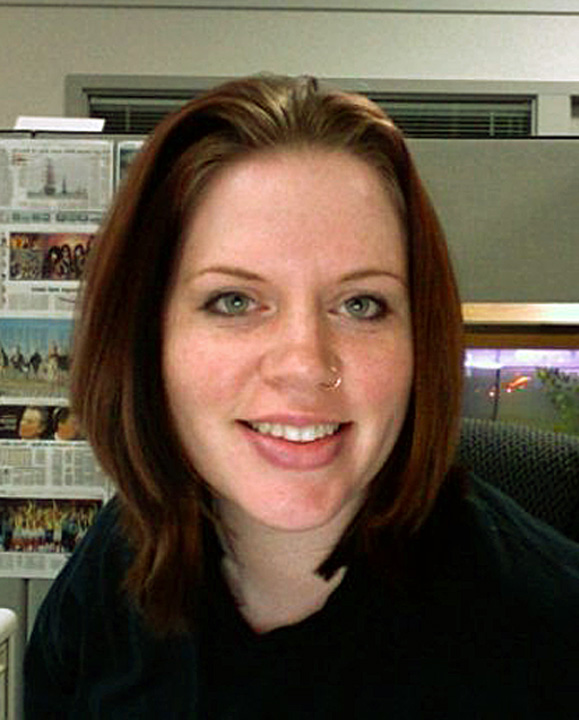
Cary at 27, all grown up.
Last night I asked Cary, who’s 29 years old now, whether she ever felt neglected or slighted because I couldn’t do as much with her as other moms did because of RA.
She goggled at me. “No!” she said. I explained a little more about what I’d been reading in the RA blogs by moms with RA, how they worried that their children were somehow being slighted because they couldn’t do quite as much as they would like to do.
“Mom,” she said earnestly, “that’s because we’re all told we have to be super-moms these days, that we have to be perfect and be totally involved in our children’s lives. It’s all bull!” She was surprisingly vehement.
“You didn’t feel bad when I couldn’t go on school field trips with you, or practice soccer with you?”
“Hell, no.” She laughed. “I was glad you didn’t come on my field trips. Us kids were always really embarrassed when our moms came, because they’d always be wiping our faces or telling us to be nice or share or be careful. We hated it. Besides, you did lots of other things with me. I never felt neglected at all.”
“Wow,” I said. “Glad I didn’t go on those trips with you, then. But I always felt a little guilty because other moms did that stuff, but I never did.”
“Guilty! No, Mom, you were great! Don’t you ever feel guilty!”
“You weren’t bothered because I had RA and gimped around all the time?”
“Nope. In fact, I never even thought about it. It was just how it was. You had rheumatoid arthritis. It wasn’t a big deal to me. You were a great mom! You still are.” And she hugged me.
She’s a good kid, my Cary. And a good adult. I’ll be perfectly honest, here: When she was a child and later, an adolescent, I never really felt like I wasn’t a good mom because of my RA. There were other ways that I felt I fell short – I wasn’t a very good disciplinarian, for one, and I sure wasn’t much of a role-model when it came to housekeeping. Who had time for a Martha Stewart house? I worried about how she did in school, because I hated doing her homework as much as she did, and because we’re both artists, I identified too much with her dreaminess and boredom with things like math and history. But the limits my RA put on me never entered my guilt-mix regarding my daughter.
The truth is I just did as much as I was able to do. I went to soccer games and yelled encouragement while sitting on the bleachers instead of jumping up and down on the sidelines. I took her with me when I went downtown to shop in the German coastal city we lived in. We walked or rode our bikes to the huge park frequently when the weather was good, and we took bike rides along the dike that stretched from Bremerhaven all the way to Denmark. We went to museums and visited other German cities, walking all over, seeing the sights and touching the ancient buildings. She was serenaded by minstrels in Renaissance dress in the central square in Bremen, and got to follow the steps of the Four Musicians of Bremen, the fairy tale about the donkey, the dog, the cat and the rooster. She learned to ski in the Austrian Alps, stayed in gasthausen with us on vacations, visited the zoo and went to all the German festivals. Back here in the States, when she was an adolescent, we went backpacking, camping, and fishing. She and I went to stage plays, saw Shakespeare productions, and rode in a wagon train. I did everything I could to help her and support her as she grew from a child into a beautiful young woman, just like any other mother does.
And I gimped my way through all of it, sharing as many experiences with her as I could, even though I had RA. Did I feel guilty? No. Frankly, I never thought about it, either. I simply loved my daughter. I still do.
So here’s what I have to say to you moms who have RA: Lighten up on yourselves. You don’t have to be super-moms. You don’t have to do everything with your child – in fact, your kid will probably appreciate that you don’t. Kids need time away from parental supervision so they can find themselves and learn to be individuals. They need to develop serious survival skills independent of their parents. Play with them, read with them, take them to new places when you can, teach them, but above all, love them. Be there when they need you, but don’t hover. Help them, but also allow them to help themselves. And don’t feel guilty because you don’t fit that soft-focus image of perfect motherhood.
No one does. It’s false. A myth. It’s unobtainable for the vast majority (if not all) moms, just like a fashion model’s stick-thin figure. So drop that load of bullpucky guilt and worry. Your kids will be just fine in spite of your RA. In fact, they might turn out to be even better people because of it – they’ll know empathy and have respect for those with disabilities as equal human beings. They’ll be kind. They’ll know how to love.
And isn’t that all that we moms want, really, in the end?










 RheumaBlog