Tough little Wren

I was outside, cup of fresh coffee in hand, at 6:45 this morning, ready to get more wood stacking done. My hands were twingey, but not awful. I figured I could lift

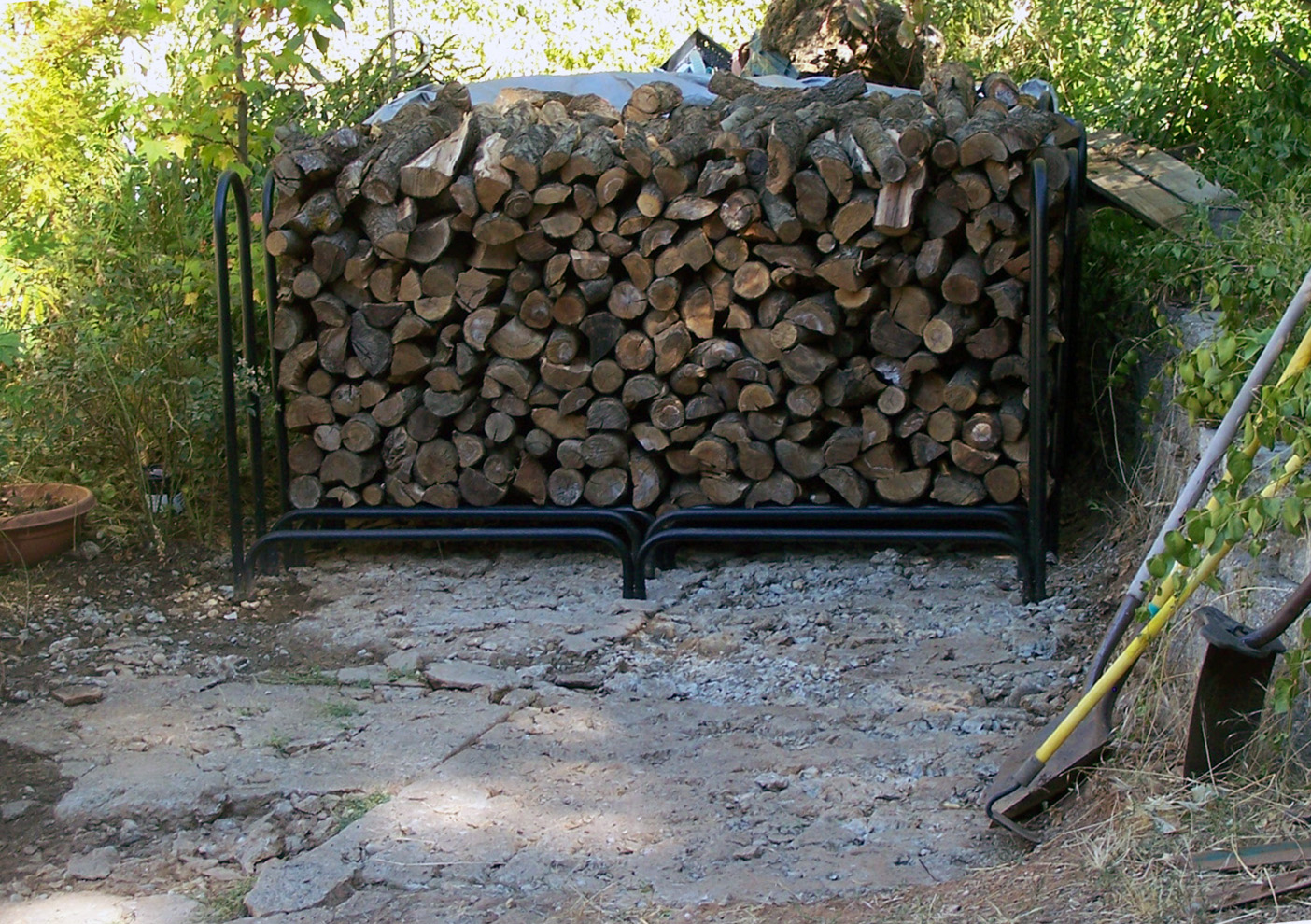
A whole cord stacked--and I did it all myself!

and stack the heavy almond-wood chunks for a while, but I’d be mindful and stop before I overdid.

Well, I’m pleased to report that I didn’t need to stop until I’d stacked the entire cord of wood! I’m tuckered out now, and the bursitis in my hips is flared up from all the stooping and lifting, but I feel pretty darned good anyway. It’s supposed to be 93 degrees F today, but this morning it was in the mid-50s. I worked steadily and comfortably in the early morning

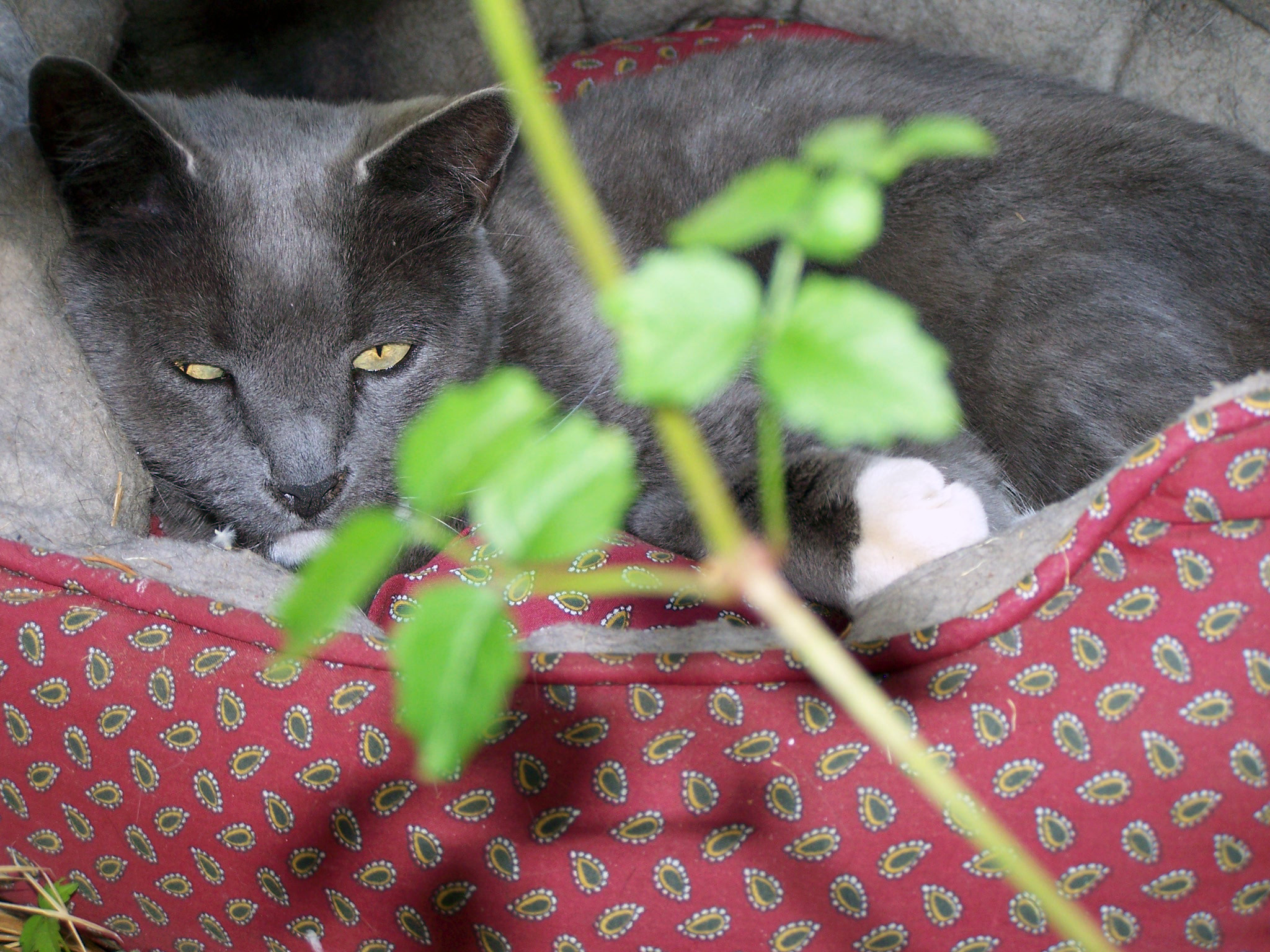
This is Stubbs (so named because he has a stub of a tail), comfy in his bed early this morning. Stubbs adopted us a couple of months ago and for now, lives outdoors. We're planning on getting him a vet check-up, then having him neutered, and when the weather turns cold, he'll join our other cats indoors. He's sweet and friendly and has already made his place in my heart.

shade. By the time the sun was high enough to heat things up and take away my cool shade, I was done.

The remainder of this September Sunday is for resting and recuperating. Tomorrow morning I’ll get a start on stacking the second cord of firewood, which is piled at the end of the driveway. The nice thing is that I know I’ve just a few more mornings of lifting and stacking and I’ll be done with the firewood until this time

One more cord to go.

next year. And I’ll have the satisfaction of knowing, too, that we’re ready when the cold weather comes. Am I proud of myself? Yep.

Warm work

Firewood area almost cleaned up. The piles of stoney dirt will get carted out to the back garden. The wood that's already there is left over from last winter.

The old saying goes that “firewood warms three times: First, in the cutting; second, in the stacking; and third, in the burning.” I’m here to say, as I wipe the sweat off my temples and flap my arms in an attempt to cool and dry my damp, aromatic body, that old saw is true.

This morning I got a start on stacking our firewood for the upcoming cold and (with luck) wet season. With the exception of a big bruise on the ball of my thumb, my hands are holding up pretty well. A bit sore, but much less so than I expected after digging seven yard-carts full of dirt and rocks off the broken old cement pad where we store our wood.

I was glad to do it, though. Last year when it rained, the whole area was a morass of thick, sticky mud, and as we used up each 1/4-cord of wood, there was that much more mud to walk across to get to it. That meant tracking it into the house each time we brought wood in for the fire, which meant the floor had to be mopped afterward, etc, etc. This year there will still be mud — I’m not fooling myself — but there will be a lot less of it. And while finances don’t stretch that far right now, next summer I’ll get a load of gravel in to cover the pad before we stack firewood again.

Temps here have risen suddenly, and we’ve got several very warm (OK, hot) days coming up through the end of next week. So I’m stacking wood in the very early hours, while it’s still relatively cool and shady. It works out well this way, really — it limits the amount of time I can spend stacking, which is the smarter way to go for someone with rheuma. I have to give it up for the day (or at least until sundown) and rest. Of course, there are always other things to do, but they aren’t quite so labor-intense.

I enjoy working my body hard. I like the “good” tired feeling that comes with it, and hard physical work is something that I haven’t done a lot of during my lifetime. I’ve always had desk jobs, so being physical was limited to recreation. Sometimes, as I’m hefting those heavy stovelengths to stack them, I think it would have been nice to be an outdoor-worker. Someone who used her muscles every day to accomplish something more than burning calories or toning. Body-work that made something happen, like plenty of wood stacked for the winter, or a house built, or a trail blazed, or … you get my drift.

Well, it’s a bit late in my life to go into construction (and that field is a bit depressed at the moment, anyway). I guess I’ll be content with the good work I have around here, and be glad that I don’t have to do it every day. With rheuma, I’d probably have been out of a job a long, long time ago.

Have a great day, gang.

Autumn hands

Autumn equinox:

I hear a strange bird call, seems like it’s coming from over here, then over there, then over there. After a minute or two of this, I start feeling a little spooked. What is that?  I look up and see… yes. A flock of Sandhill cranes, making their autumn flight south. This is a gift,  one I receive so infrequently that I forget what it sounds like until my eyes remind me. I watch until the check-mark of giant, long-winged birds disappear into the sun, the leader’s odd calls reaching my ears from impossibly high in the sky. I have to smile. I feel honored.

I spend three hours chipping six inches of baked mud with the tip of a shovel off the broken cement where I’m planning to stack this winter’s supply of firewood. My hope is to avoid tracking this sticky red mud into the house when it rains or the snow melts. I scoop the heavy, dry, caked earth into the yard cart with a straight-edged, flat shovel: scoop, lift, toss. Scoop, lift, toss. Over and over again. Then wheel the cart out to the back garden and dump it. This was preparatory labor; tomorrow morning I begin stacking the first of two cords of dry, seasoned almond-wood. For now, the wood forms two impossibly large hills on the driveway, dumped there by the wood-guy last evening. I love the scent. Instead of almonds, this wood smells like cinnamon. Each heavy hunk represents several hours worth of cozy stove-fire warmth once the weather turns cold and damp. This is good work. Satisfying work.

Watched, smiling, as two Anna’s hummingbirds chased each other around the garden, chirping. Sawed off a couple of apple tree suckers that had grown too large and were hanging in the way of my mud-chipping. Sweated like a horse, drank lots of water, and ended up exhausted and shaky and a little frustrated at myself for getting so tired.

Tonight I’m flattened. Totally wiped out. Dinner was a cheese and tomato sandwich, no energy to think, let alone cook. The bottoms of my feet ache monotonously, laying lie to what I wrote yesterday about not having this problem anymore. Go figure. My hands and wrists are desperately sore. Throbbing. Well, naturally. What else should I expect after abusing the joints in such a cavalier manner? So now I’m dosed up on tramadol and Tylenol, hoping to sleep the night through so I’ll feel good and ready to get back to work at sunrise.

Now, good-night.

Where’s my oil can?

RA blogger Kelly Young has a great post and comment thread going on the subject of morning stiffness over at Rheumatoid Arthritis Warrior. Dang, she’s good! Reading through it got me thinking. Kelly mentions that one of the questions rheumatologists have always asked their patients is whether theyhave morning stiffness, and if so, for how long? Then she says that recently, morning stiffness as a reliable indicator of RA has been dropped, so some rheumatologists no longer ask about it.

My own rheumatologist asks this question every time I see him. And every time, I feel a bit embarrassed because I’m rarely stiff in the morning anymore. Instead, I tend to get stiff later in the day if I sit for too long. Even then, it’s confined to the joints in my lower body – my hips, knees, and sometimes my ankles or the joints in my feet, and it takes only half a minute or so to resolve.

It wasn’t always like that, though. When I was first diagnosed, I was painfully stiff to the point of stumbling around each morning, and the stiffness was all over my body. To loosen up, I’d have to take a hot bath or shower, and it would be an hour or more before I could move somewhat normally. In addition, back in those bad old days (now more than 20 years ago) the bottoms of my feet hurt like hell every single day. I’d wake up in the morning feeling like I’d been standing on them all night long, or like someone had been beating them with canes while I slept, and I’d gimp around on them all day. My painful feet were a constant; flares in other joints happened along with them. And back then, my doctor never asked me about morning stiffness at all.

The nature of rheumatoid arthritis is unpredictable, for the most part, and it seems that everyone experiences the disease a little bit differently. For the longest time I could find no information about RA affecting the bottoms of my feet – I thought perhaps it was unique to me, and so I doubted myself. My RA didn’t act like the RA I read about in others, either. My flares moved around from day to day, too. One day my right knee would flare; the next it would be my left shoulder, and the day after that, it might be my great toe on my left foot. The duration and intensity of the flares varied, as well. Sometimes they’d last half a day, and sometimes for up to five days. Sometimes the flare would be mild, and other times it would be so bad I’d have given anything for a chainsaw so I could just cut the offending limb off and have done with it. Finally, if there was something to be grateful for in all this, it was that I very rarely had more than one joint flaring at a time, meaning that both knees didn’t flare at the same time, or both hands. I counted myself lucky for that.

My RA went into remission after about eight years, and stayed in remission for about six years. When it came back, it presented differently. Today, the bottoms of my feet hurt only rarely. My wrists and hands hurt nearly all the time, but for the most part, the pain is low-level pain (say 3-5 on the 1-10 pain scale). While my other joints do flare now and then, the flares tend to be shorter and less painful than they used to be. I don’t recall being fatigued all the time in those early years, or having brain fog. But today I deal with both, frequently.

Am I grateful for the lessened pain? Oh, yes. I’d like to think that the medications I’m taking today (Arava, sulfasalazine and most recently, plaquenil) are keeping my RA quiet and minimal. I’ve gotten pretty good at pacing myself to minimize the fatigue, too. But I know that it could change at any time. The one thing you can be sure of with RA is that it will change.

I’ve been very lucky that so far, the damage RA can do to the joints has been minimal in me. My hands aren’t distorted, nor are my feet. Most of the time, I have little problem with mobility, though my hands and wrists are sometimes weaker than I’d like. This, too, could change. It makes me very aware of how well I’m doing at the moment—and it makes me wary of the future. For that reason I’ll keep taking these meds, even though I wonder, sometimes, if they’re doing anything at all.

Go visit Rheumatoid Arthritis Warrior when you have a little time. The whole website is terrific—Kelly has done, and continues to do, some phenomenal work. Her research is fantastic, her empathy incredible. The visit will be well worth your time, and it will help you feel less alone as you battle this disease. That feeling of aloneness is one of the hardest things about RA, so it’s good to know that we all have comrades in the long fight.

My choice

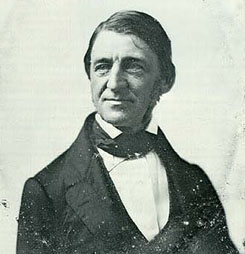
“Finish each day and be done with it. You have done what you could.

Ralph Waldo Emerson

Some blunders and absurdities have crept in; forget them as soon as you can. Tomorrow is a new day. You shall begin it serenely and with too high a spirit to be encumbered with your old nonsense.”

-Emerson

I keep this quote on my refrigerator so I see and read it often. It never fails to make me smile; it’s the perfect sum of my own, long-time philosophy of life. For example:

Chocolate and red grapes.

These are the flavors I’m indulging myself in at the sun approaches mid-day. They make me feel decadent. The chocolate is a capful of sugar-free Torani chocolate syrup mixed into my coffee; the grapes are from the local fruit and veggie stand (think “barn”) Mr. Wren and I stopped at yesterday on the way home from town. There were my grapes, along with zucchini, red bell peppers, Jonagold apples, avocadoes, celery, carrots, huge beefsteak tomatoes, green string beans, Romaine lettuce, red potatoes, russet baking potatoes and big yellow onions. They all came home with us, packed in a couple of cardboard boxes.

I have no excuse not to make some really delicious, low-carb, low-fat meals now. Yesterday we also picked up more brown basmati rice (my favorite). It’s versatile. It makes a great side dish plain, but cooked in vegetable broth and fancied up with stir-fried veggies, small chunks of salmon, chicken or pork loin, and spiced in a myriad of different ways, it’s a terrific main dish. A complex carbohydrate, plain brown basmati rice even tastes good for breakfast, heated up and sweetened with a little Splenda, spiced with cinnamon and a dash of ground cloves, and splashed with a little soymilk. I make eight cups at a time, using what I need each day and keeping the rest in the refrigerator. I also love cooking it: it smells just like popcorn.

So home-brewed café mocha and a handful of sweet grapes are my way of comforting myself today. The great toe on my left foot is flared, as is one of the joints in my right ankle. I’m doing the double gimp. It’s aggravating, but even as I mutter “Ow, sh*t!” under my breath as I walk around the house, I’m grateful that these flares aren’t worse. They’re maybe a five on the one-to-10 pain-scale. I’ve suffered and coped through far worse flares in the past, and I have a feeling that if I wasn’t taking all the meds and supplements I’m taking right now, I would be hurting a lot more today.

We’re also having another lovely, autumn-like day. It’s sunny but cool enough that I’m wearing a sweatshirt and socks again, with a thin, down throw over my legs as I sit and type this, my feet up on the ottoman. Finny is curled up between my calves, adding his radiator warmth to the mix. This gives me joy. The cool weather reassures me that fall really is on the way, even if we’ve got a high-pressure area moving in that will hike our temps back up into the low 90s by the weekend. The heat will be temporary. I can deal.

Speaking of high pressure areas — these changes in the weather and the barometer generally do have an affect on my RA, so that’s probably why my feet are such a mess today. Hands and wrists ache, too, but they almost always do, no matter the weather. In the end, it’s my own attitude about the disease and the pain it causes that makes the real difference. I can mope and whine or I can smile and cuss a bit to myself. The former only makes me feel worse, but the latter never fails to make me feel better.

It’s my choice to make. I choose positive, every time.

Sierra Autumn Sunday (words)

It’s an odd sort of Sunday, with a sky sometimes cloud-clotted, sometimes gray with uniform overcast. It’s very cool–just 65 degrees F–and calm.

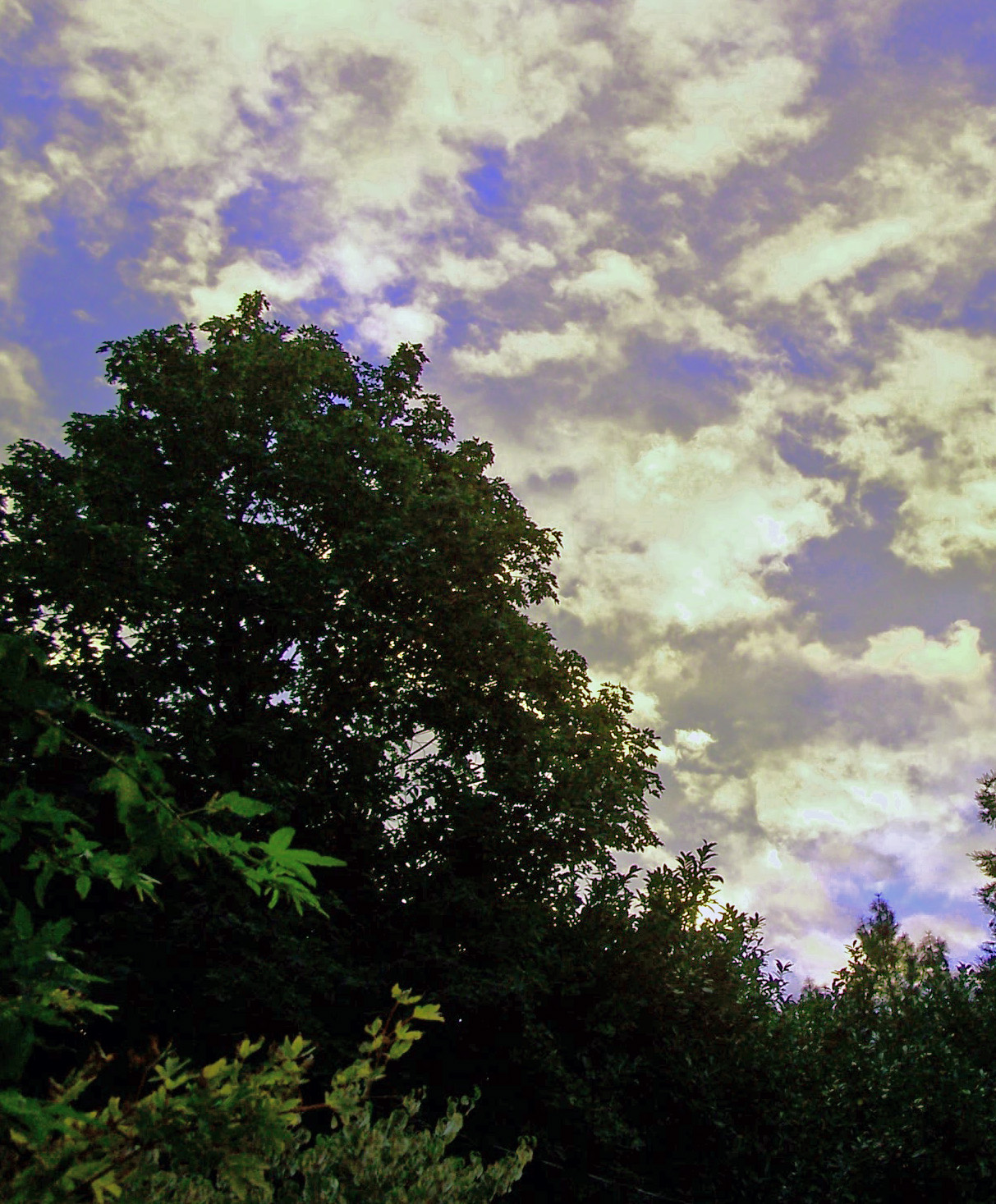
Although the vernal equinox is still a few days off (Sept. 23), I was able to note some subtle changes in the world outside when I took the photo of the cloudy sky this morning, a half-hour past dawn. First, naturally, is the temperature, which is actually much cooler than normal for this time of year. This morning, though, I smelled a hint of frost in the air. Although there was no frost to be seen in my little world, I suspect that 1,000 feet further up the mountain, there was.

Other signs of the impending autumn include a few bright scarlet leaves on the young sour gum tree outside my den window; and at the very top and tips of the Japanese maple outside the kitchen window, the small, delicate, five-fingered green leaves have closed into tiny brown fists. This tree always does this at the far end of summer; I suspect it needs a little more water than its getting on its own, through its deep roots. In a month, all the leaves will be brilliant in varying shades of green, purple, orange, yellow, red, and yes, brown. I love that tree.

The rest of the garden plants have either stopped blooming for the season or, if they continue, look a bit dusty and tired. The exception is the Cape fuschia Mr Wren planted next to the fireplace several years ago. Today it’s covered with tiny red/purple bells, each one with miniscule yellow stamens and pistils deep inside. Lovely.

Other signs of the beginning of the end of the year: many turkey vultures circling high overhead, gathering as they do for their annual migration south. And the occasional honking of Canada geese, sometimes in pairs, sometimes in small flocks, who share the vulture’s intentions. Sunflowers are drooping, their petals starting to wither, and while they’re still green, the persimmons have appeared on the trees. They’ll be just about perfect by mid-November. I’ll make persimmon bread with walnuts and currants to freeze for Christmas.

My house is chilly, but it’s not quite chilly enough to build a fire in the stove. Instead I’m wearing thick sweatpants and a sweatshirt, socks and shoes. I’ve worn nothing but shorts, cool shirts and sandals since June, but wearing this heavier clothing feels good. Cozy. Right.

It occurs to me that these things are all gifts, from the photogenic sky of early morning to the soft, fleecy insides of my sweats against my skin. I wish all of you lovely gifts from the world today and every day. Have a gentle week.

Invisible Illness Week: Empathy, not sympathy

empathy n. Identification with and understanding of another's situation, feelings, and motives.

Invisible Illness Week is nearly over, but the fact that I have one—rheumatoid arthritis—will never change. If my disease continues along the same course that it has over the last 20-plus years, for me it will likely always be invisible. I don’t have noticeable deformities in my hands or any of my other joints. It surprises me a little, considering the intense pain the rheuma-dragon has inflicted on me over the years.

Still, I’m grateful for that. I’m grateful that even though my hands hurt a good deal of the time, and there are times that they don’t work as well as I’d like, they still work well enough that I can manage daily life without much trouble. I’m grateful that my other joints work pretty much like they should in a woman my age, too. I’m not that old, but have definitely reached that amorphous stage in life called “middle age.” A little osteoarthritis at the ends of my fingers, along with the rheuma, isn’t a big surprise. Bursitis in my hips, along with the RA caught me by surprise when it was diagnosed (I thought it was simply RA), but this condition, too, often shows up as the body ages. I may not like it much, but I can accept it.

But having a chronic illness that’s invisible to others (and which I rarely, if ever mention to casual acquaintances, friends or even family members) can be frustrating and sometimes, defeating. It’s not that I want sympathy from them. For me, it’s more like it would be nice if others would acknowledge the fact that I’m handling life so well in spite of the pain and disability rheumatoid arthritis causes.

And I do handle life well. I put a thick leather cover over my car’s steering wheel so I can grasp it more easily and with less pain. Even with the cover, though, I often have to make minor adjustments in direction with the flats of my hands, only gripping when I’m bringing the car to a halt, starting up or making a more serious change in direction.

It sounds like no big deal. But it is to me, especially when I remember that I used to steer my car in the normal way, gripping the wheel constantly, and without needing a wheel-cover to make it thicker and less painful to grasp.

I also handle life well while feeling wiped out most of the time. Pain, even minor pain, uses up a lot of energy. It’s stressful. When the pain is constant, it means that I start each day already behind the power curve. I feel tired—sometimes to the point of exhaustion—for apparently no good reason. At least, that’s how it seems to others, if I happen to mention it. But I rarely do. I just push through it as best I can, doing my best to keep smiling and not complain. That anyone might actually notice my fatigue and ask how they might help me is even more rare.

I think the most frustrating aspect of having invisible rheumatoid arthritis is the embarrassment I feel when I’m disabled and there are others around. There’ve been many times I’ve spent the workday (or the week) limping heavily from a bad flare in my foot. Once in a while someone will ask, “what happened?” out of concern and sympathy. My truthful answer, “I have rheumatoid arthritis and one of my toe joints is flared” leaves them disconcerted and unsure of how to react. After all, I’m not elderly. How could I have arthritis? Really? What in the world is a flare? Your toe hurts? A stupid sore toe is making you walk like you have a broken foot? Sheesh, what a wimp! I bet you’re really just angling for sympathy and attention. Yuck!

People don’t say those things out loud, but I know that’s what they’re thinking. It’s what I would think if I was in their place and knew nothing about RA. My perception is confirmed when they look uncomfortable and change the subject, fast.

And I go along, understanding but humiliated as I see the relief in their eyes.

There have been a few times when a flare in my foot was so bad I could barely walk on it. To help me keep moving and working, the doctor put it in a plaster cast and made me use crutches for a few weeks. What can you say but the truth when someone asks you what happened? I couldn’t lie and say I broke my leg or my foot. Instead, I’d have to say “Well, I have rheumatoid arthritis…” and suffer that miserable humiliation when the subject was changed.

But once in a great while, the person asking would surprise me, saying that they had no idea RA could be so bad it required crutches. They’d be interested in my expanded explanation on what the disease is, how it works, and the trouble it causes in the joints. They’d ask more questions, and as I answered them, their concern and empathy became real. They acknowledged my pain and temporary disability, and then we both moved on. I cannot express clearly enough how relieved I would feel when this happened. It was that rare—and it still is.

In the end, that’s all I want from others regarding my invisible chronic illness. Just an acknowledgement. Not contempt. Not sympathy. I crave empathy, not coddling. It’s just nice to know that someone cares enough to ask—and then cares enough to listen to my answer with an open mind and an attempt to understand.

Always adjusting

Taking Zantac continues to tamp down the nauseating side-effects of the Plaquenil I’m now taking for my rheumatoid arthritis. This is good.

There’s another side-effect, however–it’s a greatly decreased appetite and, I’m discovering, a decreased capacity for food. Not only do I not particularly want to eat (I’m simply not hungry), but when I do get hungry and eat, more than a little causes a vague queasiness that makes me wary of eating much next time.

I’m on the fence as to the good or bad of this particular side-effect. And it definitely is a side-effect: I was not experiencing any sort of appetite dampening (except that which I could effect by will-power alone) before I started taking Plaquenil.

Thus, while I’m pleased to announce that I’ve finally (!) dropped my weight into the 160s (!), I’m a little concerned about general nutrition in the process. The bottom has dropped out of my caloric intake. This is … good. I think. But it’s also, inevitably stressing my body. I had an appointment with a VA dietician the other day. She told me that to lose weight, I should be eating approximately 1,400 calories per day, preferably in complex carbs, lean protein, and lots of vegetables, and that I should resume walking at least a half-hour per day. While I haven’t counted my actual caloric intake since I started the new medication, I’m very doubtful that I’m even reaching 1,000 calories per day. (Achy hips, either from rheuma or bursitis, have been an excellent excuse not to walk, too.)

And even so … hello, 160s. I can see the 150s beckoning hopefully in the near future.

Of course I’m ecstatic to have finally broken that miserable 170s plateau, the one I’ve been stuck wandering up and down for months and months now, in spite of mostly mindful eating. (“Mostly” may well be the operative word, here, of course.) But I’m also well-aware that my body needs to be filled with the best, high-octane fuel I can give it. To that end I’m eating no “bad” foods. Everything that goes in is good stuff, food that my body can use the most efficiently. Now I just need to work out a way to force a little more of it into the tank.

I think I’ll switch to six small meals each day versus three larger ones. Perhaps my irked tummy will accept smaller quantities a little more often. It should work. The other hurdle I need to overcome is appetite. This is unfamiliar ground for me. I’ve never not had an appetite; being hungry didn’t matter. Now, I’m finding it hard to eat at all.  Not only am I not hungry;  the thought of food is utterly unappealing and nothing “sounds good.” But I’m working on that. My body is a complex engine. It cannot function on water and air alone. I can do this.

In the meantime, I’m very pleased that my clothes feel loser again, and that I can actually feel my hip-bones through the slowly thinning layer of fat that pads them. My behind is smaller. Most of my shirts seem to have grown a size larger overnight.

I’d like to be able to say that the rheuma has taken a powder along with the pounds, but so far, nothing has changed that way. It’s early days, though. Plaquenil can take months to show any real effect, so I’ll be patient. I’m grateful that, for the moment, my daily flares are staying mostly at the low end of the pain-scale; the few that reach into the middle of the scale are very short-lived. I want to believe that all of this due to the lower inflammation levels in my body brought about by a couple of years taking Arava and sulfasalazine daily.

Hope springs eternal. I’m enjoying this new, slightly increased lightness on my feet. I believe I can fix my current eating/queasy stomach issues. Now I just need to convince myself that my wee buddy Finny and I should take a good, brisk walk today. A half-hour’s worth. Surely my stupid hips can handle that.

New old fear, new old hope

As of today I have been taking plaquenil for one full week.

For half of that week, I felt cruddy. I mean, really cruddy. I’d take the morning cocktail of pills, including the new, hourglass-shaped one, and within an hour I was seriously nauseated. The intensity of the nausea lessened somewhat as the day passed, but still—yech. Finally, it was time for the bedtime handful of meds, including another plaquenil. I took it. And started the sour, sick stomach routine all over again, except this time, it meant trying to sleep that way.

Yes. I am a wimp.

I tried eating before taking the stuff. It didn’t help. I tried eating things that might soak it up—a slice of grainy bread, or a few wholegrain crackers. Nada. I tried chewing antacid tablets, or drinking a cup of ginger tea to settle my outraged tummy down. Forget it. I’d be green in no time—and wondering, seriously, how in the world I was going to keep taking this stuff for, well, maybe the rest of my life. Talk about unappealing.

I’ve had this trouble with many of the rheumatoid arthritis meds I’ve taken over the last 20+ years. NSAIDs have always caused me stomach problems, though taking them with food helped.

This is not the first time I’ve taken plaquenil; I took it in 1989 as well. Like the other meds I’d been prescribed since being diagnosed with RA (with the exception of opiates for pain) it made me feel sick. I took it anyway, hoping that it would make the awful pain in my joints go away. But when I went in for my second eye exam at six months they found a hole in my retina that hadn’t been there before.  Plaquenil can cause problems with the retinas; that’s the reason that people who take the drug are advised to have thorough eye exams every six months. That tiny hole didn’t seem to have any effect on my vision, but learning that it was there scared the daylights out of me.

This all took place at the big Air Force medical center at Wiesbaden. My regular doctor, a US Army internal medicine doc in Bremerhaven, had sent me there to have the eye exam and see an actual rheumatologist. Wiesbaden was six hours by Autobahn from my home. Naturally, the day of the appointment I had a truly horrific flare in my knee. I could barely walk, and spent most of that long, long trip curled up in the back seat, groaning with pain as my poor husband drove and worried.

When I saw the rheumatologist an hour after having the eye exam, he told me the plaquenil didn’t cause that little hole in my retina. He insisted that I’d probably always had it. Why, then, I asked (reasonably, I thought), didn’t they find the hole during the first eye exam? He couldn’t tell me. Upset, I told him I didn’t want to take the drug anymore. Well, things went downhill from there. He was brusque and unfriendly—and he offered me no new options. I left Wiesbaden still in awful pain, my hopes dashed, extremely frustrated and more than a little frightened. They wanted me to keep taking a medicine that could destroy my vision and might already have started the process? No way. Since it seemed to have no effect at all on my RA flares or pain, and made me feel sick all the time to boot, it was with considerable relief that I quit taking plaquenil.

Back in Bremerhaven, my regular doctor was as frustrated as I was (mostly with me, since I was being non-compliant, I suspect), but he was willing to keep looking for answers. I asked if I might be allowed to see a German rheumatologist at home in Bremerhaven. (I thought maybe seeing a real rheumatologist, as opposed to the Army-issue variety, might make a difference.) To my surprise, my doc thought that was a good idea. He set it up for me. A few weeks later I started taking oral gold, prescribed by the German rheumatologist. My regular doctor took my care over again after consulting with the German doctor and procured the medication for me through the Army medical system. I was very grateful—but gold didn’t work either. I took it for about a year (and had my blood drawn every two weeks for the entire duration to watch for possible liver failure) before I decided I wouldn’t take that one anymore, either. These drugs, I thought, not only didn’t work, but  their possible side-effects seemed almost as bad as the RA itself—and maybe worse. Rheumatoid arthritis by itself, after all, wouldn’t destroy my liver or blind me.

So it was with some apprehension that I agreed to try plaquenil again when my current rheumatologist suggested it, along with the Arava and sulfasalazine I’m already taking. Like that long-ago military rheumatologist, he feels that the retinal hole they found had nothing to do with the drug. I hadn’t taken it long enough, he says. And it’s possible that when I had that first eye exam, the ophthalmologist just didn’t see the hole. He feels that taking plaquenil is safe—at least as safe as the other DMARDs available. So I put my fear aside, took a deep breath, and said I’d do it.

On Wednesday morning as I grimaced at the plaquenil tablet in my hand, anticipating a new round of grubby sickness, it occurred to me (finally!) that Zantac might prevent the nausea the plaquenil was causing me. I took some. And to my great relief, it did the job. I take it an hour before I take the plaquenil and then eat some bread or crackers, too. No nausea! I won’t have to spend the rest of my life being green around the gills after all!

It’s way too soon to know, but I’m hopeful again. Perhaps this triple-whammy drug cocktail will finally put my rheuma-dragon to sleep.