Re-learning

rheumaI’m in the reluctant process of re-learning how to accept others’ reaction to my old enemy, rheumatoid arthritis. Honestly, I’d forgotten how uncomfortable people get.

Because I’ve always been a very empathetic person, I understand others’ discomfort when confronted by my disease. Like many people with RA, I get tired of the same old responses, like “you’re too young to have that!” but considering that our culture sees RA as a disease of the elderly, I can’t really blame people for that response. When I’m in the right mood, I just inform them of the truth. When I’m not, I shift the conversation to make it about them instead. Works like a charm.

Yesterday during my morning workout one of the women there asked me how my weekend went. For some reason, I told the truth rather than trotting out the more polite and distant “just fine” response. “Not great,” I said. “I have rheumatoid arthritis. It kept me down this weekend.”

“But you’re too young!” she exclaimed. (Actually, I sort of like this response now that I’m 53. I look too young for RA? Cool!)

 “Well, that’s what I said too,” I grinned as I did reps with my legs. “I was diagnosed when I was 31. Actually, it can hit at just about any age.”

Her eyes widened. “Oh my god. Where do you have it? In your hands? My grandmother had it in her hands.”

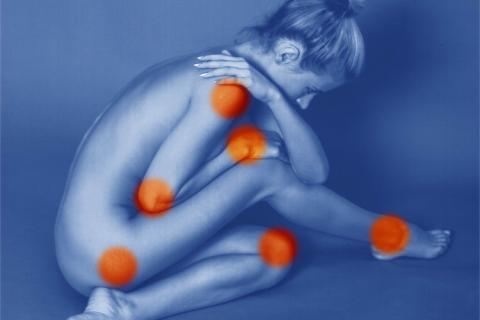
“My hands, my wrists, my jaw, my shoulders, hips, knees, ankles and feet. Mostly not all at once, thank goodness.”

She complimented me for working out in spite of it, so I told her that some days are better than others, and how I’d been frustrated and aggravated on Friday and Saturday because I hadn’t been able to go because of the pain.

“Does it help to exercise?”

I nodded. “It strengthens the muscles we need to move and helps keep the joints themselves from stiffening up permanently. I’ve never liked to exercise much, but I guess I’m finally mature enough to do it anyway. I’m exercising for my independence. I’m fighting against being disabled by RA.”

“I think that’s a great attitude,” she said. At that point I changed the subject and asked her how her weekend went. She told me, launching into a detailed account of what she and her family had done and where they’d gone. We talked and laughed for a while as we worked out on the machines, a couple of friendly strangers. Finally, she finished her workout, wished me well, and went on her way.

I’m aware that I was lucky in this particular instance, and I’m pleased that one more person in the world understands a little more about RA now, whether she wanted to or not. In the past when I’ve been honest and opened up about rheuma, I’ve seen people’s eyes glaze over before I’ve finished the first sentence. To spare them having to listen (when it’s obvious, at least to me, that they’d rather not), I change the subject. I can’t blame them for not wanting to listen to me whine.

But having to keep my battle with rheuma to myself hurts sometimes. It’s lonely.

Each member of my family reacts a bit differently. My daughter is empathetic, a trait I guess she got from me. And she also has RA, though it’s been mild so far and hasn’t been diagnosed as such yet. She understands the on-again, off-again, migratory nature of the pain, and how intense it can be at times. Her fiancé has had two rotator-cuff surgeries on his shoulder in the last year, so he’s also sympathetic about the pain and occasional disability it causes. My husband, however, is like most other people when it comes to my fight with RA. Most times his eyes glaze over.

I understand his reaction. He retired early several years ago because of disability caused by osteoarthritis and fibromyalgia. He’s frequently in pain, and he takes a truly stunning number of drugs to fight the physical conditions and the other problems they’ve caused, such as depression. The pain meds he takes daily have made him foggy-minded and slow. And he’s basically given up trying to maintain or improve his fitness, strength and mobility. He’s closed in on himself, obsessing over his troubles, and has become a frustrating hypochondriac. And while he’s ready to talk about his own health problems in great detail, he has very little interest in mine.

Absolutely any discomfort I mention, he has as well, only his is far worse. To be perfectly honest, my eyes glaze over, too.

What a shame, really. The result is that we both feel isolated and alone. But you know, he wasn’t always like this. He used to be a loving, caring and compassionate man, full of life and laughter. He was strong, fit and active.

Illness has changed him profoundly. So perhaps it’s time we both worked on this – we need the others’ love and support.

Because I was fortunate enough to have a decade-long remission of the disease, I’d forgotten how hard it is, sometimes, to talk about it. During that first long battle with rheuma I frequently pushed myself too hard, stressing and likely making it even worse as I tried to ignore or deny its effects and keep them to myself. But this time, as the rheuma ramps up again, I’m taking a different approach. I’m being open and honest about how I feel from day to day. I’m accepting my limitations. It’s still difficult, but I’m learning. Each day brings new revelations.

“But you’re too young!”

WoooHooooooo! Now that’s the kind of news I like.

Best-laid plans …

Oh, that low, mean ache.

It’s like both my hands are nauseated.

Yesterday was not much fun. Hands were ugly-sore. My right shoulder twinged and stabbed when I moved. I’d hoped to go for my workout in the morning, but had to bow to the rheuma  dragon once again. Even driving to the gym would have hurt too much.

It was the second day in a row. My hands had been bad on Friday, too, so EDthat day I took a two-mile walk in lieu of my whole-body workout. It felt good. I’d outfoxed the RA dragon. Oh, was I clever!

But I had to concede defeat yesterday. I didn’t berate myself for it (much). After all, I told myself, I’d been busy and productive in spite of the beast for almost two weeks. I’d just take a good rest. So there!

I was pleasantly surprised when I found, as I got out of bed this morning, that my shoulder was once again pain-free and my hands only ached a little bit. In spite of not sleeping very well! I got dressed, trying not to let myself get too excited. But hey, the longer I was up, the better I felt. I started making plans for the day: grocery shopping, some work in the garden (including more leaf sweeping), housework. Strip the beds, do laundry. Carpets need vacuuming and the floors swept. Bathrooms need blowtorched. And when all that was done, I’d put on my walking shoes and set off on another two-mile walk as a reward.

There was a time when a long walk would have seemed like a tedious chore, not a reward. It’s the small things I’m grateful for, you know?

I made breakfast sandwiches for myself and my daughter, Cary, who works on Sundays. It was while I was cooking the egg for the second sandwich that the ache in my right hand suddenly intensified. No warning.

I yelped and swore. It always helps, at least mentally.

I finished making breakfast. The ache persisted. It ramped up. I washed up the dishes using the hottest water I could stand, letting it stream over my hands.

And now it’s nearly mid-day. What I can do is limited. I can type as long as I rest my hands every couple of sentences (and cuss under my breath). I can’t lift the electric kettle to pour hot water for tea, though. Hubby had to do that for me. I can’t open the fridge. Hubby tied a dishtowel around the handle, looped so I can slip my hand through and pull the door open with my arm.

He forgot to do one for the freezer handle. I can’t open it, either, but he’s off to get a couple of quarts of goat milk from a local farm and run a few other errands. I’ll ask him later. I don’ t need anything out of the freezer right now, anyway.

With rheumatoid arthritis you never know what to expect. One of the more frustrating and aggravating aspects of the disease is its sheer unpredictability. One day – one hour, even – you’ll be feeling just fine. The next, not so much. One day – or minute – the pain will be merely an annoyance, a persistent, sharp-toothed rat nibbling on the edges of your consciousness. The next, the rat has turned into a hyena with steel jaws and a sledgehammer.

All utterly invisible, of course. If you’re not careful, people will think you’re being a bit melodramatic. Even slightly nuts.

Still, I’m not in a truly dark mood. To stave that off, I’m forcing myself to look at the bright side. My shoulder IS good today. I can walk without pain, so I’m looking forward to hitting the El Dorado Trail late this afternoon with Cary. The weather is gorgeous – mid-70s, breezy and sunny. Perfect for another two-mile tramp. The crackly dead leaves will still be scattered all over the patio tomorrow (along with about a ton more). Meh. They can wait. So can the housework. I’ve got a couple more days before the mess is so bad that the Housework Police will threaten to shut us down. Until then, we’ll get by.

As soon as I’m finished writing this, I’m going to go dip my hands in hot paraffin, close my eyes and meditate while the warmth soothes their nagging belly-aches. Then I’ll have a nap.

Happy Sunday, everyone.

Fighting the dragon

I’m no St. George buRheumaDragont
I’m hunting my old dragon
just the same.

Known long as Rheuma
he’s wily-strong with blunt fangs of dull steel.

Rheuma sneaks unseen
from behind grocery carts
and dogwoods.

With malice he slinks
from beneath my bed to curl
in my joints.

Clad in Arava
bristle-armed with quiet anger
I push on.

Rheuma waits for me
crouched, radiating misery
his bite swift.

He lunges at me
sinks his teeth into my hip
and clamps down.

But today my sword
swings, slices Rheuma deep and
wyrm-blood flows.

Dragon and I
retreat to our lairs overwhelmed
pained and tired.

I’m no St. George and
my dragon will never die
but I’m brave.

The power of sleep

allcreatures

RA Guy put up a post today about his recent, two-week-long battle with truly awful rheumatoid arthritis pain. Like most of us who have the disease, I understand and empathize with him as he writes about it, particularly the shoulder pain. I’ve been there. My shoulders were often the site of rheuma attacks. (Not so much now, at least not yet. Fingers are crossed …)

Guy wrote clearly and descriptively about the pain, but he also writes about how he coped, both physically and mentally.

Toward the end of the two weeks his doctor offered him sleeping tablets. Guy writes about how he’s always been reluctant to take sleeping aids (and with reason). This time, he took them – but just half-doses. As a result, he was able to get several longish, uninterrupted stretches of sleep over a period of a few days. Not full nights of sleep, but a lot more than he’d been getting.

Now, and for the last two days, he’s feeling much, much better. The pain, while not “gone,” is mild and bearable. He’s on a “streak,” he says.

During the initial, dreadfully painful years after I was diagnosed with rheumatoid arthritis, I did a lot of thinking about it and what might be done to relieve the flares of pain. I knew for a fact that when I was able to sleep deeply, and without waking, for a good stretch of hours, I generally felt better. My body needed that rest. More, my mind needed it.

The late Dr. James Herriot, the British veterinarian who wrote about caring for the animals and people of his beloved Yorkshire Dales in the 1930s, wrote a chapter in one of his books about a little dog. As I remember it, the dog had been grievously injured; Herriot patched the little guy up, setting his broken bones and stitching his wounds. He was pleased with himself – the job had looked impossible at the start, but after hours of concentrated perseverance, he’d succeeded. The little dog would live and, once healed, be almost as good as new.

But the little guy didn’t recover well. He was in terrible pain. He was dying in spite of the vet’s dedicated work. Herriot wrote frequently about how animals experienced and coped with pain, at least as he perceived it. He felt that because animals couldn’t really understand why they were hurting or what it was that was hurting them, serious pain frightened them. They were unable to flee this particular threat, and the constant flow of adrenaline exhausted and weakened them.

He looked into the little dog’s eyes and saw abject suffering and terror. He’d given the animal the usual dose of painkilling medication, but it wasn’t enough. The trouble was, a larger dose would kill the dog. But if it continued to suffer this way, its own terror would certainly kill it anyway.

Herriot was flummoxed. That night he got into his books. He read and read. It bothered him deeply that the dog was suffering like it was – and he knew if he could just get it through the next few days, it would heal enough to cope.

So he took a huge risk and injected the dog with a drug that would put it to sleep. Too much, and it would die. Too little, and it would do no good. With his heart in his throat, he took the little animal to the very brink of death, and monitoring it closely, kept it there for several days, letting it sleep and sleep and sleep.

Herriot’s theory was that if the dog was sleeping and unconscious, it wouldn’t be feeling the pain of its injuries, and thus would also not be in a constant, silent state of sheer terror. In sleep, its body – and mind – could rest and heal. He wasn’t sure if it would work. He’d never heard of anyone trying this before, and of course the risk of accidentally killing the dog was ever present.

To his relief, it worked. When he stopped injecting the sleeping drug, the little dog woke up. It was still in some pain, but now the painkiller he gave it, in safe doses, was enough to keep it comfortable. The animal lived – and to Herriot’s delight, it healed and went on to live an active long life, bringing great daily joy to its elderly owners.

A happy ending.

When I’m experiencing a bad flare – and these can often last days and days – sleep is hard to get. The pain wakes me over and over in the night, and it takes a long time to find a comfortable position and get back to sleep. Sometimes I can’t. So on top of the pain and its attendant fatigue, I’m sleep deprived. Exhausted.

I’ve often remembered that story about James Herriot and the little dog he saved by helping it sleep, and I’ve wondered how such a treatment would work for humans. Then I shake my head. There’s no way a doctor would risk the life of a human being that way; certainly not the life of someone who has chronic, debilitating pain but is otherwise healthy.

I understand the stance of the healer, but at the same time, I’m frustrated. Pain starts a vicious but instinctual cycle going. Pain makes us anxious – we want to “get away from it,” but we can’t. That anxiety makes us tense. Our muscles tighten up. We breathe faster, more shallowly. And that increases the pain, which makes us more anxious … and so on and on.

Narcotic painkillers interrupt that cycle to a great degree. So do other pain medications and techniques, like electrotherapy, ultrasound therapy and acupuncture. But I wonder, particularly after reading RA Guy’s post this morning, if simple, deep, uninterrupted sleep wouldn’t work just as well. Sleep that would give our minds a rest along with our bodies. Sleep deep enough that, when we woke up, we’d be rested and stronger, perhaps more able to cope.

Unlike injured or sick animals, we pretty much know why we hurt. Unfortunately, that knowledge isn’t always enough to help us avoid that awful cycle of pain-anxiety-more pain. Wouldn’t it be wonderful if we could simply sleep through it?

Fall follies

raking_leaves_1I felt way too good yesterday.

It was beautiful outside. Mid-60s, sunny, a hint of woodsmoke spicing the cool fall air. I spent the morning indoors, busy with my laptop, but after lunch I couldn’t stand it anymore. I had to get outside. I had to move.

The wind-and-rain storms that blew through a few days back knocked down scads of dead leaves. So out I went, thinking I’d sweep and rake the fallen leaves off the patio and do a general “neatening up” out there while the weather was still mild and gentle.

 And it was lovely. I got started on the sweeping, but decided that since it was so nice, I should go ahead and prune back the wild wisteria, grapevine and blackberry bramble growth that took place during the summer. The combination was closing in, once again, on the path along the back of the house. I found my pruners and got busy.

An hour later, I had piles of prunings dotting the path behind me. Much raking ensued. The resulting pile was so large, raking the whole thing to the patio seemed like a lot more work than I wanted to do. So I went in search of our old yard cart — a sort of super-wheelbarrow. I found it on the back-40, full of pots with soil in them. Husband had meant to do something with them, but had forgotten to carry on with the “something.” I emptied the cart and rolled it back into civilized territory, found a pitchfork, and started filling the cart with prunings.

Still feeling great, enjoying the sun and the light breeze, I wheeled the big, green, yard-waste can around and filled it from the yard cart, using the pitchfork to stuff everything down. I still had that sweeping to do, but my, the path looked nicer!

It was as I was sweeping the steep driveway – yes, the original idea was just to sweep the patio, but I was feeling so good! – that the rheuma caught up with me. Suddenly I was completely exhausted. My feet started aching. My hands were twinging angrily. My right knee got creaky and shot painful bolts up and down my leg as I moved. But I kept on. The sun was westering. The Stellar’s jays were shouting back and forth to each other in the trees, settling down for the night. I wanted to finish the job I’d set out to do.

And I did. When I finished, the back and front of the house looked great. The leaves were raked and in the yard-waste can. But oh, was I gimping. Along with the rheuma, muscles all over my body had abruptly started griping about the unaccustomed exercise I’d put them through at Curves the previous morning. Shuffling my feet now, I put the brooms, rake and pitchfork away, rolled the yard cart out of the way but handy for the next job, and went inside. Took a long, long hot shower. Climbed into my jammies, robe and slippers.

Son-to-be Matt grilled a tri-tip for dinner, so I didn’t have to cook. A good thing, too, because I was all done in. I ate a little, read for a while, then dragged my sorry self off to bed. Slept like the dead in spite of the aches.

And then I got up this morning, early, and went to Curves again for another workout. I think I’m just going to refer to Curves as “the gym” because somehow “Curves” sounds all wishy-washy and pinky-frilly-girly to me. Well, OK, it’s girly, but dang, it’s not wishy-washy. A half-hour on those exercise machines, running in place between each one, and believe me, you work up a sweat – particularly if you’re in the sad physical shape I am. I weigh a lot less than I did at this time last year, but wow, I’m flabby. I know if I’m patient, going to “the gym” three or four times a week will get rid of most of that.

I did the workout, in spite of hands that were yelling at me. In spite of sore muscles and a twingy, aggravated right knee. Despite my rheuma-sore feet. I did it, but when I got home and showered again this morning, that was it. In the midst of all that raking and pruning yesterday, I’d been entertaining the idea of cleaning up the other side of the house today.  Clearly, I was a bit over-ambitious. Because lemme tell you, I am just flattened today. I took a three-hour nap this afternoon. Three hours! And while I did make chicken soup for dinner tonight, I enlisted hubby to chop the vegetables for me. Fortunately, he likes to play with his chef’s knife. 

 I love days like yesterday, when I’m so full of energy I feel unstoppable, when the pain from the rheuma is only a whisper and therefore ignorable. Yes, I paid for working and playing so hard, but you know? It was absolutely worth it.

I’m hoping to get busy on the rest of the yard this weekend.

Cussing in cadence

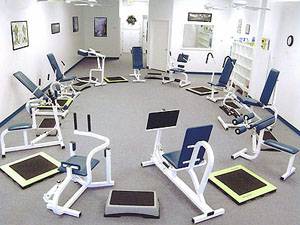
hydraulic exercise equipmentI was up early this morning, heading for the local Curves gym. It was my first time there, and, I’m almost embarrassed to admit, my first time trying any sort of gym workout since I was in Germany. There I tried to take advantage of the Nautilus machines at the U.S. Army post gym, but the rheuma was just too severe at the time. There wasn’t a single machine I could use without causing myself excruciating pain. So I gave that up.

I didn’t feel too bad about it. I got a decent amount of exercise anyway — I walked just about everywhere. We had a wire-haired dachshund, Max, who needed his walkies every morning and every evening — and more often on weekends. Nothing like a dog for motivation, right? And rather than drive and fight for parking when I needed to go downtown, I’d ride the bus and then walk and walk, doing my shopping. On Saturday mornings, if the weather allowed, I’d walk the 10 or so blocks to the little store where I bought my coffee, trying to converse with the proprieter in my truly awful German while she put the coffee beans through the grinder for me. Lots of laughter resulted. I walked to a big, nearby park at least once a week, and then walked all over it, following the wide footpaths through the forested grounds. There was a large pond — almost a lake — with ducks, geese and a pair of grouchy, dangerous and beautiful swans. There was the rose garden. The little boathouse where you could buy a cup of strong, delicious coffee and a slice of cake. The towns and cities in Germany, and the other parts of Europe I visited, were made for walking, built before cars came along.

And I walked during and in spite of bad flares in my feet, ankles and knees. Man, it hurt. I limped and gimped. When I was in basic training for the Air Force, way back in 1979, they taught us to march as the instructor counted cadence. After a while (and I learned my right from my left), it was easy. There was a sublime rhythm to marching. To my surprise, I liked it.

When I was walking along the sidewalks and roads in Germany, walking Max or to a bus stop or to a shop I wanted to visit, I used that training to help myself keep on going in spite of the pain each time I stepped on the flared foot or put my weight on the flared knee.  “Hup-two-three-four, hup-two-three-four …” over and over I’d mutter the words to myself, setting up a pace, a rhythm. Sometimes (OK, frequently) I’d sprinkle cuss words into the cadence. Doing that helped me vent my anger and frustration at my body, which was doing its best to keep me from moving, to make me miserable.
 
Today, here at home, I can’t just take a walk. The roads are narrow and twisty. There are no shoulders, just steep drop offs or ditches. Most of the roads aren’t very busy — we’re in a small mountain town — which is nice, but the locals are used to them and tend to drive fast, flying around curves. For a walker, it’s a fright a minute. So if I want to walk, first I have to get into my car and drive several miles to a walking trail. Or I can drive down into town and walk Main Street.

It’s not the same. I miss walking around the German city I lived in for six years. I miss the sidewalks. I miss all the other walkers, of all shapes and ages, because there, everyone walked. Footpower worked well. Here, not so much.

But back to this morning. Curves. I learned how to use each of the hydraulic exercise machines. It’s early evening now and the only part of me that hurts are my hands. I was able to do all the exercises. I enjoyed it. And yes, I had to drive to get there, but I guess I should either just accept that or move to a big city, like San Francisco or maybe New York City. There’d be busses. Places to walk. Other walkers.

I’ll be working out at Curves three times a week. I want to keep my joints moving as much as I can, and I figure the exercise can’t hurt my continuing program of weight-loss. I’ll get stronger, lighter, more flexible. It will be very good for me. Very good for my mind and my mood. And on the days that I have flares, I’ll just skip the machines that irritate my flared joints.

Wish me luck. I’m determined. Counting cadence and cussing a mile a minute.

Rain dance

Yesterday's fog heralded today's storm ...

Yesterday's fog heralded today's storm ...

It’s raining, it’s pouring,
The old man is snoring.
He went to bed and
bumped his head
And couldn’t get up
in the morning.

Water is falling from the gray sky here in the Sierra mountains of Northern California. I’m not an old man, I didn’t bump my head, and I got up this morning, but oh, I’m creaky. Someone find my oil can!

After three years of drought, the world around me is dry, dry, dry. But now the rain is here. It’s right on schedule. I couldn’t be happier.

The damp, negative-ion-charged air is refreshing. The wind that came with the storm is belling and jingling the wind chimes on the eaves. Rain spatters the windows, thrums on the roof. I can almost hear the earth sighing with relief.

While the shift in air pressure the change in the weather brought with it has made me twinge and ache, I don’t mind. That happens regardless of the weather, and I’ll tell you a little secret. I love rain. I love storms. Yesterday my daughter, her fiance and I covered the stacked firewood, purchased in June, with tarps to keep it dry. Matt filled the wood-ring next to the woodstove with seasoned, spicy-smelling almond-wood. And as soon as I get up enough gumption to dump last year’s ash-can and clean the old ash out of the stove (a chore I forgot all about!), I’ll start the first fire of the season. There’s something incredibly comforting about a crackling fire in the hearth. The warmth is like no other. The scent conjures images of hats and mittens, cold noses and hot cocoa.

I like wrapping my achy fingers around a cup of cocoa. It feels wonderful. I hope that this first, early storm of the season isn’t the last. Let it rain. Let it snow when the time comes. Let this be the fall and winter that finally breaks the long drought. Oh, I’m ready. I have my rice-and-lavender-filled hot packs. I have my rheuma-gloves. I have thick, warm socks. And through my window, open a crack to let in the fresh, rain-charged air, I can hear the tall pines all around the house whispering in the wind. If I close my eyes, I can hear the soft roar of the ocean surf in their voices.

Oh, yes. Let it rain.

Photo copyright Leslie Vandever 2009.

World Arthritis Day 2009

work_together_logo_animToday is World Arthritis Day. People with arthritis from around the world join together to make their voices heard on this day. The aims of World Arthritis Day are:
  • To raise awareness of arthritis in all its forms among the medical community, people with arthritis and the general public;
  • To influence public policy by making decision-makers aware of the burden of arthritis and the steps which can be taken to ease it;
  • To ensure all people with arthritis and their caregivers are aware of the vast support network available to them.

www.worldarthritisday.org

I have rheumatoid arthritis. It’s not a disease of the elderly, as is commonly thought. It can strike children, teenagers and young adults as well. I’ve had it for more than 20 years, and while modern medicine has come a long way in treating the disease and making it, for some, more bearable, there is still no cure. Please tell others about World Arthritis Day. Offer your concern, compassion and support to those who suffer with it all over the world. And perhaps, working together, we can find a cure.

Harvest time

Now that's a slew o'tomatoes. Envision spaghetti sauce ...

Now that's a slew o'tomatoes. Envision spaghetti sauce ...

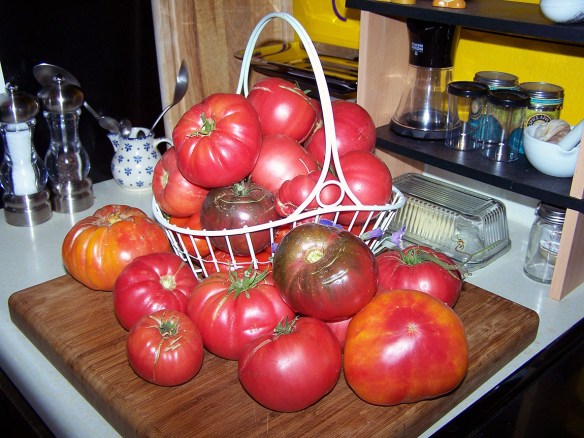
Decided to wander out to the vegetable garden this afternoon. Last time I was out there, about a week ago, there were two — count ‘em — two ripe tomatoes ready to pick off the thick, sprawling vines. The rest were all green. It hasn’t been the greatest summer for tomatoes; most of May and June were overcast and cool, so nothing much happened, garden-wise. By mid-July it was finally growing nicely, but many of the veggies we’d planted had died off. No eggplants, no red, yellow or orange bell peppers. Sigh. August got nice and hot. More growth, but no fruit. Same for most of September.

So you can imagine my surprise when I discovered RIPE TOMATOES everywhere. There were these gigantic heirloom toms and a whole slew of small romas (my favorites). I picked two basketsful and heh, here they are, ready to eat or make into spaghetti sauce immediately. I’m going to call my sweet next door neighbor and offer her as many as she’d like. Tommorow I’ll get busy making savory sauce to freeze.

And there are scads more tomatoes out there, nearly ready to pick. I figure by Tuesday I’ll have this many to work with again. It’s supposed to be chilly and rain buckets on Tuesday and Wednesday (yay!!). We sure need that rain. It’s time.

I also spent most of the afternoon out raking leaves and carting dry straw to the chicken pen and down beneath the red oak tree. The chickens like the straw for bedding and bugs; the stuff under the tree I spread out hoping to discourage foxtail weeds next spring. Now my wrists and hands are yelling at me, but my daughter Cary and almost-son-in-law, Matt,  and I will be going out again in a little bit to cover the firewood piles with tarps so the wood stays dry when the rain comes. Matt,  the love, has already brought a good load of sweet, dry firewood inside so we can stoke up the woodstove when it gets chilly and damp in a couple of days.

Then I’m making chicken soup. I love autumn.

Update: I changed my mind. I didn’t make chicken soup. I made fresh spaghetti sauce with four big chopped up tomatoes, a big handful of chopped pimiento olives, basil, oregano, garlic, a bit of salt and a couple of generous grinds of pepper. Spooned it over whole wheat spaghetti noodles cooked al dente and dusted shredded romano cheese over the top. Oh, my. yummmm.

Wise words

Rheumatoid Arthritis Guy has got to be the best bloggers about this disease I’ve read yet. His observations, his attitude, his humanity and empathy all work together to make his writing compelling, educational and — delightfully — humorous. Laughter is truly great medicine.

Today he’s talking about “disability” — what it used to mean to him and what it means to him now, after several years of living with rheuma. Here’s a taste:

When I was diagnosed with rheumatoid arthritis, I clashed against the label of “disability”. (Having just been diagnosed, this was not the only thing I was fighting against.) For all of the grief that I sometimes give others about comments suggesting that I am too young to have arthritis, I found myself doing the exact same thing to myself. “I am only in my 30’s…I am too young to have a disabling disease.” Silly me, as if disability had anything to do with age! So, along with many other aspects of my illness, I shelved any thoughts related to disability. My perception of a) who I was and b) what it meant to be disabled just did not match up in my head. (Never mind that I had completely lost the use of my left knee and was only able to walk short distances with the aid of my crutches.)

I was also diagnosed with rheuma when I was in my early 30s. I know exactly of which he speaks. Do hop over to his blog and read the rest. This is a young man with insight and wisdom beyond his years.