 I haven’t posted for a very long time, and I really do apologize. Now that the new year is well underway, no turning back, I’m going to do my best to post here a lot more often.
First, I have some really good news! I started Rituxan in November last year, after two, disappointing, 6-month-long trials each of Humira and Enbrel. Neither of those anti-TNF-alpha biologics had any effect on my rheumatoid disease. In fact, during that year my pain, fatigue, and frustration only increased.
But Rituxan! After about six weeks without any appreciable change, I started noticing that my hands and wrists, which have long been my worst RD and most frequent (read “constant”) symptoms for the last 10 years, weren’t hurting as much. At first, I barely believed it. After all,  flares come and go, and with the holidays behind me, I thought (pessimistically, yes) that the change was likely due to less stress. In addition, we finally started getting some consistent, normal rainy weather here in drought-stricken California. Rain arrives with low barometric pressure, and I’ve noticed that I generally have less pain and other symptoms when the barometer falls and bottoms out. The cooler temperatures don’t bother me much. So, not really daring to hope, I put the positive change in my pain/disability levels off to those two circumstances: less stress, and weather.
As January progressed, however, I just kept feeling better. It was subtle–I’d be going through my day when suddenly, I’d notice that my hands weren’t tender and twingy. Nor were my feet, which had been increasingly cranky over the last year. I was sleeping better, not waking up multiple times during the night because of pain as often, and my sludgy, sore stiffness in the mornings didn’t last quite as long.
Cool, right?
And then I started noticing that I simply felt better overall. Again, it was subtle, like turning a light on with a rheostat, changing it in small increments from very dim to bright enough to see and read without issue. I had a little more energy. I saw my new rheumatologist (my beloved old one transferred to another state in September last year) in early January. I told her, cautiously, that I was feeling better. She was pleased, and said that my response was right in line with other patients for whom Rituxan proved effective–six weeks to two months after infusion, on average.
Rituxan is a chemotherapy drug originally developed to combat leukemia and lymphoma. The drug contains a live human antibody that targets and destroys B-cells that have the CD20 antigen on their surface. These can provoke an autoimmune response in some people. The drug generally continues killing B-cells for four to six months after the two  infusions. The infusions, given two weeks apart, take about six hours each. Frankly, I prefer this method of delivery to self-injecting, even with an auto-pen. I’d gotten fairly used to doing it, but I was always uncomfortable and nervy, anticipating that heavy, stinging burn even when it didn’t come. I think that was really what I disliked the most about the injections: I couldn’t predict from week to week whether they’d hurt a tiny bit or a lot. And when the drugs did nothing in terms of relieving my symptoms, well…
I’m still taking my old, triple-therapy DMARDs, as welll: sulfasalazine, Plaquenil, and Arava. My rheumy has lowered the Plaquenil dose slightly, and says we’ll keep weaning off it slowly depending on how I do. I’d love it if I could take fewer RD drugs!
All this good news doesn’t mean I’m totally symptom-free. I still have occasional pain in my hands and feet, and my hip bursitis still raises its ugly head now and then. But these symptoms and comorbidities don’t stick around for long. Usually, they fade out within 24 hours or so. I think I can live with that.
A major reason I haven’t written much here on RheumaBlog is that I’m doing so much freelance writing elsewhere, both about RD and other health subjects. If you’re a real glutton for punishment, you can read about a year’s worth of my thoughts (written as Wren) about living with RD over at RheumatoidArthritis.net, an excellent, extremely dynamic website with a large and friendly patient community. (Another goal for this year: cross post these articles here, to RheumaBlog. I simply forget to do it. My bad.)
The other writers there include such brilliant bloggers as Carla, Mariah, and Andrew, and there are several others, as well. Their words and their writing are wonderful; each has a different take on the disease and offer positive ideas, encouragement, and education about living with it with hope, humor, and courage. I hope you’ll check them, and RheumatoidArthritis.net, out.
I’ve also attended several RD-and-health-blogger conferences and meet-ups over the last year or so, including Joint Decisions, HealteTalk, and most recently, RealtAlk RA.

Our first get-together at the Joint Decisions Summit in Boston in late 2014.

Joint Decisions in November 2015, Sausalito, CA

Me and Lisa Emrich at the Top of the Rock in NYC after the RealtAlkRA summit in January 2016.

JD 2015 Live Web Char Panel, Sausalito, CA
Sponsored by a few of the big pharmaceutical companies, they’ve given me and many other bloggers and patient advocates wonderful opportunities to meet each other face-to-face, make new acquaintances and friends, and widen our scope of knowledge about the diseases we battle. The goal? To better pass on our experiences and understanding to others.
I can barely put into words how honored I’ve been to be invited to participate in these amazing get-togethers. Over the last year I’ve learned so much–including how to Tweet, which is another reason I haven’t been posting to RheumaBlog much lately. I twitter every day, talking to so many fascinating people from all over the U.S. and the world, all of whom have rheumatoid disease or other chronic or chronic pain conditions. My world has expanded exponentially because of my travels over the last year and a half! I’m humbled and so grateful.
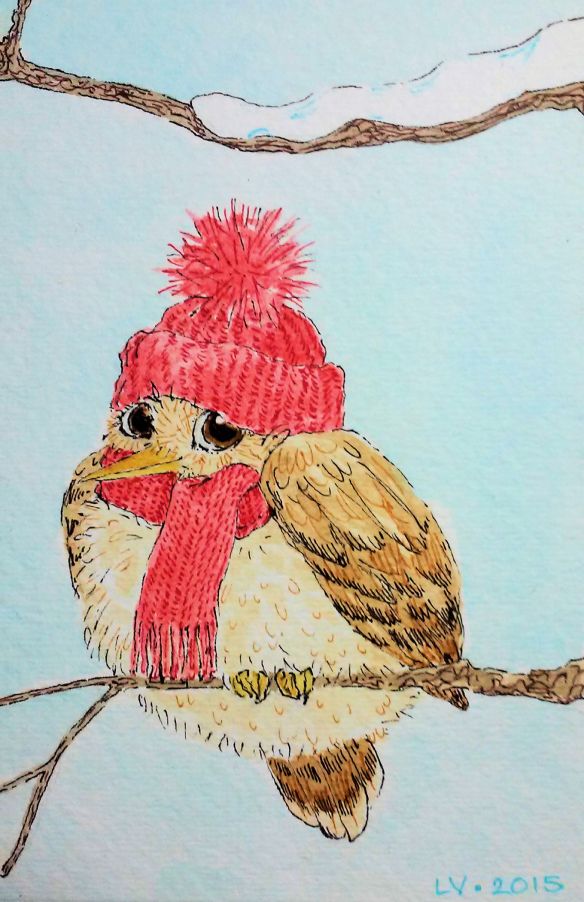
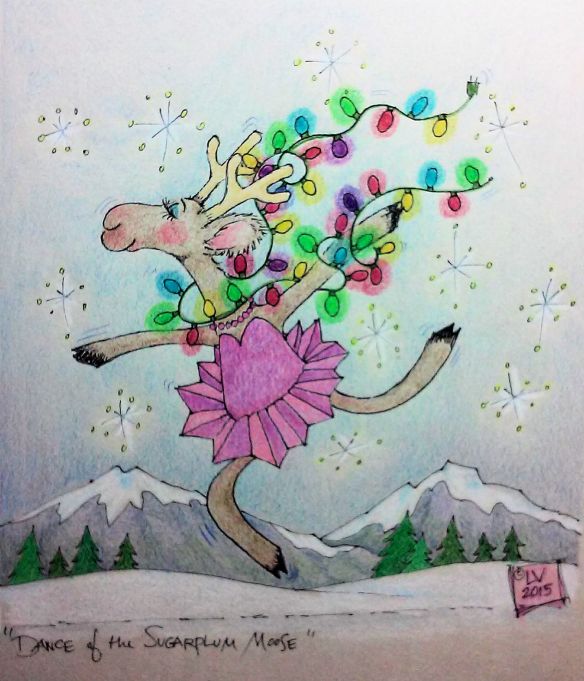
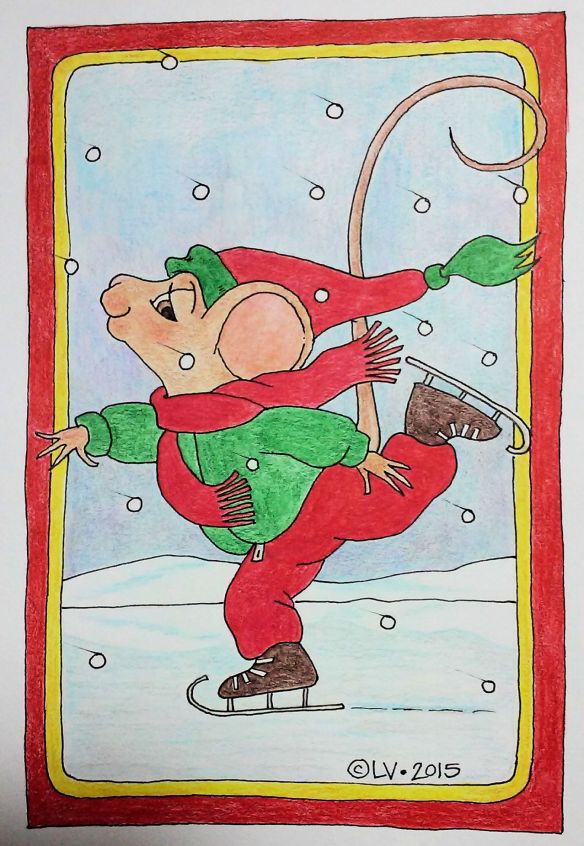
As I mentioned in a couple of previous posts, I’ve been doodling, drawing, and painting again after a decades-long hiaitus. Here, too, I can hardly describe how much joy this has  given me–and continues to give me. I’ve been participating in several casual illustration challenges within the Twitter illustration community, including #Inktober, #illo-advent, #AnimalAlphabet, and #ColourCollective. Participating is voluntary, but I’ve really enjoyed doing so as often as I can manage. Drawing and painting on a regular basis has
brought my old talent back to life and started honing old skills even as I learn some new ones. My biggest challenge at the moment is to learn how to do digital illustrations using

A small mouse, my first drawing with my new Intuos tablet & Painter software.
a tablet and drawing/painting software. It’s hard, but fascinating, and I’m determined to learn this new skill and get very, very good at it.
Finally, I’m still living with and caring for my mom, who I’m pleased to say has been feeling pretty good these last six months or so. We’ve settled nicely into our much smaller new home in the Sacramento suburbs, and we’re getting accustomed to living in this sprawling, busy, traffic-clogged place instead of the small, rural foothill community we were used to. There are good and bad things about both, but we’re focusing our attention on the good. For instance, shopping is so much easier now! Since that’s one of Mom’s favorite pastimes, that’s a Good Thing.
I’ll wrap this up now. Thanks for sticking with me in spite of my long blogging silence. I’ll be back soon!


 npox virus (varicella) remains in your body after the contagious rash and other symptoms are long gone. It mutates, nestles down somewhere in your body near a nice cozy bundle of nerve endings, and goes dormant. The commercials soberly show how painful and debilitating shingles can be.





 … But sometimes the rain isn’t physical. It isn’t wet, or deliciously cool, and it doesn’t tickle my cheeks or make playfully wide, stompable puddles. It’s more like a dreary downpour that just won’t stop, one that won’t allow the clouds to break up or the sun to peek through. The puddles this rain forms are chin-deep. It’s a soaking, cold greyness of the mind that can affect anyone, at any time, for any reason, and those of us with rheumatoid disease are very familiar with it.










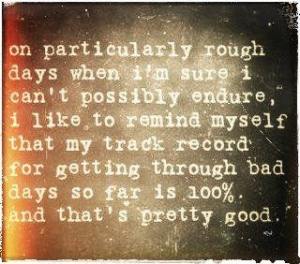 just learned of the #ChronicallyGrateful Challenge a few days ago. My Twitter friends Molly Shreiber(@mollyschreiber,
  you already know my answer: I look for the Gifts. Which means, basically, being mindful–being present in this moment right now–and noticing the beauties, both small and large, that the world offers us for free each and every day and each and every moment.
 me sigh and smile. After a few minutes of slowly flexing my hands within that warmth, I feel better in my head, even if my hands still hurt. I know that I can revisit this small therapy–this Gift–anytime; it only takes five minutes or so. Knowing that is soothing, too.
 around me. The Gifts emerge: a neighbor’s beautifully tended garden; two squirrels chasing each other and playing in the old Valley oak tree; a quick flight of six flashy, black-and-white magpies, cackling as they go.
 couple of Christmases back. Mom was delighted: cuddling into the throw conjured a happy memory–and she was instantly warmer at the same time. Doing this small thing for her took my mind off my painful hip last night and redirected my thoughts onto a pure positive. It was a win for both of us.



 RheumaBlog