About courage

One of my best friends — one who understands rheuma and who always listens when I need to vent — frequently tells me that I’m brave. That she admires my courage.Leonardohands

It embarrasses me a bit. It’s true that dealing with varying levels of pain on a daily basis takes a stiff upper lip.  It takes a certain determination, a sort of bulling on through the pain. I’m not sure that’s courage, however. And I sure don’t feel very brave most of the time.

Instead, I simply do because, honestly, what’s the alternative? Sitting around moping, hiding under my covers or letting my aprehension toward pain hold me immobile just isn’t doable. I don’t feel particularly special just because I endure rheuma’s persistent pain. That’s not bravery — it’s pragmatism. I have a life to live, and I intend to keep living it the best I can.

That said, perhaps “courage” does fit in there somewhere. This is an excellent post about rheuma and courage, and how the two can intertwine. Do read it. It’s worth a few minutes of your time. And take a look at the website it’s part of as well. It’s called “Creaky Joints.”  Cute.

Invisible? Maybe. Real? Absolutely.

When you have rheuma, it can hard to explain to others why you can’t just “hurry up” or “do” like anyone else. If you’re like me, you prefer to keep quiet about the pain you’re in – you don’t want people to think you’re a wimp, or a whiner, or that you’re angling for attention and sympathy.  Or maybe you just don’t want to have to launch into the whole complicated, mind-numbing explanation about your disease.EDTrail1

Again.

The trouble is that people usually can’t see rheumatoid arthritis. Those who have it generally don’t “look” disabled, even though the disease may eventually confine us wheelchairs or leave us bedbound and helpless. We hope that the cocktail of drugs we take each day will prevent that unwanted denouement – even as we hope they don’t prevent the proper functioning of our stomach, liver and kidneys. We dream that a cure will be found in our lifetimes, and that maybe it will happen in time to help us, too.

We’re pessimistic optimists.

Rheuma is an invisible disease. But we who have it frequently have to cope with the very real and varied disabilities that it causes. The inflammation and pain of RA often moves from joint to joint in our bodies. It’s if the disease is consciously malicious, going out of its way to conjure up new challenges for us to overcome.

Here’s an example: A few days ago, one of the metatarsal joints in my foot was painfully flared. I limped around all day like I’d broken several toes but didn’t have enough sense to go to a doctor. Yesterday it was my shoulder joint. The flare waited until late in the day to manifest, so when it was time for bed, I had a hell of a time getting my stretchy, pullover blouse off. Then had trouble sleeping because I couldn’t get comfortable. Today (and just about every day, if I’m honest) my hands are achy and twinge-y. When I went to hang a small fry pan on the pot rack after washing up my breakfastOverlookStorm mess this morning, just reaching up and fumbling the handle loop over the hook made me yelp, groan and, once I’d accomplished the task, cuss ferociously under my breath.

Rheumatoid arthritis pain is real. It can be, at times, absolutely excruciating. At other times it’s bearable, but it’s always exhausting. You have to move carefully. Slowly. You can’t just “do.” A flared joint is stiff. It “screams” when it’s forced to move. It won’t willingly bear weight. And there’s not much you can do about it but wait it out and take painkillers in the meantime.

Of course, painkillers constitute their own, exclusive little corner of hell.

But back to the “invisible” disease. When our daughters were young, my husband loved to take them hiking and fishing with him. Sometimes I went with them. If it was a “good” rheuma day, hey, no problem. I could tramp around and cast a lure with the best of them. But if it wasn’t, it meant bringing up the distant rear during the hike. I simply couldn’t walk fast enough to keep up. Each step – literally – hurt like a you-know-what. That I was walking at all – and even taking on a three- or four-mile hike in spite of my feet hurting like they’d been beaten with bamboo sticks all night – was a source of an odd and private pride for me.

After a while I’d fall so far behind that I was hiking alone, hoping to God that I didn’t trip and fall or twist an ankle, and that my family would notice my absence and maybe come find me if I did. Because I didn’t complain, they weren’t concerned about me. Once at our destination, the day would stretch out interminably. There was usually no place to sit down. I’d endure hours and hours of standing or gimping along the shore on my painful feet, casting for fish that, naturally, were totally uninterested in being caught and cooked for supper.

Still, I didn’t talk about how much I was hurting. I’d chosen to come along, so I did my best to smile and laugh. I really enjoyed being out in the wilds with my family. I enjoyed basking in the fresh air and bright sunshine, resting my office eyes on the pretty, natural surroundings. I’d spot flocks of Sandhill cranes passing high overhead, their weird calls finally reaching my ears like whispering ghosts. I’d watch great blue herons stalk tiny fish in the shallows (far more successful fishers than I could ever hope to be). I’d stare down the occasional herd of slow-moving cattle that wandered by.

And then there’d be the long, long hike home. I’d bring up the rear again.

Invisible illness. I remember one night in Germany when my hands were so painful that I couldn’t work the door lever to my bedroom. I could push it down with my elbow, but I couldn’t bear to pull it open once it was unlatched. The agony that little bit of pressure caused was simply more than I could bear. So I stood at the door and cried like a baby. Finally, I worked up the courage to take hold of it and pull. There was no choice. I had to go to the bathroom.

And taking care of that was another almost impossible obstacle.

I was fortunate enough to have the disease go into “remission” for a long time. While it was, I began to forget how painful my life had been before. I got used to being able to do what I wanted to do again. I backpacked. I canoed. I fished. I gardened. As a journalist, I covered local wildfires and kayak rodeos, bow-hunters and bears that had wandered into the suburbs. All of these required a lot of walking and sometimes, running. I did it. I even participated in whitewater rescue training with the local fire department, wetsuit and all.

Now the rheuma is back and steadily ramping up. This time, I’m speaking out when I hurt. I’m asking for help when I need it instead of suffering in silence. I’m researching the disease, learning all I can about it and talking with my rheumatologist, asking lots of questions, making him prove his stuff. Most of all, I’m learning to be my own advocate. I’m not whining. I’m not lazy. I’m sure not a wimp. Rheuma may be “invisible” to others, but it’s still disabling.

That’s a lonely, isolating condition to be in. Speaking up – and speaking out – is vital.

Posted in RA

Soup

My hands hurt. My fingers, when I try to use them to pick things up, feel like they’re coming apart. I grit my teeth and cuss, soft, beneath my breath.

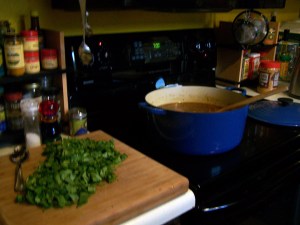
But I’ve promised my daughter and her fiance a steaming hot pot of my homemade Hungarian goulash tonight. It’s been fallish around here lately — cool, crisp, bright days and increasingly chilly nights. Soup that’s thick with vegetables, potatoes, bits of meat and spices, mopped up with chunks of warm, crusty bread, will warm our bones and make us smile. Since I’m the only one around here who knows how to make it, here I go, off to the kitchen, achy hands and all.

Yes. There is joy in this.

30 Things about my invisible illness you may not know

National Invisible Chronic Illness Awareness Week  was Sept. 14-18. I missed it. One of the things bloggers who suffer from chronic illnesses did was post their responses to the statements below in an attempt to help the “well” world understand that these illnesses are common and that the people who suffer with them are human beings, not dry statistics.

Rheumatoid arthritis is very poorly understood by the general public. It’s considered a disease of the aged. Because of advertisements for over-the-counter remedies and painkillers, people think that it’s an easily treated disease. It’s not. And it affects children and young adults as often as it does older people.

So I’ve decided that even though I missed National Invisible Chronic Illness Week when it happened, I’m going to participate now anyway. And hopefully, someone out there will have a better understanding of what RA is because of it.

1. The illness I live with is:  Rheumatoid Arthritis.SwellyHand2

2. I was diagnosed with it in the year: 1987.

3. But I had symptoms since: 1987. I was one of the lucky ones. My doctor diagnosed RA quickly. I didn’t have to suffer with it for years like a lot of people do before getting a diagnosis and treatment.

4. The biggest adjustment I’ve had to make is: accepting the frustrating disability RA causes periodically.

5. Most people assume: That RA is a disease mainly of the elderly and that it’s easily treated. It isn’t and it’s not.

6. The hardest part about mornings are: putting my feet on the floor and standing up. My feet ache like I’ve been standing on them all night, even though I haven’t. My joints, all over my body, are also stiff in the morning. It takes a while to warm everything up and get moving.

7. My favorite medical TV show is: ER. I loved the character development and the excellent writing.

8. A gadget I couldn’t live without is: my hands-free can opener. RA affects my hands nearly every day to some degree, and sometimes they hurt badly enough that I can’t grasp things like manual can openers or even a cup of coffee. I also love my indoor grill because it helps me cook easily and healthily.

9. The hardest part about nights are: When I’m suffering a flare in a joint, the pain keeps me awake. I can’t get comfortable. So I don’t feel rested when morning finally arrives.

10. Each day I take four sulfasalazine tablets, one half of an Arava tablet, folic acid, magnesium, and Tylenol. Sometimes I take several doses of tramadol, a synthetic opiate painkiller, too. And I take fish oil and other vitamins in the hopes that they’ll keep me healthier and help my joints.

11. Regarding alternative treatments I: have tried many. They don’t work for me. I think mainly the people who sell these things are making money off the suffering of others, which makes me angry.

12. If I had to choose between an invisible illness or visible I would choose: Neither one, frankly. Both types of illness are difficult to deal with in their own ways.

13. Regarding working and career: Working is often very hard, even though I love the work I do. It’s tough to concentrate when I’m in pain. And sometimes, when I’m having a flare it keeps me from moving around easily and sometimes, from moving at all. That doesn’t help the career in any way.

14. People would be surprised to know: How truly difficult it can be to live with excruciating, disabling pain day after day and how much determination and courage it takes to keep on doing – and smiling – in spite of it.

15. The hardest thing to accept about my new reality has been: that there is no cure for rheumatoid arthritis and that even though the drugs to treat it have improved, they mostly don’t deal with the pain. I will always have RA. I will always have to deal with it. And it will continue to disable me as time passes in spite of everything I try.

16. Something I never thought I could do with my illness that I did was: Going skiing in the Alps and hiking in the Desolation Wilderness. It hurt and I was slow, but I did it anyway, and I was proud of myself.

17. The commercials about my illness: give the general public the impression that RA is easily treatable and controlled by drugs. It’s true that some drugs may help some people, but it varies from person to person and often, the effects of the drug don’t last. In addition, they all come with potentially serious side effects, some of which are worse than the disease the drug is supposed to treat. This is very frustrating as it makes people think that those of us who have RA are just not trying hard enough or that we’re whiners.

18. Something I really miss doing since I was diagnosed is: getting through whole days without any kind of persistent, chronic pain.

19. It was really hard to have to give up: I’ve been fortunate in that I haven’t had to give up much because of RA. I can’t do as much as I used to, and often mundane tasks like grocery shopping are much, much harder than they should be. I’ve had to learn to pace myself and accept that sometimes, I just can’t do what I want to do.

20. A new hobby I have taken up since my diagnosis is: I write all the time. I have two blogs and I write fiction. None of it’s been published yet, but writing is one of the things I can do that distracts me from pain. It’s a good and beneficial thing.

21. If I could have one day of feeling normal again I would: go cross-country skiing or snowshoeing.

22. My illness has taught me: to be aware of the courage people with disabling illnesses and injuries have, and to be grateful for and mindful of the good things in my life.

23. Want to know a secret? One thing people say that gets under my skin is:  when people say that I should walk more, or exercise more, and then I’d feel all better. The assumption is that my pain and disability is my own fault. I also get frustrated when people say, “But you’re too young to have arthritis” or “Oh, I know how you feel. I hurt my knee the other day …” They don’t have any real idea how I feel.

24. But I love it when people: try to understand and show compassion and kindness. And I love it when they don’t act like I’m just whining for the attention it brings me. Honestly, why would anyone pretend to hurt all the time?

25. My favorite motto, scripture, quote that gets me through tough times is:  This too will pass.

26. When someone is diagnosed I’d like to tell them: Try to keep a positive attitude and don’t suffer in silence. Speak up about your illness and educate your loved ones and the people around you. Don’t feel guilty when you can’t do everything you used to, or when you have to say no to invitations because you’re hurting. You are your own best advocate. And be sure to find others to talk to, even if it’s just online, who also have RA and can understand what you’re going through and offer moral support. It helps a lot.

27. Something that has surprised me about living with an illness is: how tough I am. I keep going with pain that I know would floor my loved ones and friends if they could feel it. I’m also surprised sometimes at how I can still smile and have a sense of humor in spite of feeling terrible.

28. The nicest thing someone did for me when I wasn’t feeling well was: when a co-worker stopped by one day when I’d stayed home from work because of a flare. He asked if there was anything I needed from the store or if I’d like him to bring me a meal. I was very touched by his kindness.

29. I’m involved with Invisible Illness Week because: even though I’m a few weeks late, I think this is a good way to raise awareness of RA and other invisible but debilitating and disabling diseases. Having RA can be very lonely, and because most people don’t understand what it is and what it means to the person who suffers from it, there’s a lot of guilt that goes along with not being able to do as much as you want to. It’s frustrating and sometimes humiliating. So anything that makes people more aware is good.

30. The fact that you read this list makes me feel: good that you’d take the time to learn more about me and about rheumatoid arthritis. I hope you’ll pass it along to other people you know so they’ll understand more, too. People with RA are people just like you. We love, we laugh, we hurt, we weep, and we keep going, just like everyone else.

Posted in RA

Taking my life back

Kelly Young, who writes the excellent blog “Rheumatoid Arthritis Warrior” posted a piece about cooking with RA and invited her readers to send her their stories, their tips and their recipes.

The idea intrigued me. So I responded. But I also decided to post my response here:HomeCooking1

A little over a year ago I made some massive changes to my diet. Why? My annual check-up with my GP produced this sobering news: My blood sugar was high — I was borderline diabetic; and I was obese and getting obese-er. With a family history of heart disease, I was a living, breathing example of “metabolic syndrome,” the popular term for those of us who are over 50, live sedentary lives and overeat. We’re walking time-bombs. That we will be sick sooner than later is a given.

On top of that, the RA that had been in remission for about 10 years was back, mainly as stiffness and mild pain in my hands. I knew from past experience that it wouldn’t stay mild, that eventually I’d be facing disabling pain and deterioration of my joints.

My doctor suggested changing my diet, both to lose weight and bring my blood sugar under control. She hoped, as I did, that by doing this I’d avoid Type 2 Diabetes and avoid having to take drugs to control it. I’d also be doing my heart and my joints a great favor.

I walked out of her office truly scared. My weight gain had taken place over a period of about 15 years; I’d pretty much given up trying to keep it in check. Coming home tired from a full day of work each evening had made me a rather lazy cook, depending more often than not on processed foods out of boxes and cans, or fast foods picked up on the way home because these were quick and easy. And while I tried to avoid snacking, it was a losing proposition. I loved my crackers and chips too much to give them up in the evenings and loved the donuts and other goodies my co-workers (and I) brought to work most mornings to share.

Yet I knew, now, this was serious. I had to face it. I could become very ill. Diabetes could blind me or cause me to lose a limb. My weight, along with making me feel ugly and blob-like, could trigger a heart attack. It could cause, with the RA, terrible damage to my joints. I might end up in an extra-wide wheelchair or worse, bedbound and dependent upon others for everything in my life.

And scariest of all: I could die. It wouldn’t be a dignified, painless or gentle death, either.

So I started researching diets. Oh, I knew how to diet — I was a chronic and chronically defeated dieter. But this time I looked into nutrition. I looked into the ingredients in processed foods. I learned how the sugar I ate (in many forms in many products) destroyed my body’s ability to use it efficiently, and how that excess sugar in my blood was damaging my body. I learned that “giving up sugar”  would take more than just saying “no” to a couple of donuts with my coffee each morning.

I didn’t want to have to weigh everything I put into my mouth, or count calories obsessively. I didn’t want to feel like I was missing out on tasty foods, restricted to bland salads dressed with rice vinegar. Ugh. But after reading and learning, thinking hard about it all and readying myself for the change, I knew what to do.

Basically, I simplified the whole shebang.

Today, I eat only fresh chicken breasts, pork loin or fresh fish. If I eat red meat, it’s lean lamb stew meat, cooked into soup. I’ve given up “white” foods — white flour, white rice, white pasta, potatoes — in favor of whole grain flour in bread and pasta, and brown basmati rice. The reason? These “white” foods all turn into sugar once you eat them, making the body’s blood glucose level spike way up. Whole grains take a lot longer to digest, so they don’t cause that dangerous spike in blood glucose. They also provide excellent fiber. I eat beans of all kinds. And I eat a lot of fresh fruit and vegetables. The fruit I make into smoothies with yogurt and soy milk; the veggies are steamed, stir-fried or made into salads. Snacks consist of a piece of fruit or a handful of almonds or other nuts.

Yes, it seems restrictive, all written down like this. But what was amazing, to me, was how easy and quick cooking this way was. I use an indoor, electric grill for cooking the meats and fish. While they cook, I steam or wok the veggies, or perhaps make a salad. The other amazing thing was that I liked what I was eating. Grilled foods, subtly seasoned, are scrumptuous.

By making my portions smaller (except for veggies, which I eat as much as I want) and eating everything fresh, I started losing weight. It was slow. There were a lot of plateaus during which I lost nothing. But I kept with it, learning new ways of cooking and trying new recipes. I discovered Indian food, which I love. And a little over a year later, I weigh 50 pounds less.

My doctor is pleased with me. I am no longer a “metabolic syndrome” patient. My blood glucose levels are normal. I’ve lowered my risk of heart disease. And while I still have RA (and as I expected, it has slowly ramped up in terms of pain levels) I feel confident that at least, I’m keeping my weight from doing even more damage to the joints in my hips, knees, ankles and feet. I take Arava and sulfasalazine for the RA, see a rheumatologist every three months, and have my blood tested every six weeks. I’m a healthy work in progress.

And, to my surprise, I don’t miss donuts, candy bars, potato chips or crackers. If I want something sweet, I put Splenda in my coffee or I treat myself to an occasional “no sugar added” fudgesicle, which lets me enjoy the sublime taste of sweet milk chocolate while not causing my blood sugar to go through the roof.

I don’t eat out very often any more, it’s true. But guess what? I spend less money that way. And when I do go out for a meal (once a week or less) it’s a treat. I eat what I want for that one meal, and then I go back to my healthy food.  I take healthy leftovers from home for lunch rather than buying fast food. I spend less overall on groceries since I no longer buy snacks and processed foods in boxes, cans, and out of the freezer section. Goodbye, Hot Pockets and Red Baron!

As a result I feel much, much better. My clothes are smaller, they feel less restrictive, they’re prettier and I’m enjoying looking nice again. I can bend down and pick something up off the floor without cutting off my own breath. I have more energy. My self-esteem has improved greatly. And even showers take less time — I have less of me to wash!

Most of all, I feel as in control of my life as I can be. I know I can sustain this diet, this lifestyle, indefinitely, keeping my weight down while eating mindfully and with my own overall health at the top of my agenda. I don’t know what new problems RA will face me with in the future — only that it will. But at least I will be able to face them with a stronger, healthier body and a positive attitude. I’ve taken my dignity back.


I’m b-a-a-a-a-c-k …

I’m back from the family reunion. The aircraft I flew in didn’t crash on take-offs or landings, and they didn’t fall out of the sky. No wings tore off, no engines caught fire, no landing gear stuck. In fact, the flights to Tulsa, Oklahoma via Denver, Colorado and back to California were some of the gentlest I’ve ever been on. There were hardly even any turbulence bumps, and only a couple of those stomach-tickling little swoops in mid-air.

I think I’ve finally gotten over my life-long fear of flying. I have only one thing I can attribute this to: the iPod Touch my family gave me for Mother’s Day last May. Really. As soon as my daughter tapped my arm – the signal that we were well off the ground and at cruising altitude, so I could open my eyes and start breathing again – I stuck my iPod’s earbuds into my ears, cued up some soothing music and started playing Wordology. And then Solitaire. I even watched an episode of a PBS Mystery series I’d downloaded.

I wish I’d had an iPod when we flew to Europe and back in the late 80s and early 90s. I wouldn’t have needed those tranquilizers.

The reunion itself was a hoot, just like I expected. Mr. Wren’s family is pretty large. His dad had eight brothers and sisters, and they all went on to have large families themselves. Mr. Wren was the middle child of five. While not everyone in the extended family showed up at Feyote Park in Cleveland, Oklahoma for the reunion, 93 of them did. They ranged in age from just over a year to ninety years. And with the exception of us, the California branch, they all live within a hundred miles of each other in Oklahoma.

It was fun – and a little bit disconcerting – to have everyone I met that day share my last name. I got to meet a brother-in-law and three sisters-in-law that I hadn’t been able to before. I met nephews and nieces, and my first grand-nephew. There were so many names that I gave up trying to remember them all, but they were such nice people – they were smiling and friendly and as pleased as I was that we finally got to meet.

The weather in OK – hot, a bit humid, and breezy – made the rheuma nasty all four days I was there. Hands were constantly sore, and my right knee kept getting stiff and achy. But when a volleyball game was suggested, I surprised myself and joined it. I haven’t played volleyball since high school (when I was very good at it), and while I was less than competent playing it now, I did have a lot of fun. At first, I was berating myself, anticipating severely aching hands and wrists after the game, but that didn’t happen. Isn’t that something? I also tossed a Frisbee around with my nephew, my daughter and two of my sisters-in-law. We had a blast. I haven’t played with a Frisbee in years, either, but I did just fine. I even ran! And tripped and fell! And had to have a bunch of wicked little stickers plucked off the back of my shirt and jeans…

Since coming home, I’ve developed an itchy rash on my forehead next to my hairline, at my jaw line and along my neck. Annoying. I’m pretty sure it’s because of the sulfasalazine I’m taking for the rheuma. Photosensitivity is a pretty common side-effect. I knew that, but I wanted to play. I needed to play.

And that’s a new experience for me. I’m almost 53. Running, jumping, playing with balls and tossing Frisbees weren’t part of my repertoire any longer, and hadn’t been for many, many years. But my weekend in OK taught me something new and joyful – I CAN play, at least sometimes. I’ve lost a lot of weight during the last year, and I’m sure that’s one of the reasons I felt like I could – and I want more. I’m going to buy a Frisbee one of these days soon. My daughter and I plan to walk to the local park – and we’re going to play Frisbee. The idea just delights me. It will be good exercise and a great stress reliever for both of us.

Outahere … for a while

flying_c5Yep, once again I’m about to board a jet plane and zoom away for a while.
It’s funny, but for almost 15 years I managed to do all my traveling on the ground. I was in a car or on foot, period. Then in 2007 I flew to Washington, D.C. In 2008 I flew to New Mexico. And this year — tomorrow morning, in fact — I’m flying to Tulsa, Oklahoma. Haven’t been there since 1980.

A long time ago.

The occasion is my husband’s gigantic family reunion. It’s going to take place this coming Saturday and Sunday at a local park; there will be pickanicks, barbeques, frisbee games, a few scratch softball games and who knows what all else. Three-legged races for the kiddies?

Certainly, there will be a lot of meetings and greetings, coversations and laughter. I’ve met most members of Mr. Wren’s immediate family, of course, but I’m given to understand there will be many more people there bearing his Americanised, Dutch patrinomic name. People he hasn’t seen since he was a child; others he hasn’t seen since they were children.

Should be a hoot.

So, send courage through the ether at me one more time. I’m a huge coward when it comes to flying. I hate it. I spend the entire flight in a state of clenched-jawed non-movement, as if my moving will somehow cause the aircraft to fall out of the sky. It’s an old, old phobia, this one, connected directly to an irrational childhood fear of heights.

I’ll get through it, just as I have before. This time, I’ll be on the ground just long enough for my stomach to settle down, and then we’re flying back. On Monday. Early, early in the morning.

I’m taking my camera. We’re also visiting a place called “Woolaroc” on Friday, which I hear is rather wonderful. I’ll shoot some photos and, if they turn out OK, I’ll share them here.

Bye, gang. Back next week as long as the airliner doesn’t lose a wing or something. In which case, well, it’s been fun …

Under pressure

My hands are stiff, achy and swelly tonight. There was a time when I’d have had no idea what could have brought on any particular flare — they all seemed incredibly, frustratingly random.

Sometimes they are. That’s just how rheuma is.

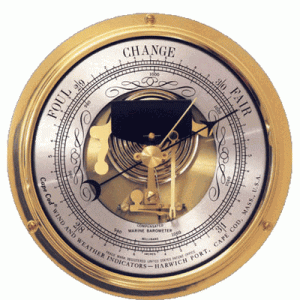
But I know why barometermy hands hurt.  The barometer is rising, and a high pressure area is settling in to the west. That’s all it takes.

Although tomorrow is fall equinox, I live in Northern California, and it’ll be hot outside for the next several days. Temperatures generally stay quite warm through mid-October around here, then it cools down slowly and gently after that. November and December finally feel sharp, crisp and autumny. If we’re lucky, the rains come. My home is in the Sierra mountains about 50 miles west of Lake Tahoe. Even at 3,200 feet above sea level, it usually doesn’t get truly cold until January.

I’d always heard that older people moved to warm, dry states because the higher temps and lower humidity helped their aches and pains. So it always puzzled me that it never seemed to matter what the weather was like when my joints flared. When I was first diagnosed with RA, I lived in Northern Germany, right at the edge of the North Sea. It was damp, windy, cold and rainy about nine months out of the year. Summers were pleasantly warm, never hot, and sometimes humid. The rheuma attacked all year ’round. I absolutely loved it there.

When I returned to California in the early 90s, I thought the warm, dry weather here might help. It didn’t. Wet and cold, warm and dry, it made no difference at all.

I lived here for five years before the RA finally went into remission all on its own. I wasn’t taking any medications for it; I’d gotten tired of popping pills and dealing with unpleasant, risky side effects while never getting any relief from the flares or the pain. I’d given up. I was living with it.

… More to come …

Rheuma semantics

I have rheumatoid arthritis.

I’ve had it for 22 years. Our relationship has never been friendly.

On some blogs about this disease people state “I take X for my arthritis,” or “I couldn’t go to the party because my arthritis flared up.”

There were so many statements like this, on so many blogs, that it started to bother me. “My arthritis is worse in humid weather.” “It’s hard to explain my arthritis to others.”

What bothers me is not what medications the writers are taking for the disease, or what it does to limit their lives, or how it’s worse at one time than another, or even how difficult the disease is to understand and explain. All of those things are part of having rheumatoid arthritis. I can identify and empathize with each one.

What I can’t figure is the “my” part.

Rheumatoid arthritis is a disease of the body’s autoimmune system, which for some reason sets up a continuous attack against its own tissues, treating them as if they were a foreign entities that must be destroyed. Rheumatoid arthritis causes the synovium, a sort of fluid-filled capsule between the joints, to become inflamed, which makes the joints painful – often excruciatingly so. Over time, this constant attack on the joints causes them to distort or freeze up. The disease eventually disables and cripples its victims. Sometimes it does it fast. Other times it can take decades.

Rheumatoid arthritis can attack other organs in the body, too. It can affect the lungs, the heart, the circulatory system and the eyes. It can make the sufferer feel as if they have the flu all the time. It can make them feel worn out, fatigued for no good reason. It affects each individual differently, so it’s very difficult to treat. A drug that works for one person won’t necessarily work for another.

And the worst thing is that rheumatoid arthritis is incurable.

So where do semantics fit in with all this?

Well, I have it, but damn it, rheumatoid arthritis is not “mine.” I don’t own rheuma and I don’t want to. It’s a malevolent stranger, a sneaking dark enemy that’s attacking me. It’s a disease I must fight against and even learn to cope with, but it sure as hell isn’t “mine.”

I believe the words we choose to use in our thinking conversations with ourselves and in our everyday conversations with others have a profound effect on us. If I start talking about the disease I’m afflicted with as “mine,” then I believe that I’ve accepted it. That I’ve learned not only to cope with it but to live with it, even to nurture it. After a while it really is “my” arthritis. Like “my” cat or “my” shoes, “my” house or “my” daughter. It’s as if it’s an old, familiar but not particularly pleasant friend.

So I fight against using those words. Rheuma is not my friend, will never be my friend.

It’s out to stop me from moving. To stop me from cooking, or sweeping the floor, or driving to work. It’s determined to make me sit still and suffer, not daring to move any more that I must. It means to keep me from playing, from sleeping, from making love. Ultimately, it’s out to cripple me and someday, to kill me.

Why in the world would anyone want to accept that? To own it? To nurture it? Rheuma is absolutely not “mine.” I will not claim it.

But I will fight it.

As in any war, I win some battles and lose others. There are times when I have to retreat, wounded, and take the time necessary to recover my strength, my courage and my will to go on.

I’ve been lucky. It retreated – went into remission – for about ten years. Or at least I thought it did, since I was no longer hurting every day. My life went back to normal. I could walk without pain. I could open doors without pain. I could sleep. I went hiking, started gardening, went camping and fishing. I worked. And oh, I was relieved and thankful, but ever mindful of the fact that there was no reason rheuma couldn’t come back anytime and ambush me, just like it did in the beginning.

I was wrong, though. It wasn’t gone. It was still in my body, working slowly and quietly to undermine my foundations. And about four years ago, it began attacking openly again.

Today I fight rheumatoid arthritis every day again, but this time, I have a variety of weapons. I have medications, I eat mindfully, I get plenty of sleep during the lulls between battles, I drink lots of water. I’ve lost nearly 50 pounds and I’m keeping it off; to me, that’s like taking and holding a major strategic city. I’m working on losing another 20 pounds. When I reach that goal, I’ll be at the optimum weight for a woman of my height and build. Why do it? Less stress on my joints. Less stress on my body, period. I’m stronger. It’s like armor.

This blog is about my battle with rheumatoid arthritis. At the moment, I’m writing it for myself, mainly, but if you’ve found me and you’ve read this far, I’ll be delighted if what I learn and write about helps you as well.

We can’t cure rheumatoid arthritis. But we sure as hell don’t have to surrender to it.