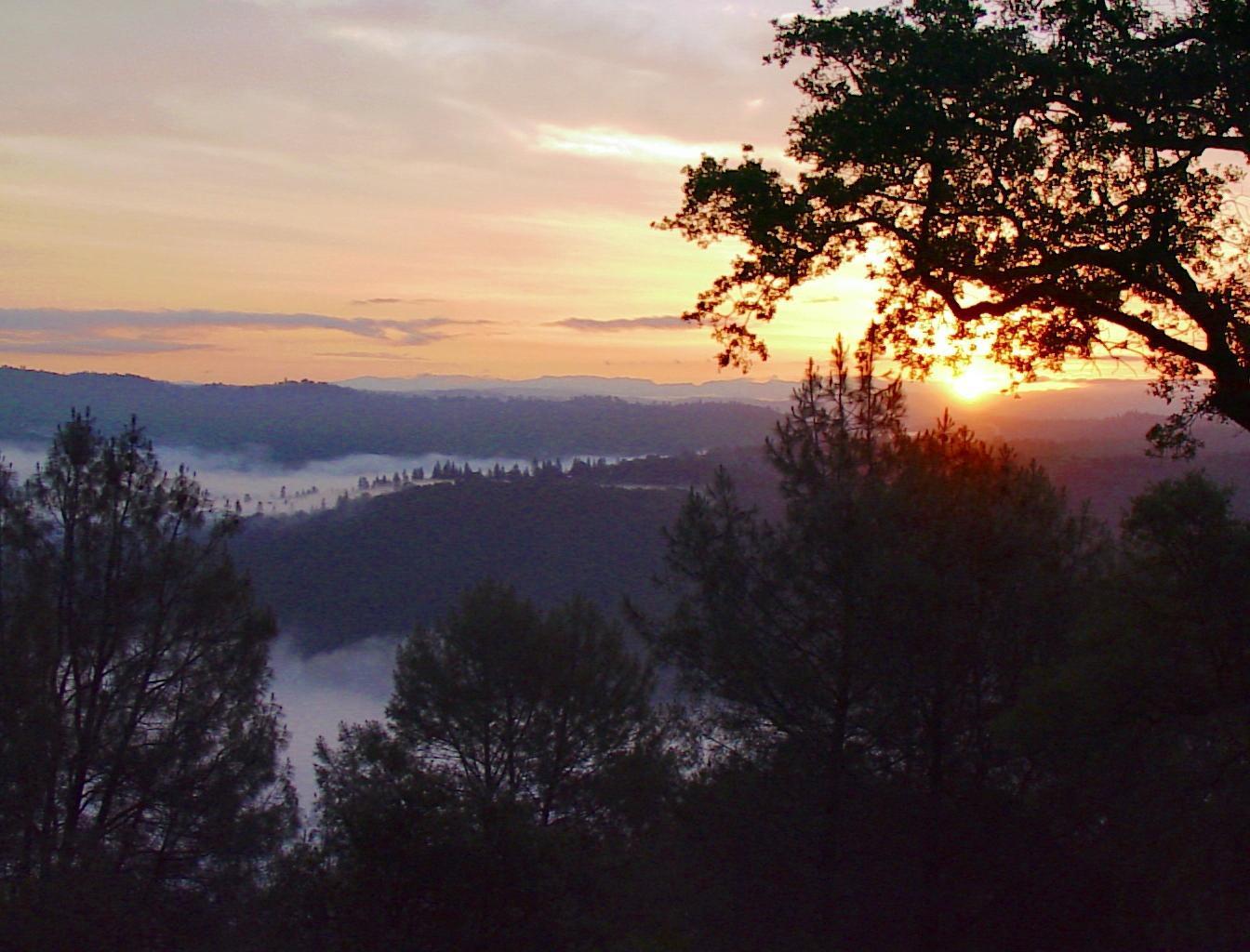
Big day

Oh arrrrghgh.

Hips and hands hurt. Company coming soon. Cary’s 29th birthday. (How old does that make me??)

So I’m making lasagna and salad, root beer floats for dessert (the first and last are her favorites; the middle one is for my conscience.) Just got the carpets vacuumed, things dusted and neatened, and yes, I have help today. Cary and Matt are pitching in like troopers. Almost-grandson Phoenix wound the cord back onto the vacuum for me with his nice, new 11-year-old hands and kept Shadow and Finny occupied.

Life is good. Wish me luck.

bursitis update …

First, a heartfelt thank-you to everyone who commented on my post, “spoke too soon.” It’s really great to have such a kind circle of friends. I can’t tell you how much I appreciate your compassion, encouragement and advice.

As of today, the hip bursitis is much better than it was, though it’s still there. I did a little more reading up about the condition and started icing (I’m already taking diclofenac, so the meds end of treatment is covered), and that’s helped to ease the inflammation. I’ve also decided to discard the tortuous tennis-ball cure. It’s just too painful, and after trying it a couple more times without positive results, I feel I can toss it without shame.

As for steroid injections, well, I’m not going there yet. Rationally, I understand that they can make the pain go away. Irrationally, the idea of an injection into that already massively painful area gives me the holy heebie-jeebies.
Translation: Cluck-cluck-cluck — I’m a big chicken.
My other hesitation regarding injections is that, since I get my medical care through the VA, my only hope for immediate treatment would be a visit to the VA ER. While my few experiences there (because of the the dog bite) have been good, I’d rather not make use of the ER unless I’m in such severe pain there’s really no other option. Hip bursitis is bloody painful, but my life is not in danger; it really isn’t an emergency. And short of a steroid injection, I’m already doing all that can be done to relieve the bursitis on my own.
RA Superb*tch pointed out in her wonderfully dry, no-nonsense way that my bursitis is actually caused by my rheumatoid arthritis, so treating it directly related to getting my RA under better control. I honestly hadn’t made that connection at all; I was thinking of the two conditions as completely separate. Sometimes I can be incredibly dense. (Thanks for the heads-up, SB!)
And she’s right, of course. So, when I see my rheumatologist in July, I’m going to remind him that we were going to start me on plaquenil. (With all the chaos caused by my dog-bit hand and my freaky high blood pressure on the day of my appointment in May, we both forgot all about starting the new med. I only remembered it several days later.)
With luck, adding a third DMARD to the mix will help both my RA and this nasty bursitis. In the meantime, I’ll keep icing as needed, keep taking the NSAID I’m already on, do the stretching and strengthening exercises I’ve been taught, and give Shadow his tennis ball back, which will make us both happy.
And I’ll continue to be grateful for all of you, my friends. You’re the best.

Fessin’ up …

A couple of nights ago I was at the kitchen sink, a big artichoke from the garden in one hand and a pair of kitchen shears in the other, cutting the pointy tips off the ends of the artichoke’s petals in preparation for steaming. There was a plastic bag full of them, waiting for my shears.

And I was angry.

I was angry because I was doing this chore myself, even though Mr Wren had promised me he would do it. I was angry because my hands were swollen, twinging and aching as I wielded the scissors and the vegetables, and because I had to run lukewarm water for rinsing since cold water hurts my hands too much. I was angry because only a few days ago I felt so good, and now, along with a new flare of bursitis in my hips, my bloody hands were back to their old tricks. I was angry because the kitchen was too warm after a day in the high 80s and there was nothing I could do about it. I was angry because I had to keep telling Shadow to get out of the kitchen, over and over again.

But mostly, I was angry at myself for being angry over things that were so trivial.

I have a confession to make. After reading Kelly’s post about RA and anger, and then Kris’s short post referring and commenting on Kelly’s, I had a minor epiphany. I’d commented on Kris’s post that I don’t get angry, I get frustrated. That I find anger useless, basically, and I don’t like directing my frustration at others. I do let it vent, though, usually in short bursts of blue language.

Or by gritting my teeth as I snip the pointy petal tips off artichokes.

So what was the epiphany?

I realized that I do get angry. Not just politely frustrated, but seriously angry. I had to acknowledge it as I worked on those artichokes.

One of Kelly’s points was about articles in the media that seek to blame RA pain on things like repressed anger. Or articles that indicate that people with RA have lower pain thresholds than people without it. This sort of thing is so useless – and worse, it creates stereotypes that can actually harm people who have RA. When people are told, by seemingly reputable sources, that women diagnosed with RA not only cause their own pain by repressing their anger, and are weak and wimpy on top of it, it hurts. And because some otherwise good doctors are also influenced by this sort of BS, many of us are given the runaround when it comes to diagnosing the disease and getting adequate treatment and pain relief strategies for it.

I can’t deny that repressed anger creates inner stress and angst. Or that stress, endured without some sort of outlet, can certainly make a flare seem a lot worse (if not actually make it that way). It’s even possible, I suppose, that repressed emotion can trigger a flare, though I’m not convinced of that. I can be happy as a bluebird and flare up. Go figure.

And I also know that different individuals perceive and experience pain in different ways. I know for a fact that I can endure a lot of pain before I break down. I’m quite experienced with it, and I know the difference for me between light pain and heavy pain. The thing is, that perception is one of the main problems that doctors face when trying to treat a patient’s pain – they can’t accurately measure the amount of pain their patient is feeling. They have to take us at face value.

This would be fine, except not all patients are being honest about their pain, and doctors are rightfully wary about prescribing narcotics without being sure. Not only might they be initiating or feeding an addiction (which will only get worse with time) by prescribing narcotics, they could be an unwitting party to the black market in prescription painkillers. Being “easy” could cause them to lose their license to practice medicine.

That’s another issue, and a big one. Unfortunately, there’s no easy answer, but articles that push these erroneous theories about women who have RA are both unfair and harmful. They need to be debunked.

Anyway, yes. I do get angry sometimes about having rheumatoid arthritis, and now, bursitis. It manifests in me mostly as frustration, and because I’m a low-key type of person, I generally blow that off and move on. Life is too short, I’ve always figured, to waste on being angry about something I can’t change. Anger makes me focus too much on the moment’s disability and pain. It makes me feel sorry for myself, which I hate. It makes me feel angry at my family – and it’s not their fault I’m hurting.

The epiphany of the other night did, however, allow me to look more closely at why I was angry and what I can change, myself, to avoid it in the future.

First and foremost, I can be more assertive. I can hold people to their promises rather than picking up the slack without a word. It wasn’t Mr Wren’s fault that my hands and hips were hurting me, but when he wasn’t available to prepare those artichokes he wanted for dinner, I shouldn’t have done the chore myself. Instead, I should have told him, later, that the reason we weren’t having his artichokes for supper tonight was that he hadn’t prepped them as he’d promised.

Because if I think about it, that was really the source of my anger that evening. The rest of the things I felt angry about – my physical pain, my disappointment that it had returned so quickly, the pesky dog, the cold water that hurt my fingers, the hot, stuffy kitchen – all those other frustrations grew out of it like the tendrils of a noxious weed.

That sort of thing does me no good. By the time supper was on the table, I’d let it all go, vented bit-by-bit in dark, muttered cussing and banging things around a little more than necessary. But for that thirty minutes or so at the kitchen sink, I was in a deep funk, furious at my lot in life, acutely aware of each twinge in my hands, of my aching hips, of my “misfortune,” and of the thoughtlessness of my loved ones. I absolutely wallowed in it.  And if I’m honest, I have to admit that my anger colored the rest of the evening even though I’d thought I’d dropped it. Later on I felt blue. I didn’t enjoy the softness of the summer night, or go outside and look at the stars while I listened to the cricket songs. I forgot to laugh. I forgot how to look for the gifts.

So I’m working on this issue. It may be natural to get angry over things we can’t help that hurt us, but it’s not natural, or healthy, to aid and abet it. I’ll be speaking up for myself more often. Thanks, Kris and Kelly.

Spoke too soon

Naturally, within 24 hours of hooting like a fool in public about my wondrous lack of rheuma pain, I began hurting.

Wouldn’t you know.

I’m not religious, but the words “God is not mocked!” come immediately to mind (A leftover, perhaps, of many wriggly Sundays spent in church with my cousins when I was small. Or maybe it was Charlton Heston in The Ten Commandments who said that, and it stuck. Wait. Was it Spartacus? Did Heston play Spartacus? Naw, Kirk Douglas was Spartacus.)

Never mind. Because if there’s really an all-powerful, kindly, loving Supreme Being in charge of Everything in the Universe (including little ol’ me), why would He/She/It be so petty and thin-skinned as to punish me for being happy about not hurting? Do I deserve being zapped for the sin of pride? Hmmm. I can almost hear Her/Him/It: “You think you’re so smart? Well, try a little of this!”

Nah. I think I was simply mistaken. I’d rather not believe in a God who acts like a spoiled 12-year-old when He/She/It gets Her/His/It’s nose out of joint. We’ll just move on.

There is good news. (This would not be a bona fide Wren post if there wasn’t a silver lining, right?) It’s not rheuma pain I’m feeling. It’s that danged bursitis.

Yep. Both hips. It started as a little twinge now and then when I walked. I was determined to ignore it. No, I told myself, that’s not real pain. That’s just a little poke. Nothing to see here, move along! So you just sat on your fat arse for too long, that’s all. Naturally you’d feel like someone put gravel in your hip joints. Shoot, that’s nothing but a little stiffness and … OK, pain. There. I said it. But it’s hardly any. And even if it is actual pain, it won’t last. In fact, as soon as I get distracted by something else (it helps to have the attention span of a crow in a jewelry box. Oooh shiny!) I won’t even feel it anymore. See? What pain? Ouch. Dang … (rubs hip with fingers) …

Of course the little twinge turned into a big one before long, and as of this morning, both hip-joints ache when I’m sitting or laying down, and howl at me when I stand up and walk around. I was convinced for so long that this was rheuma, but no. Both my rheumatologist and my regular doc say it’s bursitis. Fine. Be that way.

So I pulled out the sheet of exercises my regular doctor gave me when I last saw her, the ones that are supposed to help get rid of inflammation in the bursae (which I promptly filed away and did not do because I wasn’t hurting at the time. Smart, right?)

First, I got down on the floor and stretched out on my back. You’re supposed to be on a hard surface. I did the simple stretching exercises (only a little difficult to do while the local Schnottie licks your face and bounces on your stomach, totally delighted with this new game).

Well, that wasn’t too bad. Emboldened, I slipped out to the living room and stole Shadow’s tennis ball. He hadn’t been chewing on it recently, so it wasn’t wet and slimy. Just a little … crusty. No problem, I’m wearing an old t-shirt and jeans today, and I’m not expecting a visit from President Obama tonight. As my daughter would say, “It’s all good.”

I looked at the instructions. “While on your side, place the tennis ball between the tender point on your hip and the floor and relax your full weight onto it. Remain in that position until the pain stops.”

When my cool, hippy-dippy VA primary care doc explained this exercise to me a few weeks ago, I winced just thinking about it. She’d only just pressed two stiff fingers into the tender point on my hip, causing me to jerk and yelp. If she could cause that much instantaneous pain just by pressing that spot for a second, I could only imagine what doing this … exercise … would feel like.

She said it would hurt. But she also said it would help.

So I got down on my side. While Finny wiggled and bounced and barked and tried to take it away from me, I put the tennis ball between my hip and the floor, right at that tender place. I steeled myself and relaxed my weight onto it.

“Oh, holy @*#!”

I mean, !*#@! that hurts! Imagine, if you will, a blunt iron railroad spike digging mercilessly into your hip joint. Imagine just letting it. Then imagine staying in that position until the steel spike doesn’t hurt anymore. When is that? When you pass out from the agony?

I managed about 20 seconds on my right hip. That is not long enough, apparently, for the pain to go away, because it didn’t. In fact, it intensified until I was turning the air blue. I have to admit I chickened out on the left hip.

I’m not beaten, though. The tennis ball is right here on my desk, still crusty with dried Shadow slobber. I think it’s laughing at me. And my hips continue to ache. So I’m going to try again in a little while. You know, once the trauma-memory fades a bit and the tramadol kicks in.

Remind me not to brag about being pain-free again, OK?

Harmony

For some of us, a sudden season of comfort has arrived, out-of-the-blue, unexpected, a daily, even hourly surprise.

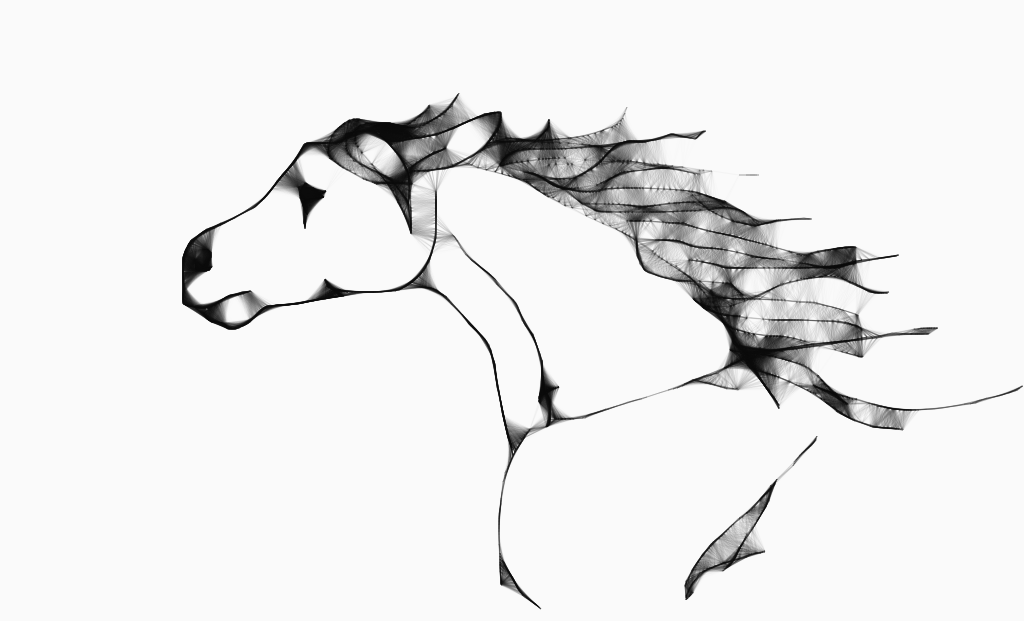
I drew this using the free, online software drawing application called "Harmony." It's fun! You can find it at http://mrdoob.com/projects/harmony. Click picture to embiggen.

Cathy, Terry and Megan are all enjoying a holiday from serious pain these days. Others are, too. I am. It’s wonderful, but …

But? How in the world could I question an extended break from rheuma pain? Isn’t this what we all dream about? Shouldn’t I be thankful? Why do I need to whistle a little doubt into this delightful interlude?

But I am thankful. Look at me! I can move! I can pick up a heavy pan with just one hand and move it confidently from stove to sink! I hardly think about it. I roll out of bed in the morning and hit the floor running, no laying there for a while working out how stiff I am or what parts of me are too sore to move just yet. In the shower I raise my arms smoothly over my head and scrub shampoo into my hair with fingers that don’t twinge and ache. (I’d sing, but freedom from pain doesn’t mean I can suddenly carry a tune. I’m not expecting miracles, for goodness sakes.) I dress, do chores and walk freely, easily, my body moving as it was made to move. How very strange. Hips. Knees. Ankles. Toes. No hesitancy, no caution necessary.

Painkillers? I don’t need no stinkin’ painkillers! No Tylenol, no Tramadol, no Vicodin. The little bottles sit untouched in my medicine cabinet, hoping to grow cobwebs.

I whisper, “This is good.”

Sure, I’m taking my other rheuma drugs, the ones that “slow” the disease’s progression and “reduce” inflammation. But in the past, taking them didn’t erase stiffness, pain or fatigue, which meant that the rheuma was still active, my joints still inflamed and reacting to the insult. I was bummed. Still, my doctor assured me that in spite of my sore hands and wrists, my blood tests showed that these powerful drugs were doing the job promised. Good sulfasalazine. Good Arava. Never mind the hair loss or the lack of a good defense against infection. Minor annoyances, worth the drop in my sedimentation rate.

My doc is on my side. I have to believe him. He’s my strongest ally – perhaps my only ally – in my forever battle against the rheuma-dragon.

And now today, yesterday, the day before. No pain. The mind boggles.

Another of my Harmony drawings, using the mouse as a pencil. I'm hooked.

Deep down, I know why I distrust this sudden, if positive, change. It’s because there’s a word I want so much to use – remission – but I’m afraid to use it. Because of my past experience, for me remission means no RA symptoms for an extended – really extended – period of time. Not days. Not weeks. Not even months. No, for me, remission means years. Many years of life without any kind of rheuma pain, mild, moderate or severe. It means being able to say “zero” to the pain-scale question when the nurse calls me in for my pre-appointment assessment. It means living, moving, being, without pain.

I’m afraid of the word because I know that remission is exceedingly rare in rheumatoid arthritis, even though our doctors like to use the word as the proverbial carrot on a stick. I’m afraid because I once experienced a very long remission – so long that I almost forgot I had RA – only to have it fall apart as the dragon woke suddenly, stretched, discovered he was ravenously hungry and started attacking and biting me again.

Remission? I’d rather have a cure, if you don’t mind.

But you know what? I’m going to shut up. I might not believe in remission any more than I believe in the Tooth Fairy, but I’m not going to complain about my current lack of rheuma pain. I’d rather celebrate it, enjoy every minute that I can get that comes without pain. I know it will be back, probably sooner rather than later, but I’ll deal with that when it comes. For the moment, the dragon is slumbering somewhere deep inside me. I’ll whisper so as not to wake him as I delight in the little things, like making my bed without grimacing, without muttering “ow!” and bluer words beneath my breath as I tug up the sheets. Like enjoying how it feels to walk on the smooth soles of my feet, feet that suddenly have no sharp gravel in them, no throbbing pain with each step.

I can’t help but wonder why the pain is gone. Is it the weather, which is finally becoming summer-like as the Solstice approaches? We’ve had a nice little run of sunny and mostly-sunny days here, with temps in the mid-70s and 80s. No drastic barometric swings, no chilly rain or oppressive heat. Just nice. Sort of like remission…

I’m in good mood. I’m happy for my friends, here in the RA blogosphere, who are also free of debilitating pain at the moment. I hope we all get a good, long holiday. And I hope that those of you who are still battling your dragons minute-to-minute will also get a break real soon. A nice, long breather. Time to rest and recoup. Time to laugh out of joy, not just to cover the pain and keep up the tough image to family and friends.

Just simple, pain-free time. I think we deserve it.

Approaching milestones

If I shed eight more pounds, I’ll weigh exactly what I did the day after my daughter was born almost 29 years ago.

This has become a significant milestone for me all these years later.

I weighed 130 pounds when I got pregnant. My doctor told me that I should try not to gain more than 25 pounds during the pregnancy, so I was careful during those nine months about what I ate. Nevertheless, inn the end I gained 30. (Those cravings! I loved eating cottage cheese as a dip for Fritos at lunchtime every day …!)

After giving birth, I perceived myself as gargantuan. I was mortified at the extra weight I was still carrying around (somehow, having a 6 lb., 3 oz. infant didn’t melt all that excess away! Wahhh!), so I started being very careful about what I was eating. The motivation to do so went beyond vanity: I was in the Air Force at the time and had to drop that weight to avoid being stuck on what was called (by those unfortunate enough to find themselves on it after the annual weigh-in and fitness tests) the “Fat Boy” program. If you got put on it, you were weighed monthly, vigorously counseled on nutrition and weight loss and, if you didn’t show a drop in poundage each month, put on a mandatory exercise program as well.

That involved daily running and calisthenics comparable to boot camp.

Well, there was no “Fat Boy” program for this girl. In the end, I lost the extra weight and got back to 130 pounds, 10 below AF standards for my height and build. It took me nine long months – exactly the amount of time it had taken me to gain. I was pretty pleased.

So. Here’s what I’m looking at: Eight pounds will bring me down to 160, my top weight all those years ago. Then, I’ll drop 30 more to weigh the same as I did when I was 26 years old.

Yes, I know I’m 29 years older now. I know my body has changed over the years. My metabolism has slowed. I have osteopenia and I’m post-menopausal. I have rheumatoid arthritis, which can put a real damper on regular exercise. Give me a few more minutes and I can come up with many more reasons that I can’t do this now.

But I know better, don’t I.

I know a lot more about proper nutrition and how weight loss works than I did when I was 26. I’m a lot smarter. Wiser. Frankly, I have more will-power now and more patience. And I cannot tell you what a huge triumph reaching that goal will be for me.

So I’ll give myself 10 months, rather than the nine it took back then since I need to lose 38 pounds rather than 30. I think that’s realistic: it works out to 3.8 pounds to lose each month. If it happens faster than that, I’ll be delighted, but (keeping my head out of the clouds) the slower loss will be healthier and, as an added benefit, more permanent. And as I shed that weight I’ll be reinforcing the healthy eating lifestyle that will allow me to maintain that lower weight in the end.

There are plenty of benefits to weighing 130 vs 168, just as I’ve seen plenty of benefits to weighing 168 vs my heaviest weight of 220 in 2005. I can move much more easily. I don’t tire out so fast doing everyday things like walking up my long, steep driveway, pushing a vacuum cleaner or even standing at the kitchen counter chopping vegetables. I can lean down and tie my shoes without cutting my own breath off. (!) I can get out of bed easier in the morning, even when I’m stiff from rheuma. I wear a much smaller clothing size and have been able to donate all my ugly, hated “fat clothes” to the local hospice thrift store. I can walk two miles without feeling like I’ve walked 10. My blood pressure is good. I have ankles rather than cankles. There’s a lot more room on my lap these days for my small beasties. PIB and Finny both like snoozing there in the evening. They have to take turns, though.

And this is a biggie: If losing 52 pounds has helped save my hip, knee, ankle and foot joints from increased stress over the last 18 months, then imagine what losing 38 more will do for them? As far as RA and hip bursitis is concerned, this can be nothing but good.

I’m on my own “Fat Boy” program – and you know, I like it.

Since you asked …

Since you asked (and because he’s such a lovely young thing) here’s a photo of Shadow, our new family member. He’s a black Labrador retriever, about 15 months old. He’s gentle, friendly to a fault and surprisingly quiet-natured for a Lab, even
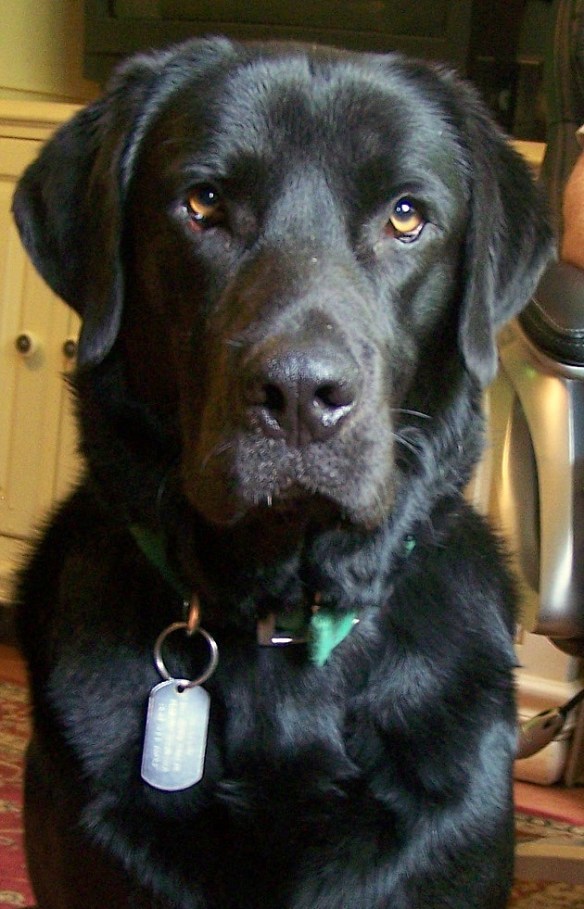
Shadow

though the only command he recognizes and responds to is “sit.” It works pretty well, actually, but he needs to learn a little more, I think.

Mr Wren picked Shadow out for himself, much like I did Finny, though of course we love them both. But Mr Wren has always loved, in particular, big dogs. He’s always had at least one for almost as long as I’ve known him, which is nearly 30 years now.

(Gulp) How time flies …

Shadow was actually Mr Wren’s second choice. His first was a black, 2-year-old Great Pyrenees-and-something mix – a gorgeous, pony-sized dog – but someone adopted him before Mr Wren could stake a claim. I’ll be honest; I breathed a private sigh of relief. Nice as that gigantic dog probably was, he was also simply too big for our little house. And then there’s the fact that the extra-large breeds tend to have relatively short lives; they rarely make it to 10 years old. Our next door neighbor Alison loves Irish Wolfhounds. They’re wonderful dogs – huge and gentle, and so goofy-looking with their big heads, long legs and scraggly hair. Sweet dogs, really. But in the almost 13 years since we’ve lived here, she’s raised five of them from puppyhood and grieved terribly as each one died after only a handful of years. I think the longest-lived one, Ian, was five when he passed. It was just so sad.

But I’m just delighted with Shadow. Finny likes him too, and loves to play catch-me-if-you-can with him, running around the house at 90 mph. There’s just one problem: Shadow, being a very young, adult but un-neutered fellow, sees Finny as a furry, teensy sex-toy, so they haven’t gotten to spend a lot of time together so far. Shadow will be relieved of his raging hormones very  soon, though. I think he and Finny McCool will be great friends.

What if?

Lene Andersen, who writes “The Seated View” asked a good question in her latest post. It was: “What would you take with you if your house was on fire and you only had 60 seconds to escape?” I’m paraphrasing, but that was the gist.

My flip answer? “I’d probably succumb to the smoke and flames trying to drag my mattress out with my laptop, external hard drive, and accordion file full of Important Documents hugged beneath my arms.”

A little further thought, and I added, “Oh, I’d try to grab the three cats, two dogs and Mr Wren, too. I’m doomed.”

In reality, I think I’d leave the mattress behind. It can be replaced. I would grab my laptop, external hard drive and the Important Papers, though, and I’d save all the beasties I could catch in the time I had (realizing that cats perversely refuse to be caught when it’s Very Important). Mr Wren most likely could save himself, but I hope he’d be helping me herd cats or something before the place fell in on us.

And everything else? While much of what’s in my house has sentimental value (collected over many years and from many places), and I have a few treasured, beautiful pieces of antique furniture from Europe I’d be heartbroken to lose, it really is just “stuff” in the end. Most of what I have is replaceable. And the stuff that isn’t? Well, I’d grieve, that’s for sure. But then I’d move on. Life is more important than stuff.

This is a matter that I’ve given plenty of thought to before, living in the tinderbox mountains of California as I do. To be honest, my private phrase for summer is “the fire months” because usually, from May through October, wildfires are imminent just about everywhere in the state. Drought years don’t help, of course, but even in years with normal precipitation and a good snowpack in the higher elevations, California is naturally dry, with very low humidity. Hardly any measurable rain falls during those months, and usually, the temperatures range from 80 to 110. Every single day.

See why I love rain and snow so much?

Fortunately, I live only a few blocks from our local fire station, and only a couple of miles from the state’s fire dispatch and staging center for my region. Even so, not a summer’s day goes by that I don’t hear sirens as firefighters zoom to the scene of another blaze, or the whop-whop-whop of low-flying helicopters passing overhead with huge canvas buckets dangling, headed for yet another water fill-up from the local reservoir.

It’s a mixed blessing, but California’s firefighters are incredibly swift in response to reports of fire. They put out thousands upon thousands of small blazes each year, most of them caused by lightening, sparks thrown by cars that kindle in the dry grass and brush at the sides of the roads, arsonists (grrrr boo hiss!) and, believe it or not, unfortunate turkey vultures that sometimes land on power lines, get electrocuted, and start fires when their flaming bodies fall to the dry-grass-covered-earth. Any of those small fires, if left a just a little longer, could turn into huge, grassland-and-forest-eating conflagrations.

I say our firefighters’ swift response time is a “mixed blessing” because it’s a bit sad that they get so much practice at it each summer. But that’s the reality, and I’m truly grateful for their hyper-vigilance and dedication.

Years ago, I covered a huge wildfire for the local newspaper. At the time, I was pretty experienced at the job. I’d been given some very specific training from the fire department I worked with most frequently — training that taught me how to stay safe as I cover wildfires so I wouldn’t inadvertently “become the story” (the journalist’s worst nightmare) or hinder the fire crews as they fought the blaze. I had no idea that the science of fires was so complex.

But nearly all the fires I’d gone out to up to that point were grassland fires. Some of them were quite large, but for the most part they have clear combat lines. Staying safe and out of the way wasn’t too tough.

This fire, though, was different.

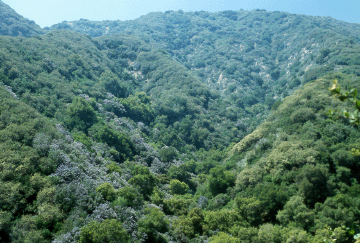
Northern California chaparral

It got started in scrubby grassland, but it just happened to be a windy day. The wind and the geography sent that fire raging into the steep, mostly wild, chaparral-covered foothills. To those of you who live in the eastern half of the country, think “mountains,” not hills. Western chaparral land starts at between 1,500 and 2,500 feet in elevation; it’s a distinct natural feature in California. It’s made up of scrubby, bush-like vegetation such as manzanita, sage, buckbrush, live oak and chamois. At its higher reaches, it can include sugar pines. The chaparral’s understory is made up of dry, crispy, often thorny grasses and other small, seasonal plants that survive, year after year, on little water.

But the most important thing to know about chaparral is that most of the plants have extremely flammable resins in them. They practically explode into flames at the mere touch of a kindling spark. Some of them, like manzanita, have very dense, hard wood, too, so they burn long and with ferocious heat.

Nature makes them that way on purpose. The seeds of these plants and shrubs have such a hard outer covering that about the only thing that can crack them open – and thus, allow them to take root and grow – is fire. Hot, hot fire. Before California was overrun by people in the19th Century, just about the only fires that started in the chaparral were caused by lightening – and those burned out of control until they ran out of fuel. Chaparral plants depend on periodic wildfires to renew themselves.

What’s left behind is an almost sterile, blackened landscape. But the soil beneath the char is filled with just the perfect nutrients for the tough seeds to grow in. It’s truly amazing how quickly chaparral renews itself after the fire finally goes out and the winter rains come.

But back to my story.

This particular wildfire was started by a 14-year-old who was playing with matches in the middle of a dry field not far from his home (heavy sigh). Within minutes, the fire had raced through the grass and got into the surrounding chaparral. Urged on by the hot, dry wind of late summer, abundant fuel and the natural lay of the land, this fire moved so fast that even though it was reported quickly, it transformed into a monster and got away from the firefighters who first arrived on the scene.

By the time I got out there to cover it, the fire had climbed much higher up in the hills, devouring sugar pines and fir trees along with manzanita, buckbrush, low, twisted live oaks and understory grasses of the high chaparral. I parked my car in a relatively safe spot, far from the front lines of the wildfire, and hiked up the narrow, two-lane rural road toward it. I could see, in the distance, a scatter of fire apparatus. The air was hot, filled with smoke. My eyes instantly turned red and weepy. I was wearing the required bright yellow fire gear loaned to me by my firefighter friends, along with a Nato-blue helmet with “PRESS” in big letters on the sides. I was overheated and sweaty within moments of leaving my nicely air-conditioned car.

Along with smoke and ash, the air was filled with small, winged insects of every variety. Birds were everywhere, too, headed higher up the mountainside as fast as they could go, trying to escape the flames. It struck me then, as I walked up the road toward the firefighters, that it was strangely quiet. You’d expect to hear the birds chirping and calling to each other in a panic, right?

It was from within this otherworldly silence that I suddenly became aware of the real sound: the low, growling roar of the wildfire itself, voracious and all but unstoppable. I’d heard the roar and crackle of a wildfire before, of course, but this was different. This was deadly serious. I’ll never forget that sound; it raised my neck hairs and sent a surge of adrenalin rushing through me. You hear that sound and your caveman-instinct screams “Run! Run now! Run fast! Run for your life!”

I didn’t run, knowing I was relatively safe, but I picked up my pace – in spite of the heat and my stifling clothing. I am forever in held in awe over how firefighters work for relentless hours in their hot, fire-retardant gear; the stuff I had on was relatively light, compared to the thick, weighty canvas stuff they actually wear while battling nose-to-nose with a blaze.

As I drew closer, that creepy roar got even louder. Ash and cinders turned the bright, summer-blue sky dark as twilight. And then I saw the leaping, orange and yellow wall of flames, reaching up over the tops of the live oaks and sugar pines, an enormous, raging, mindless, living thing. It was the biggest wildfire I ever saw, It literally dwarfed the firefighters and apparatus far below it.

One of the photos a colleague of mine got that day was of a jackrabbit fleeing uphill through the tall grass, the wildfire approaching behind it. I wasn’t quick enough to get shots of the deer I saw, running in great, ground-eating leaps and disappearing into the thicker, forested slopes ahead of them.

I stayed as long as I dared, taking photos, interviewing random firefighters and a small knot of evacuating local residents. They watched the battle with their arms crossed tightly over their chests, their wide eyes red and running, their fear of losing their homes and everything they owned written large on their stricken faces. I’ll never forget that, either.

That particular wildfire consumed something like 45,000 acres of chaparral and forest-covered, steep hillsides. It took the fire crews – well over a thousand men and woman from all over the state – four full days and nights to extinguish it, and another week after that to find and put out the hundreds of leftover hotspots. The fire came within a few feet of several rural homes, but actually burned down only a single, remote outbuilding. Amazingly, not a single person was hurt. Many of the wild creatures that inhabited the area, however, were not so lucky.

Yep. I’ve thought about what I’d take with me if a wildfire threatened my house. I hope I never have to do it.

Good work

This is a Harry Lauder's Walking Stick, one of my favorite shrub/trees. It's about 15 years old now, which just amazes me.

Finally, summer seems to have arrived.

I’ve spent about 12 hours over the last two days clipping, pulling wild blackberry canes and sweet peas, dandelions and scotch thistles, raking, pitch-forking the yard waste into the bin, and sweeping. I’ve planted some bright flowers here and there and weeded out and cleaned up the pots holding my favorites on the patio.

I’ve discovered that our old umbrella, which somehow never got put away last fall,

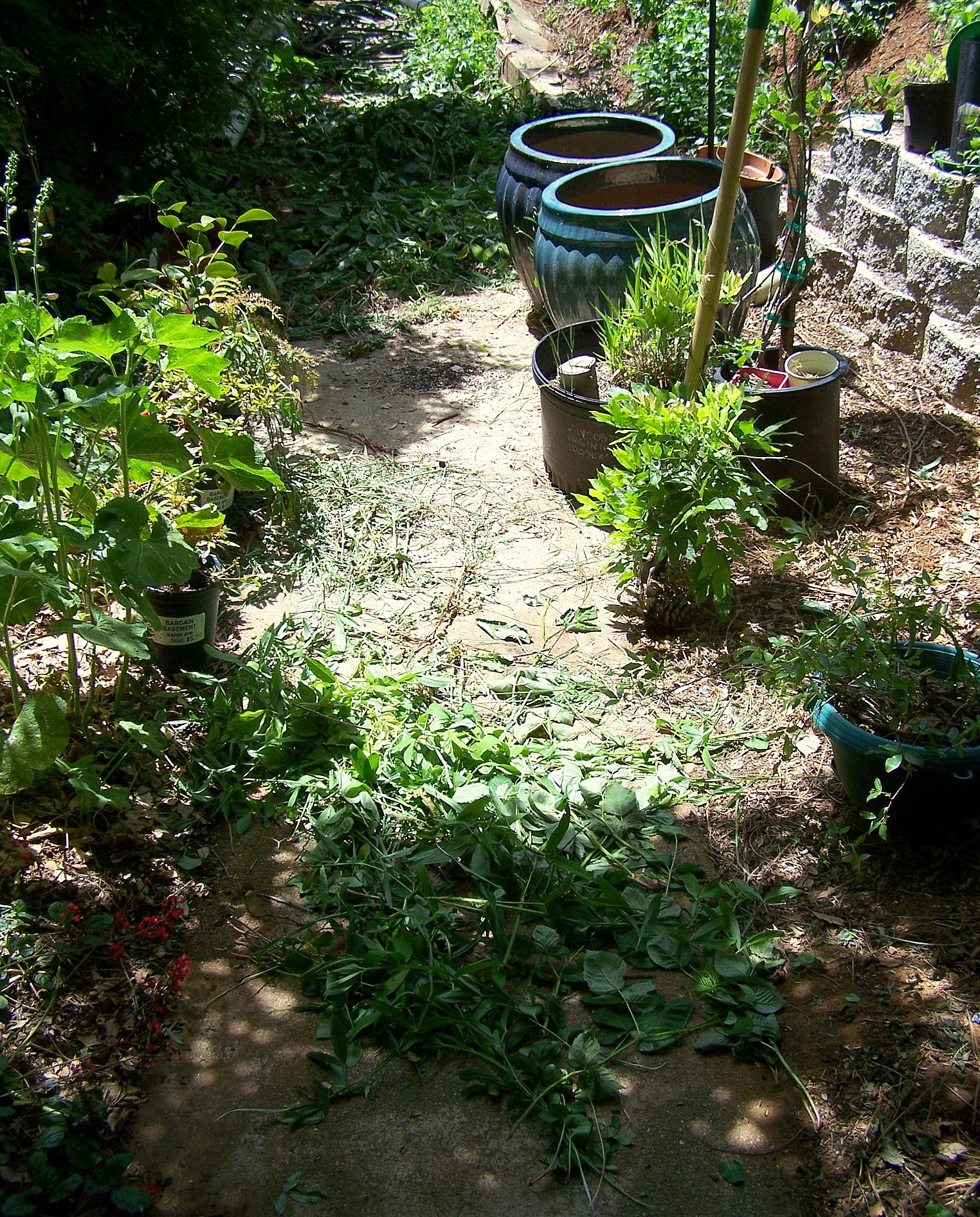
Wild blackberries and sweet peas (shown on the walk after pulling), get super-thick, tangled and thorny in the hedgerow as summer progresses. The berries, which ripen in the fall, usually get snapped up by the birds before I think of picking them. So this summer, I'm ahead of the game by pulling the ones I could reach. Not to worry. They'll be back.

didn’t weather the winter well. It’s ribs are snapped, the fabric torn, and the pulls rotted away. Oh well — I’ve been thinking about getting one of those sail-cloth sun shades anyway. Now I have an excuse …

I ’bout wore myself out. But it’s beautiful out there — warm but not scorching. Sunscreen, a hat, and copious amounts of water later, I’m done with this part of the garden clean up.

Next up? The other side of the house — another long cement patio — and the masses of grassy weeds up at the street on either side of the driveway. Once they’re gone, I’m planting things that need little water to survive, but will still look a lot nicer than the weeds. And then — a thorough sweeping of the entire driveway again, last done in the late fall.

This is good, hard work, enjoyable work. And since it’s pretty much too late in the season now for a vegetable garden, I’m not going to worry about it. Maybe I’ll plant a pot with tomatoes on the patio and give it a go, but the raised beds are for next year. I’ll just have to lean on Mr Wren to build the danged things so they’ll be ready next spring, should the sun come out.

On the physical side of things, I’m feeling pretty decent. Tired, of course, from the physical work, but I like that. Both hands are a bit achey and stiff with rheuma (as usual), and my right hand (the one Logan bit) is swollen from fingertips to wrist

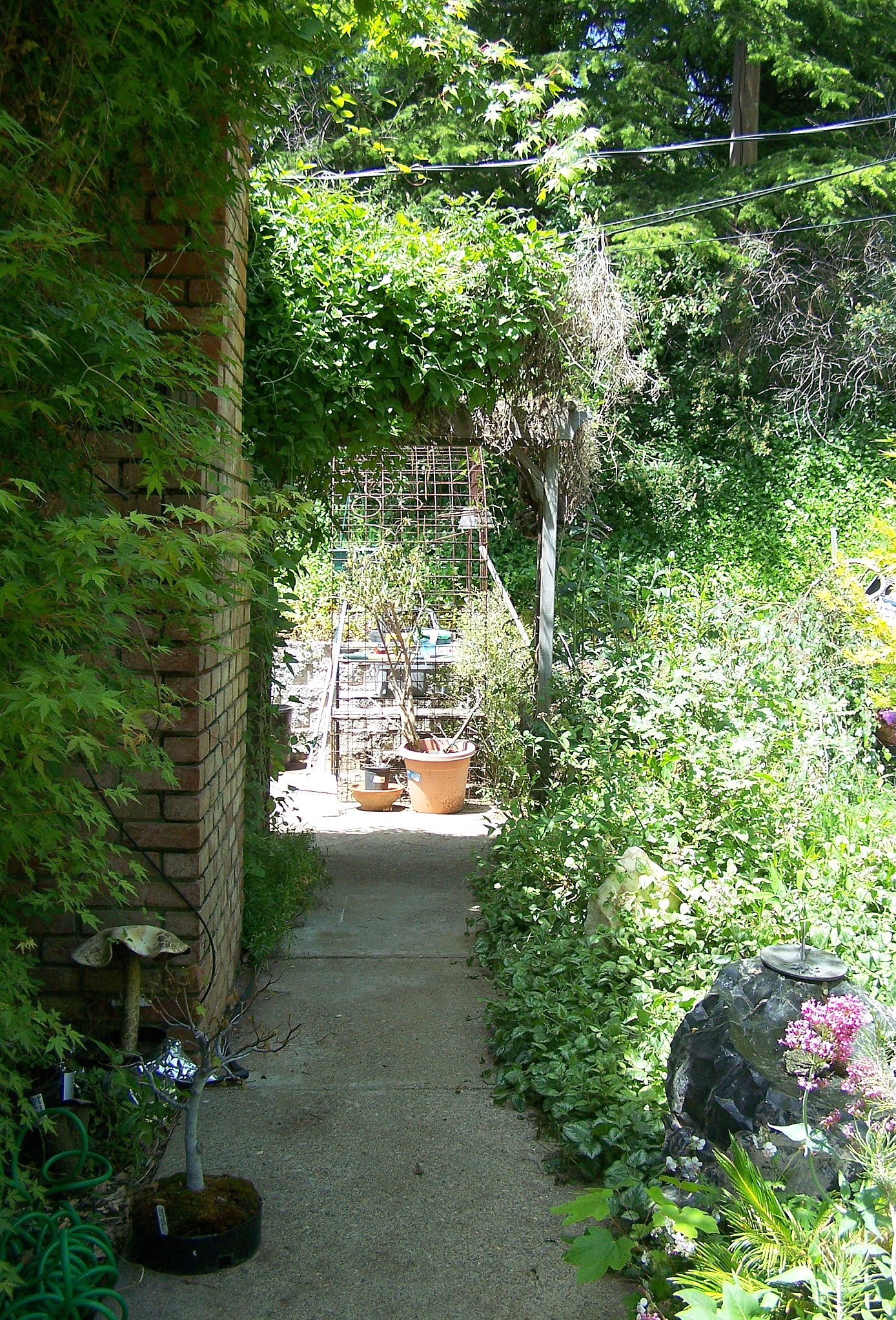
This is the "after" photo. I trimmed back the maple branches and the wild loops and vines of clematis hanging down off the garden arch. Much easier to walk along the path, now ...

and bright red, but there’s no pain there. I’m stuck again, right now, at 168 on the scale, but I have a feeling that the garden work I’ve been doing and will continue doing will start knocking that down pretty soon, as long as I keep eating mindfully. Exercise alone isn’t enough for weight-loss, but in combination with healthy nutrition, lots of water and plenty of sleep at night, it tends to jump start the metabolism.

I say: Yes.

The Sierra Bushmen (handymen, weedwhackers and haulers galore) will be here sometime next week to put up a new length of chain link fencing along the side of the yard that needs it, and they’ll be fixing the short stretch of fence along the top of the yard that was blown down during one of the winter storms. Next order of business: a new gate. That one’s a Mr Wren job, but I’m hoping to get a fire lit under him so it can be done about the same time as the fence-work.

It can’t happen too soon. We have another new member of the family: Shadow, a 15-month-old, sweet-tempered, dumb-as-a-post black Lab. Who, I might add, can’t be allowed to run loose in the yard yet because of the bad fences. Once he discovered that he has to keep Shadow leashed and inside all the time (like I do Finny), and walk him out to do his business several times a day, Mr Wren called the Bushmen. Nothing like living the aggravation to motivate action, eh?

Shadow is scheduled at the vet’s for neutering on Thursday. Once he’s home again and healed up, Mr Wren and I are signing up for dog obedience classes with Shadow and Finny both. We love dogs, but love them even better when they’re well-trained. It should be an interesting six weeks.

Hope this finds everyone feeling well and enjoying life.

Sunday morning

Photo by Douglas00

First the robins.

I wake at 5:11 with the rosebush-filtered sunlight of dawn filling my window, bright but not blazing, to the sound of trillions (at least) of robins singing. Rousing from their night perches high in the monster laurel hedge next to the drive, the robins welcome ol’ Sol as he rises over the 9,000-foot, snow-crusted mountaintops not with a chorus but a cacophony, a bursting choir of red-breasted would-be Pavarottis, each one singing its own individual aria.

My mind grumps that it’s too early. I’m not ready to leap into the day yet. I let my heavy eyelids close and snuggle my face into my pillow to shade the dawn and muffle the noise. The tweeting and trilling recedes. Deliciously warm and drowsy, I seek the place I left off in my dream before the racket woke me.

A hot steel spike sinks into my hip.

“Ow! I groan and swat PIB with amazing, if blind, accuracy from his perch there. As usual, he’s managed to make one of his front paws weigh 100 pounds so he can drill it right into my hip-joint and wake me up. That old cat’s knowledge of my physical infirmities is incredible. Thump. He hits the floor; the pain stops. I shift, pull the covers up higher and snuggle down deeper. There. Peace.

A Stellar’s jay takes position in the sweet-gum tree 10 feet outside my window-screen, the perfect spot for screaming insults at his hundreds of relatives. Each screeching squawk raises a new cacophony of sneering replies from every tree within range of his voice. There are millions of trees, billions of touchy, insulted jays in them. I wrap my pillow around my head. That dream. Something about … oh, it doesn’t matter. I’ll just start a new one.

The bed shakes. PIB, his small, compact body now weighing in at 200 pounds, is back for another assault. I brace myself, but he’s being coy. He walks beside the length of me until he’s reached my shoulder, and purring like a mountain lion, tucks his hind-end into the curve of my neck and shoulder and assumes the meatloaf position, paws tucked under him. The purring continues, loud as a buzz-saw.

I hitch my sleepy mind to the rhythmic sound and slip away again.

Something heavy scratches at the quilt, inching it down and letting the chilly air in, a sharp contrast to the warmth that cocoons me. Irritated, I open my eyes. Finny’s goofy, mustachioed face comes into focus. He digs at the quilt with the same determination he’d use to bury a particularly tasty bone in the garden. It slips down further, making my skin goose-bump.

“Aw, Fin,” I whine. I pull the quilt back up. So he licks my nose and sits his little round rump down, gazing at me with eternal patience and affection, quivering. The light from the window is brighter now, hard to ignore. One of the papa wrens begins singing in the snowball bush, his liquid song sweet and long, paced with chirps.

PIB backs up further, deciding to sit on my face.

Finny leans over and sniffs him. PIB hisses at him. Finny leaps to his feet and barks, bouncing next to my ear.

“Arghhhh!”

I sit up, dumping them both off the sides of the bed. I’m wide awake. My bladder makes itself known. Urgently. I give up, sweeping aside the bedclothes. First order of Sunday bizness: the loo. And then a shuffle outside with Finny, so he can do the same. Then back in to give them both their breakfasts, which was their nefarious plan all along, I know that now.

I sit, bleary-eyed, at the kitchen table, gazing at the finches chirping and fluttering around the birdfeeders just outside the window. The electric kettle roars and dings. I make my coffee.

It’s Sunday morning. Hello, world.

Note: See more of Douglas00’s photos here.

Today’s unexpected gifts

I think I might have mentioned that when I saw my rheumatologist the last time (several Saturdays back, now), for some reason, my blood pressure was dangerously high. So much so he had me check myself into the ER right after my appointment with him. And there I sat for the next several hours, having my blood pressure monitored and watching the live Emergency show going on around me, the only calm bed in the storm.

I was just fine. My blood pressure was back to normal from the time they started monitoring until they let me go with instructions to follow up with my primary care doc. So I made an appointment, and went to it today.

I think I’ve mentioned before, too, that I like my doctor. She’s direct, doesn’t pull punches, and has a beautiful smile when forgets herself and uses it. And the contrasts she represents tickle me: she’s a gray-haired hippie, lives the vegetarian, natural lifestyle, is as apt to prescribe vitamins and supplements as conventional pharmaceuticals and decorates her office walls with faded travel and flower posters — yet spends her waking hours taking excellent care of military veterans of all ages, races and genders, many of them crusty, rude and non-compliant. I think she’s pretty cool.

She was wearing a denim jacket with an appliqued giraffe in bright, primary colors when she came to the clinic doors and called my name today. I’ve come to look forward to seeing what she’ll be wearing each time I see her, and today her jacket made me smile. I complimented her on it as she led me down the long white hallway to her office, “the Yellow Brick Road,” as she calls it. She looked back over her shoulder at me. “Gotta wear something to keep ’em laughing,” she said, and asked me to take a seat.

“This isn’t your routine visit,” she said. “I see a note here about blood pressure.”

I explained what had happened, and she called the records up on the computer. “That was pretty high,” she agreed. “Do you take it yourself at home?”

I told her my Mom had dug up my late Dad’s little blood pressure unit for me, and told her what the readings had been when I’d taken it, off and on, since that day in the ER.

“Those are pretty normal readings,” she said. “Slightly on the high side, but nothing to get excited over. This high reading was during the same week you were bitten by your dog, right?”

“Yep.”

She grinned. “I think that’s what was going on. You were pretty stressed that week. You were still fighting off the infection and taking high-dose antibiotics. No wonder your BP was high, even if it was short-lived. I think you’re just fine.”

I breathed a sigh of relief. This was what I’d been thinking myself, so it was nice to hear I’d gotten it right. I’d worried a bit that I’d end up with a new slew of cardic appointments to go to during the next several weeks: stress tests, heart monitors, etc., and I hadn’t much been looking forward to that.

“Says here your rheumatologist diagnosed bursitis in your hips, too. Did he refer you to PT?”

“No, because they don’t hurt me all the time. He said if they did, he’d send me to a physiatrist for injections.”

She asked some more questions, and then, to my surprise, had me get up on the exam table, where she made me yelp and jerk by pressing those incredibly tender bursitis trigger points on my hips. “Classic,” she said. “Have any trouble at night with it?”

“You know, I do. I’m a side-sleeper, and after a while, my hip on whichever side I’m laying on wakes me up, aching. So I turn over. I guess I do that pretty much all night, every night, turning from side to side. It never occurred to me it could be bursitis. I thought it was my mattress.”

“Nope. Laying on those tender spots gets the bursa inflamed. But there are some things you can do about that,” she said, and proceeded to show me some exercises specifically for hip bursitis and, I’m guessing, to strengthen the muscles surrounding the bursa. Then she told me to take a tennis ball, get down on the floor, place it right at the trigger point on my hip — and lay on it, rolling it around a little, until the pain stops and the area is numb. Then do the same with the other hip.

That sounded downright unpleasant. I swallowed. “All right …”

“Yeah, it’s gonna hurt like hell. But if you’ll do that every day, on both sides, and do those exercises, too, twice a day, after a while that bursitis isn’t going to bother you any more. Beats getting corticosteroid shots and taking pain meds.”

“Sure does,” I said, and smiled.

“Show me the dog bite hand.”

I stuck it out for examination. I’m pretty proud at how well everything healed up. Today, there are still reddened scars, but that’s all. My only concern has been that that hand has remained a bit swollen all over, and the skin is still a couple of shades darker than on my left hand. I asked if that was normal.

“Very normal. You had some pretty deep soft-tissue trauma there, along with the infection. You’re healing up great, but that swelling and redness will stick around for a while longer. Don’t worry about it.”

She whisked off to make a copy of a handout for me that explains and shows the bursitis exercises she wants me to do. I sat there, looking around her office at the posters, some small, colorful stuffed animals jammed into the corners of one of the shelves over the sink, the notes taped to the old-fashioned exam table that state, in large cursive letters: “Dr. H’s exam table! Do not remove!” I was tickled all over again.

And then she was back, telling me she better not see me again until October, when my routine visit is scheduled. I thanked her and got one of those big, beautiful smiles. “Be careful,” she said. “No more dog-bites. And …”

I waited.

“Great job on the weight loss! You’re down seven more pounds since you were last here!”

As I said, I’d been sort of dreading this appointment, afraid that it would turn into several more, mostly unpleasant ones. (It’s happened before.) I was in a pretty blue mood. Instead, I was given several unexpected and very nice gifts by my good doctor. I ended up walking out of the medical center on pink clouds of joy —  and a little bit of pride, too.

Funny how things work out, isn’t it?