Hot diggity dog!

Finny McCool

Remember this little guy? The photo I used for a post about wanting a dog a few posts back?

Well, let me introduce you to Finny McCool, the almost-newest member of the Wren family. Finny joins elder dog Logan, my old cat PIB (Puss in Boots), and Cary and Matt’s cats, Goblin and Sister.

I can’t tell you how excited I am. Mr. Wren and I are headed down San Francisco-way to meet him and, assuming we all like each other, bring Finny back with us to his new home. He’s part Scottie and part miniature Schnauzer, and his foster mom assures us that he loves riding in cars and walking on a leash. Well, that’s just perfect. I’ve been longing for a buddy to take on walks with me, and I think Finny fits the bill.

So. I’m outahere. I’ll be back soon, though, with more news about Mr. McCool.  :o)

Discombobulated

I made a mistake.

I stayed up late last night, listening to author Neil Gaiman reading chapters of his wonderful book, “The Graveyard Book.” I was enthralled. As a writer and a seasoned explorer of my own imagination, I’m overawed by Mr. Gaiman’s. Hearing him read his own work was well worth staying up past bedtime for.

Except I forgot to take my evening meds until I was getting too tired to listen anymore. In fact, I was surprised at how late (early?) it was. So I took them, patting myself on the back as I crawled into bed. At least I did take them. I didn’t forget completely.

Just one problem: among the two tabs of sulfasalazine, the one tiny, triangular tab of Arava, and the tiny round dose of folic acid, there was also my nightly dose of Elavil (amitriptyline). It’s a very low dose, meant only to ease me off to sleep and relieve pain. And it does work, as long as I take it consistently.

But it works so well that I usually take it, and my other bedtime meds, around 9 p.m. That way, when I toddle off around 10 or 10:30, I fall right off to sleep, and except for a 3 a.m. sleepwalk to the bathroom and back, I’m out like a light until 6 a.m. or so, at which point I wake slowly but easily, feeling refreshed. I hate taking pills, but Elavil is one I’ve learned to appreciate. It does exactly what it’s supposed to do.

So what’s all this about? I didn’t take my meds last night until about 1 a.m. I considered not taking the Elavil, but I was afraid if I didn’t, I might not sleep well. My hands were annoyingly achy and I knew they’d make me restless. So I took it.

Well.

I woke up at 10 this morning. How embarrassing! Mr. Wren was long gone to a medical appointment and doing a Costco run. My daughter, who’s home from work today with a stomach bug, was up and cautiously eating a piece of toast. Matt was up and about, preparing to run errands. The dog had been fed, the woodstove was blazing. Only my old cat had slept as long as I did. And he was huuuungry. I stumbled around, mumbling, and fed him. My hands were swollen and stiff. Fumbly.

I have always been an early riser. Even on weekends, when I could have slept in as late as I wanted to, my eyes would spring open at 6 and, try as I might, I couldn’t go back to sleep. When I stay in bed more than 8 or 9 hours, my whole body starts to ache and forces me upright. And when I was working 50-plus hours a week, I hated sleeping on weekends because I didn’t want to sleep through and waste those precious “free” hours. I also tend to be a night-owl; I have to make myself get into bed at a reasonable hour.

And now I’m all discombobulated. Not only am I groggy, I’m also inexplicably drowsy, but there’s no way I’d get back in that bed. I look at the clock and do a double-take. Four p.m.? No! How could it have gotten that late? Yet I look out the window and the sun is still high in the sky, though it has headed westward toward its setting point way out there beyond the Coast Range. Toward spring …

That’s it. I’ll blame it on bloody Daily Savings Time. That’s what’s got me so jabberwockety. Not the sun, which is doing the same thing at the same rate that it has always done since the dawn of time. No, it’s that stupid, artificial turning of the clock’s hand one hour ahead, so there will be an “extra” hour of sunlight in the evening. Isn’t that just the silliest thing? There’s no extra hour, not really …

I have just set an alarm to remind me to take that tiny tablet of Elavil at 9 p.m., when I should. I hope to awaken at my usual hour tomorrow so that all will be right in my little world.

We shall see.

I have that, too!

One of the things I frequently read from other RA bloggers is their frustration – and

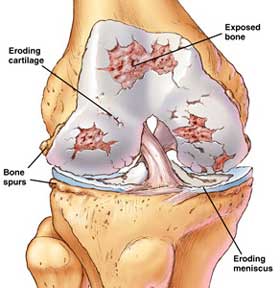
Osteoarthritis is a natural consequence of growing older. It's painful and debilitating, and just about everyone ends up suffering with it during their lives.

sometimes, anger – when others, upon hearing that they have RA, respond with “Oh, I have that too! I have it in my knee/fingers/hips. I just take some Tylenol and it goes away.”

Gahhhh! That response can make us feel that they’re dismissing our pain, suffering and even disability. We’re hurt and humiliated. It’s as if they’re saying we’re being whiny babies about the kind of pain that nearly everyone has. The inference is that we ought to just shut up, grin and bear it. After all, if we’d just take Tylenol we’d be fine.

I’ve had this happen time after time since I was diagnosed with RA. I’ve felt hurt and embarrassed. Dumb. More often than not I’ve bitten down on my frustration and kept my bitter remarks to myself, only to replay them endlessly when I’m alone, complete with witty retorts. How, I’ve wondered, can people be so freaking callous? So plainly unsympathetic? So … so … incurious?

Well, maybe they’re not.

It’s just part of my nature to be generally forgiving of such comments, unless I’m sure that the response really is dismissive and uncaring. It’s just how I’m made. I believe that most people really do care about me, but perhaps they just don’t know what to say when I complain about my pain and frustration. The aggravating response, “Oh, I have that too” is more often actually a form of empathetic commiseration. It’s clumsy, but it’s not dismissive or insensitive. Of course there are people I’ve encountered who really didn’t care and thought I was just wanting attention and being a crybaby, but that’s another issue entirely.

Assuming that’s not the case, the ball is back in my court. It’s time for me to ask if they have osteoarthritis. If they do, then it’s up to me to explain the difference between it and rheumatoid arthritis. They really are apples and oranges. But as I do, I should also be sure to return their awkward commiseration and sympathy. We all need that when we hurt.

Because, to be fair, osteoarthritis can also be dreadfully painful. It can be disabling. It most certainly is frustrating to the sufferer, as well. The big difference is that someone with osteoarthritis can, oftentimes, relieve the pain with a mild analgesic like Tylenol. If my RA flare is mild, and I’m lucky, sometimes Tylenol is enough for me, too. And while there are many treatments for RA that can successfully minimize the pain and damage by slowing the disease down, perhaps avoiding disablement – or even sending the disease into remission – there’s pretty much nothing that can be done for osteoarthritis outside of temporary relief through analgesics or joint replacement.

Finding the fountain of youth might work.

Osteoarthritis is a natural consequence of aging. Time and gravity do their worst to just about all of us; with osteoarthritis it causes the cartilage around the joints to break down, and over time, the ends of the bones start grinding against each other. Their surfaces grow pitted and rough. And naturally, the area becomes inflamed and often very painful.

Fortunately, Tylenol and other mild, over-the-counter analgesics and NSAIDs can and do relieve some of the pain and inflammation of osteoarthritis, for a while at least.

My rheumatologist tells me that I probably have osteoarthritis in some joints in addition to RA, and even if I don’t right now, at some point in my life, I probably will. So I don’t know what that particular pain is like. But the next time someone says “Oh, I have that too,” I’m going to be quicker to give them the benefit of the doubt. I’m going to try harder to empathize. And if I can, I’m going to explain the difference between my RA and the simple, mostly unavoidable wear-and-tear on the joints that everyone suffers as they grow older.

I believe we should all be as informed as we can be, not only about rheumatoid arthritis, but about osteoarthritis, which is far more common. It’s good – and humbling – to remember that we’re not alone. Perhaps by becoming more empathetic ourselves, we’ll teach others to be that way, too.

Funny-looking bird …

“Mom! Come look what’s at the bird feeder!”

It was my daughter, calling from the kitchen, where she stood at the big window by the kitchen table. Just a few feet beyond is the wisteria arbor Mr. Wren built a decade ago, and from it hangs a couple of feeders. Over the years we’ve had a host of busy, feathered diners our garden – one time there was a peregrine falcon. It had nabbed a mouse somewhere and chose the arbor for a perch.

At this time of year we get house finches, juncos, rufous towhees, California brown towhees and sparrows flocking to our feeders. Occasionally my favorite, a big, raucous Stellar’s jay, will go for the black niger sunflower seeds, too. So it was unusual for Cary to call me to come look. I wondered what new type of bird was visiting.

Well, it wasn’t a bird. It was a big, well-fed, female roof rat (rattus rattus).

Yeah, I know. “Gahhhh! Ewwww!”

Now, I’ll be honest. I don’t like having rats set up housekeeping in the woodpile, the hedgerow and my attic. Those little beasties used to sound like they were having a kegger party up there after sundown, but bit by bit we closed up all the access holes into the attic we could find, so it’s not a problem anymore. We also place rat traps around the outside of the house about once a year.

But I have to be honest about this, too. I think our little roof rats are sort of cute. I mean, look at those big, inky-black eyes! Those wee, pink front paws that look sort of like tiny hands. Their gray-brown fur – at least on this species of rat – looks soft and sleek. I’ve never had a phobia toward rats. They don’t make me squeal and I don’t automatically connect them to filth and disease (though I’d prefer they stay outside). Certainly I don’t perceive the little creatures as evil. They’re just small animals doing their best to get on with their lives. If that means stealing birdseed from a handy feeder, then, well, why not?

The rat, oblivious to us watching her from the window, worked busily at the mesh, extracting seeds, then cracking them with her sharp teeth and discarding the hulls, enjoyed the tender seeds within. She was there for about a half hour.

It’s after dark now and raining outside. The weather folks are saying it will turn into snow overnight, but that we won’t get more than an inch or two. Tomorrow is forecast to be partly cloudy, partly sunny, with a high in the 50s. The snow will melt away fast.

Spring has arrived in this part of the world, even if the vernal equinox isn’t until March 20. Have a wonderful weekend, everyone.

Encroachment

“RA is a disease of encroachment.

So commented KimH, the writer of the blog RA Sucks, about my last post. Her words struck me; they’re undeniably true for a lot of people who have rheumatoid arthritis.

As an artist (I’ve been drawing since I was a toddler) and a writer, I have a “visual” imagination. I’ve discovered over the years that I learn most easily when I’m shown how something works, rather than reading instructions or descriptions.  When I was learning to be a radar weapons technician in the Air Force 30 years ago, I had a terrible time understanding the geometry involved in sending a fighter aircraft after an enemy aircraft at the correct angle to achieve a “lock on” – the angle necessary to successfully fire missiles and shoot the target down. Frustrated, my instructor finally went into his office and brought out two model jet fighters. He handed me one of them and said, “OK. You’re the target. I’m the interceptor. Now, if I fly in at this azimuth…” and he proceeded to show me, with those plastic models, what I’d been unable to understand by looking at numbers and dry words in a manual.

I learned. In fact, I learned so well I became an instructor myself six months later.

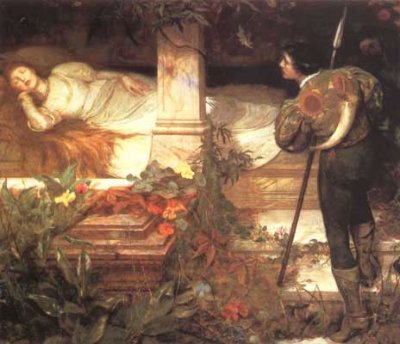
I mentioned this to explain just why KimH’s words so caught my attention. When I read the word  “encroachment,” I immediately visualize a tangle of thorny, tough, menacing dark weeds closing in around a cottage from all sides, a la the brambles that overtook and enclosed Sleeping Beauty’s castle after she pricked her finger on the spindle. The dictionary definition of “encroachment” (meaning that something advances beyond ‘proper’ limits) doesn’t exactly match up with what I “see,” but that doesn’t really matter. My understanding is still accurate and my visualization is, to me, chilling.

While RA may strike some people suddenly and with vicious strength, for many of us, it truly is a disease of encroachment. It creeps up over months and years, gradually changing our lives and the way we live them. Instead of being awake and aware of it (like a gardener with a pair of trusty clippers he can use to cut brambles back and thereby keep them under control) we don’t notice how RA is affecting us until we realize, suddenly, that we can no longer open that jar without help, or that we’re always avoiding outings with friends because we know we can’t be on our aching feet that long. We compensate almost without thinking of it.

Another example of this from my own life is from about three years after my daughter was born. I had a large ganglion cyst in my right wrist. While I was still in the Air Force, the doctors there aspirated it three separate times, hoping to get rid of it for me, but it came back each time, a hard, round bump the size of a marble right at the bend of my wrist on the back of my hand. It was rarely painful, but it did occasionally interfere with my grip. My hand would sometimes spring open on its own accord when I tried to pick something up.

I’d been out of the Air Force for a couple of years, when one day I reached down to pick up my daughter – and realized that I wasn’t using that hand to grasp her, but instead, used my forearm to sort of scoop her into my arms. I’d grown so used to not trusting that hand that I didn’t think about it anymore, and I couldn’t remember the last time I’d used my right hand to lift her up. Since the cyst was becoming more painful, more often, and was starting to bother me when I typed, I went to my family doctor about it. He referred me to an orthopedic surgeon, who tested the strength of my grip in that hand. It was about 30 percent of what it should be. Two weeks later, he removed the ganglion cyst surgically. My wrist healed and the cyst, thankfully, was gone for good. I had the full use of my hand back.

RA is pernicious and sneaky. Sometimes, it creeps up so slowly, so gradually that we don’t really notice it – at least, not until it blocks out the sun and we’re trapped. KimH wrote, “Having RA is like growing old. For example, when your sight starts to go and you need reading glasses, you’ll initially deal with trying to focus on the written word by holding books and Kindles at arm’s length. Then you’ll finally relent and get reading glasses.”

To her, the way RA “encroaches” is probably the scariest part of having the disease. By the time we grab our virtual clippers – strong medications, lifestyle changes, mobility aids, supplements – the damage is already done. The thorny weeds of RA have started to undermine and rot the castle walls. Our only choice is to try to keep it from doing more damage, and in the meantime do our best to cope with the increasing pain and disability.

I guess this post is really just more on the “quitting RA” theme. It just occurred to me how nice it would be if a Handsome Prince could ride up on his white charger and hack through the brambles to wake me from my RA trance.

I think I’ve been reading too many fantasies lately.

Thoughts on quitting

Have you ever wished you could just “quit” RA? You know – just say “All right, I’ve had enough. I quit. I’m not going to deal with this anymore.”

Kelly Young, who writes the excellent RA blog “Rheumatoid Arthritis Warrior” has a post up today that covers this theme. Young writes about how tired she is of RA, and how tired she is of hurting, and of having to forego social events, and having to tell others that she hurts, or having to explain to others yet again what rheumatoid arthritis is and how it affects her daily life. She’s tired of not telling others that she’s in pain, hoping that she won’t be thought of as a whiny wimp. She’s very, very tired of having RA.

Her post has been up for less than 24 hours. Already it has attracted many comments from readers, nearly all of whom agree with her wholeheartedly and wish they could “quit” too. In her response to one of them, a 17-year-old with RA, Young writes, “… You said what I tried so hard to say. I think that’s what I say in my mind: ‘I can’t even give up.’ Lately, I’d really like to quit – but how?”

There’s no doubt about it, RA gets mighty old mighty fast. I’m one of the lucky ones whose disease seems to be under control – I have pain, but it’s minor compared to what it has been in the past, and it’s isolated itself to my wrists and hands. But I get tired of RA, too. I wish I could “quit” it. I’m tired of swallowing handfuls of pills every day. I’m tired of losing my hair because of my medications. I’m tired of getting blood drawn every six weeks and tired of doctor appointments. I’m tired of RA’s sudden, vicious, painful jabs when I heedlessly pick up a plate or pull up the blankets on my bed to make it. I’m tired of the way it reminds me, constantly, that it’s part of my life, part of me.

And I’m tired of having to ask others for help with simple things, like opening a jar or folding laundry.

But I can’t quit RA. Like Kelly and her young commenter, and like all of you reading this today, I have no choice but to get on with my life the best I can in spite of it. As a “glass-half-full” sort of person, I try to look at the deeper meaning of my life with RA. This disease has made me much more mindful of the small gifts I receive each day. It’s made me far more tolerant and patient with others than I might be, were I always “normal.” These are good things, but it’s easy to lose my focus when I hurt.

While I don’t feel courageous in the least, when I step back and look with a cool and detached attitude at how I get along each day, I know that I am brave. Living with constant, variable pain takes courage and a good deal of fortitude. It takes grit. I’m very good at clamping my teeth and just going on with whatever it is I need to do, but if I’m honest, there’s more to it than simple bravery.

There’s also the raw fact that I haven’t any choice in the matter, and no matter how hard I fight. No matter how much I want to “quit” RA, RA won’t quit me.

Wait. Let me take that back. I do have a choice. I could simply give up. take a bottleful of strong painkillers or walk in front of a bus. But as bad as my RA has been at times over the last 23 years — and it has been bad — killing myself has never been a real choice for me. I love living too much, even if I have to contend with pain and disability. I like hearing the wrens sing and the watching the towhees hop around my garden. I love the sound of the rain pattering on the roof. I like how the world looks when it snows, and I love my family and friends, I’d miss them too much to just give it all up. I also would never want to hurt them that way.

When it comes down to brass tacks, I realize that before my end comes, as it inevitably will, I still have way too much I want to do. Too many places I still want to go, and too many things I want to try.

I guess what that means is that I’ve learned to accept my RA, unwanted though it is. When I think back to the bad times, when it was hurting me so much that simply standing sometimes seemed – and sometimes was – impossible, I know that there’s something in me that simply won’t allow me to quit. I’ve done so much in my life in spite of my pain, and those are accomplishments that I treasure now in my memory. I did them anyway.

And I know that I’ll continue to do that. I hang on to the hope that someday, somehow, medical science will find a cure for this disease. At the rate science is advancing in this day and age, I even have hope that it will happen in my lifetime. And in the end, isn’t life just hope?

Rheumatoid arthritis, for better or worse, isn’t something we can just “quit.” That means we have to keep on keeping on. And if we can do it while still finding joy and laughter in the world around us, well, then maybe it’s not so bad after all.

Something to look forward to

It’s raining again.

I’m glad, because as I’ve said in this spot before, Northern California really, really, really needs the rain. Mainly it needs the rain in the form of mountain snow so we won’t be so parched come summertime, and maybe we won’t find ourselves having to choose which to water, ourselves or our gardens.

On the other hand, I was sort of looking forward to a little more pretty weather. You

In this photo from late February 2007, it was snowing on the almond blossoms. It was windy, too, and the pale white petals mixed in with the snowflakes, almost identical.

know the type: it’s cool, even a little nippy, but the sky is a breathtaking robin’s-egg blue, the sun is bright, and everywhere you look there are signs of the oncoming spring. Our next-door neighbor’s old almond tree is covered in blossoms. Tulip leaves like green swords are rising from the soil next to our front door. The elderly laurel hedge has thousands of upright new leaves, still tightly furled but the promise … oh, the promise. My climbing rose, which has looked dead as a doorknob since November, suddenly has tons of new, tiny, deep maroon leaves.

Yep, spring is springing. No doubt about it.

But for the last several years at this time I have absolutely not felt that odd yearning for spring. Caught deep in drought, our winters have been so dreadfully mild, and so numbingly sunny and dry that I’d have danced naked on Main Street if there’d been a reasonable chance doing so would usher in some big storms and lots of water from the sky. I knew it was useless, though, so I spared everyone the traumatic experience.

I know I’m an odd duck, liking winter as I do. Most people who live here (and elsewhere, I might as well face it) love sunny, mild winters. They hate gray skies. Rain chills and depresses them. I have friends here who get downright glum when the clouds come in. They take it personally. They live in California, despite all its drawbacks, because they love sunshine and hot weather. If winter gets in the way, well, they’re really put out.

I don’t mind rain or cold weather. But this year, I do have a reason to be more appreciative of spring: my hands are killing me. These rapid changes in barometric pressure cause my knuckles to ache above and beyond the call of duty. The fact that I accidentally whacked my right hand against the corner of the table as I went into the kitchen a little while ago doesn’t help, either. That hand yelled bloody murder, it was so insulted. Now it’s twinging madly and there’s a round, red divot in the knuckle joint. I really need to be more careful.

Walking dreams

I want a dog.

I already have a cat.

A dog would greet me each morning with a huge, toothy smile while wagging its behind in an attempt to keep up with its tail. A dog would be delighted I was awake and out of bed, you see. A dog would run for its leash and dance in front of the door. Its whole being would exude “Yipeee let’s go let’s go let’s go for a walk!”

My cat merely stands on my chest, each of his front paws weighing 65.9 pounds, and waits for me to start gasping for air, which never fails to wake me. Then he sits in front of his bowl and watches me like a hawk until I pour his morning repast, roughly two tablespoons of evaporated milk. When he’s licked the bowl clean he goes back to bed.

Snickering.

Don’t get me wrong. I love my cat, but our relationship is based totally on comfort. His, mostly. Sure, he does his part. He meatloafs on my stomach and purrs me to sleep each night, which is sweet and oddly reassuring. But let’s not kid ourselves. If my stomach wasn’t soft and blumphy – not to mention 30 degrees warmer than the surrounding furniture – the cat wouldn’t bother. We both know it.

But a dog … a dog would get under the covers with me. He’d sleep as close as possible, and he’d stay in that position until he used up all the oxygen down there. And not only that: my dog would do this because he wants to be with me, because in his soulful brown eyes I’m the Most Wonderful Person in the World – and not just because his paws are cold.

Now I have to admit I already DO have a dog. And he’s a Good Dog, mostly. Trouble is, he’s a few crayons short of a full box, and while he starts out behaving nicely on a leash, a passing car can terrify him. He weighs 93 compact and very muscular pounds, so if he bolts, believe me, he’s taking me with him. Right under that car’s tires.

He’s also utterly convinced he must protect me from Evil People. I wouldn’t mind this (and frankly, I feel quite safe if I’m home alone), except he considers all people outside of his own family/pack Evil. That means if I take him for a walk, I have to put a muzzle on him or he’ll disembowel anyone who comes closer than 10 feet away. This is Not Good. The muzzle, by the way, also terrifies my poor, cracked dog. We both end up traumatized and trembling.

We took him to training classes and tried hard to socialize him, but by then I was terrified he’d tear the hand off some heedless child who ran up squealing, arms outstretched for a big hug, “Doggie! Cute doggie!” Because he is cute. He looks like a big, cuddly, red-gold bear. But looks are deceiving, and when it was clear that the only way to keep him from biting someone was to have all his teeth removed, we gave up.

My dog and I don’t do walkies. Ever.

He’s going on 13 years old now and showing his age. He’s all gray around his eyes and jaws, and he likes nothing better than to snooze near the fire. So while it makes me feel a little bit guilty, I’ve been thinking a lot lately about what it would be like to have a “normal” dog. One that I can take on walks. One that might lick people to death, but would never dream of hurting them in any way. One with no bats in his belfry.

There’s a motive to my madness. I like to walk. It’s great for my health: it revs up my naturally slow metabolism, it helps strengthen my muscles and be more flexible, and it’s good for the rheuma. The thing is, I don’t particularly like walking by myself. Human walking buddies are great if I can find one, but most of the time I can’t. So most of the time I also can’t seem to get myself out for a walk.

When I do, I enjoy the fresh air and the movement, but I’m a bit lonely. No one to talk to. No one to point out that pretty bird to, or laugh about the llama with. I take my iPod and listen to music or an audiobook while I walk, but it just isn’t the same as company.

And then I see someone coming along the trail toward me, a dog on a leash beside or in front of her. The dog is trotting along smiling, ears perked, tongue lolling, a bit goofy smile on his face. His person seems happy, too. They’re a team. They’re both enjoying the walk.

While out on my solitary walks I’ve seen rottweilers and rat terriers, shepherds and shi tzus. I’ve seen Basset hounds, and Welsh corgis, and Boston terriers and dachshunds. I’ve even seen Great Danes and once, a huge, beautiful, black Newfoundland hound. Some of them I’ve stopped and talked to – the dogs and their people.

It’s so nice.

So I’m thinking about a dog. I probably won’t get one until my fearful old friend goes to the Great Doghouse in the Sky, but that’s OK. I’ve been perusing pet adoption sites. There are so many Good Dogs who need Good People. I’m sure that one day, we’ll find each other.

Oh – gotta go. The cat wants his supper.

A smile for Sunday

For all my friends (that’s you) …

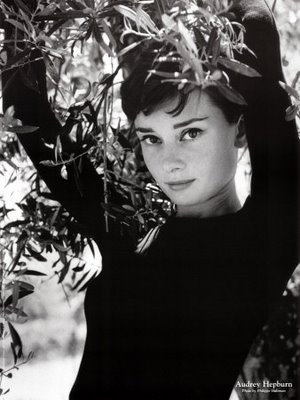
Audrey Hepburn on “beauty tips”:

“For attractive lips, speak words of kindness.
For lovely eyes, seek out the good in people.
For a slim figure, share your food with the hungry.
For beautiful hair,
let a child run his/her fingers through it once a day.
For poise, walk with the knowledge that you never walk alone.
People, even more than things, have to be restored, renewed, revived,
reclaimed, and redeemed; never throw out anyone.
Remember, if you ever need a helping hand,
you will find one at the end of each of your arms.
As you grow older, you will discover that you have two hands;
one for helping yourself, and the other for helping others.”