3 truths, 1 lie

Only one lie? There are so many I could tell! Oh, well. I’ll play:

1st : I had breakfast with Sir Peter Ustinov in front of the Cologne cathedral.

2nd: I once chased four tigers around a shipping harbor.

3rd: I skied the Alps with a bad RA flare in my right large toe.

4th: I landed a two-seater Cessna on my first try.

Guess which one is a lie?

This post was for Day 8/Post 8 of the National Health Blog Posting Month

NHBPM Day 7: My cure for a case of the Mondays

Today is Day 7/Post 7 of the National Health Blog Posting Month. The writing prompt for the day is A Case of the Mondays. Write about something that gets you down, burns you out or makes you sad. Turn it around at the end and tell Tuesday why you’re ready for it.”

I think yesterday’s non-prompt post already tackled this one, except that I wrote it on Sunday rather than today. I don’t know about you, but I can have a “case of the Mondays” just about any day of the week.

Here’s the thing, though. It’s rare that the Mondays get me down for more than a few hours. I’m simply not very good at wallowing. Yesterday I was bummed about my hip bursitis. Today I’m not, although both hips are still achy, stiff and sore. The difference?  Last night, the characterization for the condition I’d been looking for came to me during a pained, wakeful moment.

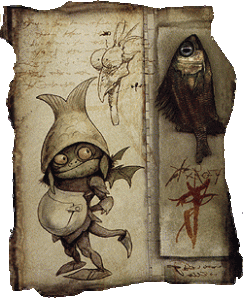
A little backstory: To go with yesterday’s post, Creature without a shape, I used an illustration of a mythological Celtic beastie called a púca. According to the website “Ireland Myths, stories and pictures,”  “The Púca are one of the most feared and mischievous of all the faeries in Ireland. It is a changeling who appears in many guises … Sometimes it takes the form of like that of some of the smaller faeries, from all accounts similar to a deformed hobbit like creature.” I chose the illustration without thinking, but as I wrote the post the creature seemed more and more familiar—it’s what, to me, this narsty, annoying bursitis looks like. Okay, it does, I thought, but unlike the rheuma-dragon and the osteo-wyrm, no memorable name for it comes tripping off my tongue.

Names are important, you see. The names of things give the mind a hook to hang them on, like rain-dampened jackets, and they can stay there until you need them again. A name gives the namer a modicum of control over the creature it represents, even if it’s only the diaphanous control of familiarity. But though I tried, yesterday I couldn’t find a magical name for the púca.

When the damned beastie woke me up at 2 a.m. to remind me, naggingly, of its presence, I growled and grudgingly turned over, putting my weight onto my other hip, which wasn’t hurting as much. And as I did, the púka’s name came to me: the bursa-púca.

Y-e-sssss! I said the name into the velvet dark a couple of times, voicing it to make it real. I visualized the mean little brown thing pummeling the trochanteric bursae and iliotibial bands in both my hips with stone hammers as it hopped and jibbered madly. And you know what happened?

I giggled. The image was so silly it tickled me.

Naming the bursa-púca didn’t make the pain go away, but the chuckle it bubbled out of me took the tired grimness out of it. I shifted my thoughts to my breathing—in (sohhh) out (hahhh)—and drifted gently back to sleep.

It made my Tuesday ever so much better.

NHBPM Day 6: Creature without a shape

For today’s National Health Blog Posting Month I’ve chosen my own subject rather than writing from the prompt:

You know, I think what’s worst about this constant bursitis pain in my hips (yes, it’s still hangin’ right in there) is that it’s boring. Second worst is my frustration with it. Because aside fro the bursitis, I’m feeling pretty darned good these days.

My rheuma-dragon, the evil beastie, has been dozy lately. Aside from a few nibbles at my knuckles, he’s leaving me alone. That’s wonderful! I mean it down to my toes when I say I’m grateful. But…

Heheh. There’s always a “but,” isn’t there?

The bursitis pain is always right here, lurking at the edge of my consciousness

Maybe a púca...

and making frequent forays into the here and now. I’ve tried everything I can think of to keep the bugger locked in the little brown trunk I’ve tucked into the back of a deep, dark closet in the attic of my mind, but he simply seeps out through the cracks. Bursitis wakes me rudely at least twice during the night (even with my sleepy pills finally working so well!), rousing me simply to remind me of his presence. Because of bursitis, the first coherent thought I have in the morning is “Ow! My hips! Ugh!” (“Ugh” is a stand-in word for any four-letter obscenity of your choice. Feel free to test several.) Eventually I work up enough courage to move my rheuma-stiffened joints and clamber out of bed. I stump to the loo like Frankenstein’s little sister, each step I take underlining the deep purple ache in both hips.

And what creature represents bursitis in my overactive imagination? I don’t know. The “rheuma-dragon” fits perfectly the diabolical randomness and varying intensity of the pain and disability caused by my rheumatoid arthritis. I might not be able to vanquish the dragon, but I can fight him to a draw.  And the occasional sharp stab and throb in the tiny joints at the ends of my fingers has manifested in my mind as the r-dragon’s cousin. I call it the osteo-wyrm, so named for the garden-variety osteoarthritis nearly all of us get as we age.

But this trochanteric bursitis, my constant, aggravating and tedious companion, defies characterization. And I’ll be honest: I’m almost embarrassed to complain about it. It’s much less painful than a bad rheumatoid arthritis flare. It’s not truly disabling; it hurts, but I can move, I can walk. I can pretty much do everything I need to do even though my hips ache. And ache. And ache. Unlike RA or osteoarthritis, this bursitis ache never takes a break. The only time I can escape from it is when I sleep, and until recently, I couldn’t even do that.

So to what phantom mythical or imaginary character should I assign my bursitis? I’m open to suggestions.

Lifechangers

Post 5, National Health Blog Posting Month (30 posts in 30 days): Five things that changed my life, for better or worse, as a patient, a caregiver or a health activist:

In general (because a patient, caregiver or health activisti is first an individual, a regular person living her life as best as she can):

1. Giving birth to and raising my daughter. This was huge.  Not only was the commitment physical–nine months of pregnancy and everything that comes with it, including morning sickness, body-shape changes, and the realization that there was another person growing inside me with a life of her own–but it was also a serious commitment to responsibility. Giving birth to a child was one thing; caring for that child and meeting her needs day in and day out for the next 18 or more years was, to me, monumental. How can something like that not change a person’s life? It was–and continues to be–incredible.

2. Getting and living with RA. Before I had rheumatoid arthritis I coped with the same generic maladies and illnesses that most people get: colds, stomach bugs, childhood illnesses like measles, mumps and chickenpox, cuts and scrapes, sprained ankles, bumped heads, bee stings. Pain and sickness happened, but they always went away. Disability happened–the sprained ankle, etc.–but I healed. Every illness or malady I had until I was 31 years old either went away, healed or was treated and cured by my family doctor. So it took me quite a while after being diagnosed with RA before I understood–and accepted–the fact that my doctor couldn’t cure me of it. And not only that, there were no other doctors, anywhere in the world, who could cure me, either. Suddenly I was living each day with pain in one joint or another, disability because of the inflammation, swelling and pain, or both. RA didn’t wait for me to accept it–it just moved on in, and in ways both obvious and subtle, my life changed because of it. Left without a choice in the matter, I adapted and took on the challenge. It’s one that hasn’t ended yet and won’t until the day I die.

3. Discovering a talent for and love of writing. I’ve always been artistic and have loved to draw and paint from the time I was a small child. In school, I liked English and did well with it, and when I was given assignments that included writing, I enjoyed them and generally got good grades. I also loved reading, and when I was a young adult I decided to write a spy novel (my favorite to read at the time). I wrote and wrote and wrote in my spare time (I was new mother and was in the Air Force at the time), and finally produced my novel. It was rejected by publishers more times than I want to admit, and eventually it ended up at the bottom of a box in a closet. But I did it. And I while I did it I discovered how much I enjoyed writing. To me, it’s like painting with words.  A few years later, in Germany, I got a job as a writer/editor with the U.S. Army Public Affairs office on the post my husband was assigned to, and it was there that I started learning journalism. I loved that job, and I’ve worked as aprofessional journalist–a writer and an editor–ever since. I still write fiction in my spare time, too. One day I might actually finish another novel.

Lifechanging events I’ve had as a patient:

1.Finding a good rheumatologist. The doctor who first diagnosed me with rheumatoid arthritis was an internal medicine specialist. He was a U.S. Army doctor–a captain–and the closest actual American rheumatologist was a four-hour drive away. Dr. C did his best to treat me, but he didn’t have the best tools at the time. After five years of severe, active disease, pain and disability, years during which no drug I was prescribed had any effect on my RA (with the exception of narcotic pain relievers), I stopped seeing any doctor for it. Several years later, my RA went into spontaneous, drug-free remission. I was symptom and pain free for about six years, and then the rheuma-dragon woke up and started chewing on my joints again. By the time it started to get bad, I’d been laid off from my job and no longer had medical insurance. In desperation, I applied for medical care through the VA and was accepted, and within a few weeks had my first appointment with a VA doctor. She, in turn, wasted no time in referring me to the VA rheumatologist I still see today. He’s excellent. And I’m sure that without his care, my RA would be much, much worse than it is. That, to me, is lifechanging.

2. The Internet. When I was diagnosed in 1987, the only access I had to information about rheumatoid arthritis was what my doctor told me. He was informative, but I really didn’t even know what questions to ask him about the condition. There was a very small library on the Army post where I worked, so I looked there for more information–and couldn’t find any. The librarian found the address for the American Arthritis Foundation for me, so I wrote them. They sent me a pamphlet that included about three paragraphs about RA. The rest of the pamphlet was about osteoarthritis and other, lesser known varieties. I already knew the basic information in the pamphlet. It wasn’t until long after I was back in the U.S.A. and the Internet came along that I learned more about my RA. And when Google was created…well, I was able to learn far more than I really wanted to know. The Internet is such a gift. People who are diagnosed with this disease today have all the information about it they could ever want right at their fingertips, almost instantly. That’s something to be thankful for, because we can much more easily fight the enemy we know than the one we don’t. The Internet has also allowed me to blog about my RA. And that, in turn, has gifted me with the ability to communicate with other people who also have the disease. For the first time since being diagnosed I was able to  “talk” with others who knew exactly how I felt and what I was experiencing. I’ve made many dear friends within this online community. I’m no longer alone with my RA.

And that is the most lifechanging thing of all.


“Publish:” to press or not to press…

Write about what happens after you press “publish.” (Post No. 4 for WeGo Health’s National Health Blog Posting Month: 30 posts/30 days.)

I immediately re-read my freshly written post—and every single time the typos and awkward sentence structures and misspelled words I didn’t notice when I proofread before pressing “publish” leap off the page at me. Why didn’t I see that one? Am I blind? How could I have missed this? Humiliated, I go back and edit the post, fixing all the boo-boos and then re-publishing.

The real angst for me occurs as I write the post in the first place. I always wonder if what I’m writing, which is fascinating to me, is actually going to be deadly boring to my readers. Am I being too wordy? To melodramatic? Will that little attempt at humor fall flat? Am I being too whiney? Too pompous? Am I rambling? Will I offend someone? Will I put them to sleep?

One of the reasons I love blogging is that most of the time people leave a few words in reaction to what I’ve written. Many times I’ve been delighted to discover that they really liked what I wrote–and in fact, liked it far more than I expected they might.  And sometimes, a post that I thought just glowed earns no comments at all. Those can be a bit of a blow to the ol’ ego, but I like them anyway. They teach me to be more discerning. The posts that do the best comment-wise are the ones that seem to almost write themselves; paradoxically, they’re the ones that I have the least confidence in before I hit “publish.” Go figure.


No letter from the future for me

Post Number 3 for WeGo Health’s National Health Blog Posting Month: 30 posts/30 days: Write a letter to your 18-year-old self.  Tell her what to do more of, what to do less of, and what she has to look forward to.

Um, no.

While there are undoubtedly some things I might have done differently in the past had I been privileged with foreknowledge from 37 years into the future, the fact is that I didn’t have that foreknowledge.  I’ve had to make my decisions as best I could. Sometimes I sought advice from my parents, other members of my family, my friends or co-workers. Sometimes I didn’t. Sometimes I just used my own knowledge and experience to make the decision to leap off the precipice into the unknown, my eyes and heart wide open.

It’s what we all do. Not a single one of us knows what the future holds for us. Life is a gorgeous gamble.

And like everyone else, sometimes I’ve crashed to the ground and burned. Fortunately, those times have happened far less often than my more successful flights. Looking back, I’m satisfied with where I’ve been and how far I’ve come. And frankly, there’s a lot I’m glad I didn’t know about before it happened.

If I’d known at the age of 18 that 13 years into the future I’d be diagnosed with rheumatoid arthritis and that I’d suffer terrible, often disabling pain off and on for the next 24-years-after-that-and-counting, I’d have been absolutely terrified. And what might I have done with that knowledge?

Maybe I wouldn’t have decided, after a couple of years of college, to join the Air Force. If I hadn’t, I would never have met Mr Wren–and I would never have given birth to my sweet daughter Cary. Perhaps I wouldn’t have gone through our later, devastating divorce, either. We were so young and so stupid. But then I wouldn’t have gotten married again to another man, and I wouldn’t have gone to Germany to live for six years. If I hadn’t done that, I wouldn’t have gotten my job with the U.S. Army Public Affairs office–the job that introduced me to journalism, which I loved more than any other work I’ve ever done–and if I hadn’t done that, I wouldn’t have later worked for several newspapers back here in the States as a reporter, and then as an assistant editor, and then as a managing editor with a staff of reporters of my own. I also might not have returned to California after the second, sad divorce, or hooked up serendipitously with Mr Wren again, and then remarried him, and stayed with him for the next 15 years and counting…

Having RA has made me mindful. Like anyone else I have dreams and I try my best to plan for the future, but the reality is that I can only live today, right now, in this present moment. And so it’s up to me to make this moment the best that I can make it. While I hope I’ve learned from my mistakes, I’m not sorry for any of them. They’ve made me what I am today, and today is making me what I’ll be tomorrow. Life is too short and too precarious to waste regretting the past or worrying about the future.

My life is precious, a flawed diamond but a diamond just the same. I wouldn’t change a thing.

My life as TV

Post Number 2 for WeGo Health’s National Health Blog Posting Month: Write about a TV show based on my life or my blog.

Oh, my. Talk about booooorrringggg.

Sure, I’ve done a few exciting things during my lifetime, but like nearly everyone else in the world, my life is pretty routine. Normal. Even dull—at least, to anyone but me. Now, add daily chronic pain from rheumatoid arthritis and bursitis, and things get even less interesting.

But hey, I’ll give it a shot.

As the program starts, Wren is striding into the newsroom at a small, local newspaper. She’s the editor of the paper, along with being a reporter, photographer, graphic designer and the go-to person for clearing all copier machine jams. She’s feeling great this morning, greeting her colleagues and joking around. She pours herself a big cup of coffee and grabs a donut, then settles down at her desk to get started on the day’s editing.

An hour or so later the police/fire scanner on Wren’s desk starts blatting. There’s a big wildfire burning within the paper’s coverage area; firefighters, engines and aircraft from all over the region are converging on it. Wouldn’t you know, Wren’s two staff reporters are out covering other stories. She grabs her notebook and camera, her yellow fireproof jacket and NATO blue helmet, pulls on the hiking boots she keeps handy just for times like this and starts for the door … only to yelp with pain as her left big toe flares, suddenly, stopping her in her tracks.

What to do? She tests it gingerly and finds she can walk on the bad foot if she uses the cane she keeps handy in the trunk of her car, but shooting photos and writing notes while juggling it will be awkward. But if she’s honest, with or without the cane, gimping around on a dry, grass/brush/thorn-covered, steeply sloping hillside with a wildfire burning out of control nearby doesn’t sound very wise. She really shouldn’t go.  

If she doesn’t, though, she’ll miss the story, not to mention the dramatic photos of firefighters battling the blaze. She’ll have to explain to her boss why

A deer escapes a wildfire in the Angeles National Forest near Los Angeles. nydailynews.com

no one covered the story. Wren sets her jaw. She’s going to the fire, damned RA or no damned RA!

And so the show begins. Wren finds the fire and the firecrews, stays on the roads that run through the hilly, rural area, and shoots some nice photos of the leaping flames, burning oak chaparral and busy firefighters from a safe distance. She interviews the battalion chief and gets the details about the fire, along with some good quotes. She talks to a couple of other firefighters, too. Then, hot, sweaty and stinking of smoke, she hobbles back to the newsroom, has the photos developed, writes the story up and files it. She takes herself home and swallows pain pills before falling, wimpering, into bed.

Not very exciting, eh?

A good TV program—a TV movie would be best—would be much more dramatic, exciting and interesting. Our intrepid reporter with RA, who’s pretty and perky and in fabulous physical shape except for her flared toe, wanders around on the burning hillside shooting photos. Suddenly, her flare gets much worse, so much so she looses her footing and tumbles into a hollow. Since this is a movie, she’ll have broken her good leg in the fall. She ends up being rescued from the approaching wildfire at the very last moment by a handsome firefighter who risks his life to bring her to safety.  Turns out he’s been in love with her for a long time but was too shy to tell her. Dazzled by his selflessness and his biceps, she falls for him, too. They live happily ever after…

Guess which version really happened?

Yep, the first. Exciting for me, maybe, but an audience would yawn and change the channel before the first commercial. Blah.

The reality of rheumatoid arthritis isn’t even a little bit glamorous. My experiences as a reporter and editor were rarely as potentially dangerous as covering the occasional wildfire was; instead, any TV show about me would work best as a documentary on my day-to-day life, showing the many ways that RA stops me from doing normal, everyday things like opening a peanut butter jar, driving a stick shift or even combing my own hair. It might show me limping around a grocery store, leaning on the cart, or gritting my teeth in pain as I pull the groceries from the cart and put them onto the conveyor belt for the cashier.

A TV show about those who cope with RA would focus on the courage and persistence it takes us to get through a normal, boring day. It wouldn’t be exciting, but it sure would be the truth.

NHBPM–Day 1: My future book titles

In honor of National Health Blogging Month, I’m going to write one post a day for the entire month of November, starting today. WeGo Health has kindly come up with 30 writing prompts. I like that idea, as I can’t always think up something to write. Today’s prompt is to come up with five working titles for an imaginary book about my life, community, condition or Health Activism. Whew! And then, as if that wasn’t enough, describe one book jacket.

Oh, jeezly crow. Here goes:

1. An American Gimp in Germany

2. The Elephant Chase

3. A Flare for Blogging

4. A Cane of my Own

5. Heat Rub: Living with RA

Silly, eh? At least they didn’t ask for the opening paragraph for each working title. Now, as for that book cover…

It’s an illustration in grays and blues of a vast, deserted shipping harbor. In the middle of it is the back-view of a short, disheveled woman stands leaning on a cane, a purse slung over her shoulder and a slim reporter’s notebook in her free hand. In the distance we see what the woman cannot: A cunning Indian elephant hiding behind a stack of shipping containers. In large white letters over the top third of the illustration are the words “The Elephant Chase.” Smaller, at the bottom, is the author’s pen name, “Wren Hopper.”

Hey, it’s a start.

Five tens plus five

T’was my birthday on Oct. 25th, but since the Big Day had the bad taste to fall on a Tuesday we pushed the celebration to the weekend.

So on Saturday night, my family (plus me) met up at a favorite brewhouse-style restaurant for a tasty, high calorie, high fat, high carb, sinful and delicious meal in honor of my successfully having lived through 54 years. I had a giant order of fish n’chips and drank a pomegranate margarita, my first booze since my last birthday. I was a bit tipsy by the time the glass was empty. The stand-in for a birthday cake was a lit  candle stuck into the scoop of vanilla ice cream on top of a freshly baked, still-warm chocolate chip cookie.

It was divine.

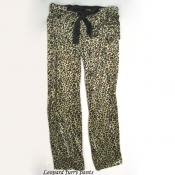
Gift-wise, it was a particularly girlie sort of birthday. To whit: I am now in proud possession of a free manicure, a free pedicure and a brand new pair of pajamas, the pants-part of which are leopard-patterned. Meowrrrr.

Happy Halloween, everyone!

Distractful thinking

“By this time tomorrow, this flare will be gone.”

That’s what I used to tell myself during the bad flares, the ones that made me wonder how I’d live through them. The ones that were so bad it felt like a dull spike was being drilled into the joints of my knee, or my great toe, or my shoulder.

“By this time tomorrow it will be gone.”

Sometimes the flare actually was gone by that time the next day. It hardly mattered, honestly. Telling myself that, in the midst of the awful pain and the silent, screaming fear that came with it helped to keep me calm. To keep me strong. It was a coping tool I used faithfully because it worked.

“By this time tomorrow it will be gone” doesn’t work with hip bursitis. Unlike my rheuma flares, which vary in intensity and can be depended upon (I can’t believe I’m writing that!) to ease off and stop eventually, this bursitis is always with me. I wake up to the same low, insistent, aching pain in both hips that I went to sleep with last night. Every night. And it persists all day, every day, despite exercise, despite Tramadol and now, Vicodin.

Of course, with the bursitis is my new and improved, under-pharmaceutical-control rheuma-dragon, who bites and chews at my knuckles and wrists at random. He’s invited his cousin, the osteo-wyrm, in for a visit, and he’s given her the joints at my fingertips to work on. Together they’re gnawing away as I type this, an aggravating counterpoint to the throbbing of “my” bursitis, which throbs from my arse down the back and outside of each hip to the knee. Basically along the entire length of my iliotibial bands (IT bands), the long, thick ligaments that sorta hold all the thigh muscles in place and help me walk.

Yeah, okay. I’m in a whiny mood this morning. Silly me; I went to sleep last night telling myself a variation of the fable I started this post with: “It will be gone when I wake up.”

Eh, not so much.

The good news is that the increased dosage of nortriptyline I take an hour before bedtime each night is working. I sleep right through the bursitis aches now. I’m deeply grateful. Despite my carping, that deep, restful sleep each night makes a huge difference in my ability to cope with the pain as I make my way through each day. I think I’ll send a thank-you note to my always-smiling, practical rheumatologist, Dr. McA.

When I opened Word to write this post, I had in mind to write about the coping mechanisms I use for rheuma (and now, bursitis) that help me through flares. The main one I was thinking about? Distraction. In our busy world, we tend to think of distraction as a bad thing. Distractions keep us from keeping our attention on our work, or on the road as we drive. But when we’re in pain, anything that can help us shift our minds away from it is welcome.

Allowing pain to command our constant, full attention makes for far more stress and can make hours seem like days. It can be hard to tear our minds away from it, but I’ve found practice works in this case.

How?

When I hurt, and my mind is determined to stay with the pain (like this morning, for instance), I look for something equally as compelling to distract me from it. For many years my first, go-to choice has been to lose myself in a good book.

It doesn’t matter which genre or type of book you choose. It just has to be one that can capture your interest and imagination and hold it tight. For me, only fiction can really do that. One of my favorite books is The Stand, by Steven King. There are several compelling aspects to The Stand: it’s filled with complex, fully fleshed-out characters, both scary and not; and it’s incredibly descriptive, so that when I’m reading, I’m right there, an observer in the place where the action is taking place. The plot is simple: this is a story about good vs. evil. Finally, The Stand is a long book. It has the added virtue of riveting me to its pages for hours at a stretch.

My mind is refocused. While I’m reading, I don’t notice my pain anymore. It’s as simple as that.

Another method I use for distraction is writing. This is harder, of course—words don’t always want to manifest themselves on the page the way I want them to. But if I can manage it, the sheer delight of writing fast and (hopefully) well is a wonderful distraction from physical pain.

Listening to a good audiobook can work, too. It’s a 30-minute drive to my aunt and uncle’s house when I go there to shop and cook for them. I always use the same route, as it’s the quickest, but it’s pretty dull. A few weeks ago I plugged my iTouch into the dashboard stereo, pressed the AUX button and started listening to A Wizard of Earthsea, a book written long ago by the famous science fiction and fantasy author Ursula K. LeGuin. The story, which is about magic, wizards, and a very different world from my own, is read by Harlan Ellison. He’s a terrific author of science fiction and fantasy in his own right, and quite famous. His voicing as he reads the story to me is sublime.

Each time I drive to my aunt and uncle’s house now I listen to a little more of A Wizard of Earthsea. It makes the drive seem like it takes about four minutes, and if I’m hurting from bursitis or RA at the time (which I usually am), I lose my awareness of it. It’s actually a double gift: I’m entertained and my pain is “relieved” at the same time.

Movies and TV, unless they’re really, really good, don’t work quite as well for me as pain-distracters as books do. But for lots of people, they do work equally as well. Comedies offer that special, double gift, too: along with distraction, you’re given laughter, which stimulates endorphins, the brain’s natural opiates. What more could you ask for?

Oh, right. A cure. Well, we can’t have that yet, but in the meantime, it’s worth it to practice the art of distraction. There’s more to pain control than drugs. And how about that: While I wrote this post I forgot, most of the time, my aching hips and twingy fingers.

It’s like magic.