A Day in My Life (with Autoimmune Arthritis)

This post will be included in the International Foundation of Autoimmuneleonardohands.jpg Arthritis’s World Autoimmune Arthritis Day Blog Carnival.

I am so lucky.

A day in my life today (with rheumatoid arthritis) is, first and foremost, not as painful as a day in my life was when I was first diagnosed in 1987. Since then I’ve experienced years of truly awful pain, years when my RA seemed to go to sleep and I was blessed with the elusive “remission” we all dream of, and finally, the recent years, when the “dragon” woke up again.

Today, when I wake up in the morning, my body feels stiff, sore and sludgy. The knuckles of both hands are swollen, so I have to be careful not to drop my handful of RA meds when I take them. I pour myself coffee (one hand grasping the handle of the glass carafe, the other supporting it with a potholder) and gratefully, I settle into my armchair. I pick up my laptop computer, open it, and sip coffee while I read over the news of the day, enjoying the peace of the morning—and the fact that I don’t have to rush around anymore …

Not like the old days, when waking up meant stiffness and sludginess, just like now, but it also meant that standing up from bed gave me my first breathtakingly sharp, rude jolt of pain for the day. My RA attacked joints in my feet all day, almost every day. It made every step I took painful. Some days my joints swelled, and I’ve have to wear loose, slip-on shoes. And if I was lucky, that was all I’d have to deal with. If I was unlucky, another joint would be flaring as well: a knee, an ankle, a shoulder, the pointer-finger of my right hand…

Today, by the time I’ve been up for two hours the worst of the stiffness has gone. The Tramadol I took first thing has sent the pain in my hands to a back room in my brain (though they remain swollen and a bit clumsy). By 9 a.m. I’ve finished my coffee and had a little breakfast. I go back upstairs to take a shower and get dressed, and now I can walk up the stairs comfortably. Going to work is a breeze: as a professional freelance writer, my workplace is my desk upstairs.

What a difference! In the bad old days, there was no time to wait for my meds to work. (And since they consisted of NSAIDs alone, they didn’t work anyway.)I was into and out of the shower first thing. Dressing could be interesting; putting a shirt on over a flared shoulder or tugging my slacks up with flared fingers was an exercise in stoic determination. I tried to keep any moans and groans to myself, not wanting to worry my daughter. She was seven. Once I was dressed, I’d wake her up, get her dressed, comb her hair… all those things moms do on school-day mornings. I’d get us some breakfast and pack her lunchbox. Some days that was easier than others. Somewhere in the middle of all that, my husband took off for work …

Today the knuckle at the base of that same index finger is fairly painful—it’s just annoying, though. It won’t slow me down much. At my desk, as I wait for my laptop to boot, I put both hands through a series of exercises, warming them up, getting the joints moving more smoothly. That one knuckle is going to be aggravating.  I take a deep breath, accept it as it is, and get to work.

Back in the late 80s, getting to work meant driving my little stick-shift car. Work wasn’t far away, but driving could be an agonizing—and dangerous!—undertaking when my left knee, or my big toe on my left foot, or any joint in my right hand flared. Some days instead of risking my life or the lives of my fellow drivers, I’d take the city bus instead. But that meant walking several blocks to the bus stop, and then standing there for 10-15 minutes waiting for the bus. Walking and standing were dreadfully painful every day. It felt like I was walking on gravel. And once on the bus, which was always crowded, I’d usually have to stand, hanging on to a hand-strap. By the time I got to work, I couldn’t wait to get to my desk so I could take my weight off my throbbing feet.

Today, my days are pretty darned good in comparison. My feet hurt sometimes, but never as bad as they used to. I generally don’t have flares in any of my larger joints anymore, either. Because my hands are swollen, a bit stiff, and sometimes painful, I can never really forget that I have RA during the day. It’s not like breathing, which we mainly do without even thinking about it. But I’ve got to say right here that I realize how lucky I am. I realize how fast things could change for the worse.

It could happen overnight. Just like the onset did. Just like the remission, when it came in the mid-90s. And just like the way my RA returned after a six-year nap. Like Jack Nicholson in The Shining, there it was, wielding its wicked knife to thrust into my joints. I’m b-a-a-a-a-k!

By tonight’s early evening my hands are a little more swollen. They’ve become more painful, too. The Tramadol isn’t working so well anymore. But usually by then my work is done for the day. No more typing. I can relax, dip my hands in the paraffin bath or microwave my lavender-scented gloves and slip my hands into their soothing, moist warmth. When I go to bed, if I’m lucky—and I usually am—I’ll be able to drift off to sleep without too much trouble.

I try not to remember those miserable, countless nights in the old days. I was often in so much pain there was no way I could sleep. I can remember nights when I stood crying at the bedroom door because it hurt too much to open it. Nights spent sitting on the sofa, rocking, trying to concentrate on the book in my lap instead of the monstrous pain. And other nights spent floating gently in a narcotic fog, aware of the pain that lived in it, somewhere, but thankfully locked up for a few hours.

They’re behind me, those times. And if my luck holds, that’s where they’ll stay.

Posted in RA

Pain and honey

I went out to lunch with my Mom yesterday. Unsure of what we wanted to eat, we ended up going to old town Folsom (yes, the same one that’s named in the famous “Folsom Prison Blues”). After considering and rejecting an American café-style meal, a heavy European meal, and spicy Mexican food, we decided upon Hop Sing’s Palace and had a delicious Chinese lunch for a price I hadn’t seen since the late 90s. Mom even had a glass of wine.

Afterwards we wandered up and down the raised, Old West-style boardwalks, browsing the gift and antique shops. The day was cloudy and cool, very pleasant. There were quite a few people out and about, which surprised me until I remembered it was Veteran’s Day, and anyone with a government job was off work for the day.

It was really nice – except that I couldn’t figure out a way to carry my handbag without making my hands cry. I ended up hanging it on my forearm (the straps aren’t long enough for my shoulder). It worked, but made me feel awkward and clumsy as I moved up and down the narrow aisles in the tiny shops, trying desperately not to knock anything over.

I was getting tired and cranky and trying not to show it.

It was in the last shop we visited that I saw a small display for a line ofbaklava_close_up hand and body creams made in Idaho. I’m not usually real interested in hand creams – most of them make my hands and fingers feel greasy, which I hate. But my hands, sore as they’ve been, have also been very dry and itchy lately. So I tried one of the samplers.

You know how those singular “moments” can sneak up and just surprise the heck out of you? Well, this was one of those for me. The cream, made with glycerin and an eclectic combination of flowers and herbs, was warm and soothing on my achy hands. As I rubbed it in, massaging them gently, it sank into my skin, so it felt silky and soft, but not greasy at all. For a brief time, the world slowed down as I took care of my hurts and the scent of the hand cream rose into my nostrils. Honey. It smelled like honey. It smelled like warm baklava tastes.

Well, that was it. I bought a tube of the stuff. I’ve rubbed it into my hands three times since yesterday, and each time it felt heavenly, though the sweet scent is a bit more overpowering here at home than it seemed in the shop. That’s all right, though. It beats the scent of Deep Heating Rub!

My hands are swollen and painful again today. I haven’t gone to the gym since last Friday. I can’t face using them to push and pull and brace myself on the exercise machines, though I have done some walking. But man, I’m just feeling flattened – I guess from not sleeping well and from the continuous, unrelenting pain, which is making me worry. I also feel guilty for letting the rheuma get me down and keep me from doing things I know I should do. This is not good.

The new meds my rheumatologist prescribed for pain and insomnia haven’t arrived in my mailbox yet. I hardly dare hope they’ll be there today when I check, but I do have a little more hope for tomorrow. And I’m hoping, too, that this awful, low-level but unrelenting flare will ease off soon. Some days I just don’t have the wherewithal to stay upbeat, hard as I try.

Yeah, I know. Stiff upper lip and all that. Nothing that a good night’s sleep won’t help! (That’s an absolutely truism, that one.) Well, I’m working on it, OK? But for the moment, I’m going to rub honey-glycerin cream into my hands and wallow. I’m sure I’ll feel better tomorrow.

Always do.

Wee beasties

As  you might have guessed, today’s post isn’t specifically about rheumatoid arthritis. It’s about my wee beasties.

AnxiousLogan

"Do you have to point that thing at me?!"

This is Logan. He’s a Queensland healer/border collie mix. He’s a bit over 13 years old now and he’s always been very shy about having his photo taken. He’ll sit still for it, if he must, but he’s very anxious for the whole ordeal to be over. I took this one with my cell phone — it doesn’t even look like a camera, but Logan knew I was about to take his picture anyway.  You know those old stories about how there are some people who refuse to have their photo taken for fear that the camera will somehow steal their soul? Maybe that’s what Logan thinks, too, as I tell him to sit, and stay, and raise my camera. If so, he’s just as brave as he is anxious.

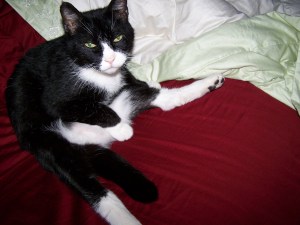
OhPIBLogan and my 14-year-old tuxedo cat, PIB (Puss in Boots) can always rustle a laugh out of me, no matter how tired or achy I am. When my fingers hurt, Logan lets me sink them into his warm fur — it’s so thick, I can lose my fingers in it up to the first knuckle. PIB is my wee shadow. Wherever I am, he’s there, somewhere close. He’s good at soothing aches, too. He’ll drape himself over my sore hip or ankle or knee, if I’m laying down, and let his furry warmth sink into my joints. And as you can see from this photo of him, he’s sort of a ham when it comes to cameras.
Although I did my workout this morning, bright and early, I’m really fatigued and sore today. My beastie buddies are helping me keep things in perspective, however, as they put up with my whims. And I love them for it.
Companion animals are good for us. Their uncomplicated acceptance and affection, their soft fur and warmth, even their purring and nuzzling touch the parts of our brains that have to do with pleasure and comfort, and cause a release of seratonin, a chemical that helps sooth pain, relaxes our tight muscles and puts a smile on our lips. Logan and PIB are a vital part of my life, my wellness.
Do you have pets? Do they help you deal with pain, fatigue and low spirits? I’d love to know. And thanks for stopping by!

Apprehensive

It’s a little after 7 a.m. I’m waiting my turn in the bathroom (daughter is prepping for work, son-in-law-to-be is heading out with her on his way to a physical therapy appointment. When they’re done, I’ll dress in my workout clothes and head to the gym for my 45 minutes of strength-and-cardio training.

I’m a little apprehensive this morning. My right pointer-finger is full of a nauseous ache; the other fingers are twingy and sensitive, as usual. And of course, all of the resistance machines involved in my workout require my hands – some actively, others as braces.

So how will I do? I’m enjoying these workouts. They’re vital for any numberexercise-cartoon of reasons – toning flabby muscles, working and strengthening my body and heart, burning calories, lowering cholesterol and blood sugar levels without additional drugs. As I get stronger, I’m counting on the fact that strengthening my muscles will be beneficial as I deal with rheuma flares. I’ve doubted, a little, the fact that the rheuma is active and “severe” again (as my rheumatologist describes it) because until recently, it’s been mostly in my hands and mostly twingy.
But I don’t doubt anymore. Each day, each week re-introduces a heightened level of pain. Bathroom is free. Can’t put it off any longer. I’ll check in later.

Update: Well, that wasn’t so bad. Sure, that particular finger is shouting at me right now and my hands are sore, as usual, but I can deal with this. Today, the rheuma didn’t stop me from moving anything — which pleases me to no end. Really. The icing on the cake is that I worked all my muscles, got sweaty and kept my heart rate up and steady for a little over a half-hour. And the icing on the icing? I had fun.

Wonders never cease.

I have RA. Should I get a flu shot?

I’ve seen this question pop up all over the Internet these last several months. I’ve asked the question myself. But it was only today that I discovered, while perusing the weekly Centers for Disease Control (CDC) H1N1 Flu Update I get by email, that CDC now has instructions aimed specifically at those of us whose immune systems are suppressed by disease or medications, or both.

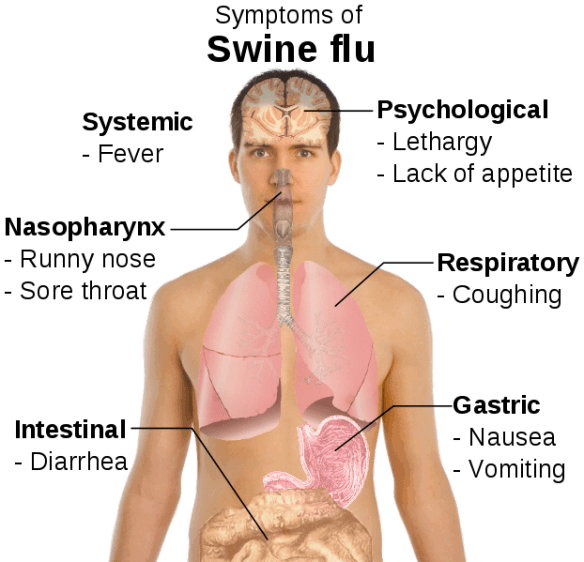
The answer? Yes. Absolutely get the H1N1 (swine) flu shot just as soon as it’s available through your rheumatologist or primary csymptoms_of_swine_flu_svgare physician. Get the normal, seasonal flu shot, too.You’re at a much higher risk for complications from either or both flu types.

However, do NOT get the type of vaccine that has the live virus in it. Only get the type with the dead virus. Be careful. Ask before you get jabbed. This is important, as your body might not be able to fight off the live virus and you could possibly get sick.

According to the CDC, “Medications that can weaken the immune system and increase the risk of influenza-related complications include corticosteroids, disease modifying anti-rheumatic drugs (DMARDs), and biological response modifiers.” Lots of us who fight the day-by-day battle with rheuma take these medications. They help us battle the disease but leave our bodies far more vulnerable to infections, both viral and bacterial.

“Although the exact type and severity of immune dysfunction that correlates with risk of influenza-associated complications has not been well defined, patients with more severe immunosuppression are predisposed to serious complications such as prolonged or increased severity of illness,” states the CDC on its website.

If you have any of the following rheumatological diseases:
•Rheumatoid arthritis (RA)
•Systemic lupus erythematosus (SLE)
•Psoriatic arthritis
•Anti-phospholipid syndrome
•Polymyalgia rheumatica
•Systemic sclerosis/scleroderma
•Spondyloarthropathies
•Sjögren’s syndrome
•Polymyositis/dermatomyositis
•Vasculitis (e.g., giant cell arteritis)
•Necrotising arteritis
•Sarcoidosis
•Polyarteritis nodosa
be sure to get both the seasonal and swine flu shots as soon as they’re available in your area.

H1N1 (swine) flu is widespread all over the United States now. Take precautionary measures to prevent yourself from catching or spreading the flu:

–Try to avoid contact with people who have the flu.
–Wash your hands frequently with soap and hot water, or with antibacterial gel.

Symptoms of the flu may include:
•fever *
•cough
•sore throat
•runny or stuffy nose
•body aches
•headache
•chills
•fatigue
•sometimes diarrhea and vomiting
*It’s important to note that not everyone with flu will have a fever.

If you develop flu-like symptoms:
•Contact your healthcare provider.
•Avoid contact with others. Seek medical care early. You should stay home and avoid travel, including not going to work or school, until at least 24 hours after your fever is gone except to get medical care or necessities. Your fever should be gone without using fever-reducing medications.
•If you leave the house to seek medical care, wear a facemask, if available and tolerable, and cover your coughs and sneezes with a tissue.
•Do not stop taking any medicine you take for your arthritis unless told to do so by your physician.
•Seek medical attention early. Treatment is available for persons with severe disease and those at high risk for complications. Persons with inflammatory rheumatic disease are considered high risk for complications from the flu; therefore, your health care provider may choose to prescribe antiviral medications for you if you get the flu.
•If you are exposed to someone who has flu, consult your health care provider.  They may prescribe medication to help prevent you from getting the flu or watch you closely to see if you develop flu symptoms.

Note: People with osteoarthritis are likely not at increased risk for influenza-related complications unless they also have another high risk condition such as asthma, diabetes, heart disease, or cancer.

For more information, visit the CDC website page specific to those with rheumatalogical diseases: http://www.cdc.gov/h1n1flu/arthritis_clinicians.htm

For more general information about the H1N1 flu, visit http://www.cdc.gov/h1n1flu/general_info.htm

Here’s hoping that all of us stay strong and healthy throughout the 2009/10 flu season.

Preparing for battle

MistyDogwoods

It’s one of those interesting autumn days when the sun and the clouds battle for dominance overhead. Indoors, the light from the windows shifts from yellow and warm to gray and cold, back and forth, back and forth. There’s a breeze that puffs up and moves the wind chimes enough to make zen-like notes that hang on the air and die away until the next time. My dog, now in his old age and arthritic like me, sighs and does that grumpy-old-dog groan in his sleep.

It’s early afternoon, mild and in the mid-60s. I have the windows open so the good, clean, fresh air can waft through the rooms. The temperature is so soft I’m comfortable wearing an oversized T-shirt and jeans; there’s no need for anything warmer. My beloved mechanical clock, the gears run by a weight and pendulum, tock-ticks the quiet minutes away.

I’m thinking about my renewed struggle with rheuma. I’d gotten accustomed to getting through my days without coping with painful joints, without limping, without that sudden, sharp knife of pain and surprise when I try to open a jar or pick up a book. I’d forgotten what it was like before the disease went into its long remission.

In a way, forgetting was a mercy. It’s good that our minds blunt memories of pain.

Now the rheuma is back. The evidence is everywhere. It’s in my blood test results. It shows up as pain in my wrists, hands and fingers. As twinges in my knees and shoulders. And it shows itself in the 5-inch-long, zig-zag scar I’ll always have along the outside edge my right wrist, the visible aftermath of surgery four years ago to slice away an ominous deposit of synovial pannus. A mis-shapen, hard, completely painless lump that appeared as if out of nowhere over my wristbones, it was potentially, even iminently, disabling. It was the first clue I’d had in nearly a decade that the disease still active in my body.

I’ve learned a great deal since I was first diagnosed with rheumatoid arthritis. Back then, there was no Internet. No Google. I was living in N. Germany, working as a civilian on a U.S. Army post. It was only because I’d been experiencing bewildering bouts of increasingly intense, persistent pain in my hands, shoulders and feet for more than six months that I finally went to my doctor, a U.S. Army internal medicine physician. Major Tom. He ordered blood tests. They came back with a positive Rh factor. I had my diagnosis.

Maj. Tom put me on NSAIDs. He told me a little about the disease — it was an autoimmune disease, mainly — and prescribed painkillers when I needed them. With no other resources, unsure of what to questions to ask, I went to the post library, looking for books about rheumatoid arthritis. There weren’t any, but the librarian found the address of the American Arthritis Foundation, so I wrote them for information. A few months later they sent a pamphlet.

And that’s how I learned the disease was, and is still, incurable. That it affects more woman than men by three to one; that it affects children and young adults and isn’t, as I’d always thought, an afflication of the elderly. I learned that some people felt better if they stopped eating foods from the nightshade family (potatoes, tomatoes, eggplants), but that there was no scientific proof of it. I learned that exercise was strongly encouraged, yet I knew for a fact than when one of my joints was flared, I could barely endure moving it a few inches, let alone exercising it. I learned that the well-meaning people in that foundation who seemed so knowledgeable about rheumatoid arthritis thought of the agony I frequently experienced as “aches and pains.”

I felt very, very alone. But as the years passed, I learned more. My doctor tried drug after drug on me, hoping to relieve my pain. I took the whole gamut of NSAIDs. I tried plaquenil, but stopped taking it after the opthalmologist discovered a small tear in  my retina that hadn’t been there before. I took oral gold. I had blood tests every two weeks for so long that the veins in my elbows collapsed and they had to draw blood from my forearms and backs of my hands.

None of it helped. The only relief I had was when I took narcotic pain relievers, and those I only took with great care, and only at home.

I had to take a couple of sick days off from work each month; when the flares got really bad, sometimes I had to take more. My supervisor and my boss were sweet and understanding. They saw me cover stories (I was a writer-editor with the post’s public affairs office) while gimping along with a cane or on crutches; they saw me type those stories up in spite of hands so painful I had to do it slowly, doggedly. They gave me no trouble over the days I took off as long as I got my work done. I did get it done. I was proud of that.

When I came back to live in the States again, I’d had all I could take of doctors and endless drugs and bloodtests. Nothing helped. I resigned myself to living with the disease without treating it. The side effects of all those drugs frightened me. And eventually, as slowly as it had come on, the rheuma went into remission. The flares became less and less frequent. The continuous, annoying twinges finally stopped. I went back to living a “normal” life, one free of canes and crutches, drugs and needles, of pain.

I knew that “remission” didn’t mean that the rheuma was gone. But I didn’t really understand that it meant, even if I couldn’t feel it, that it was still doing damage inside me. I guess I thought that it was in some sort of suspended animation. I was wrong.

Today, as the autumn sun slides down the sky toward night my hip hurts when I move, stabs me when I walk. My hands, as usual, twinge and ache. The disease hasn’t reached the terrible, excruciating intensity that it did before, at least not yet, and I’m taking an old drug — sulfasalazine — and a new drug — Arava — as weapons in my arsenal against my back-from-the-dead enemy. My rheumatologist says they’re working.

I have to believe him, even though so far (as before) the drugs aren’t doing anything to stop the creeping advance of pain. But I know a lot more about the disease now. I’m educated. I’m not isolated on an Army post on another continent, the only person I know who has it. The latest information about rheumatoid arthritis is today always available, right at my fingertips as I search the Internet. I search with great hunger for more. I want to learn and learn.

And this time, I don’t feel quite so alone. There’s a whole, online community of people who, as they battle this disease, are talking about it, writing about their experiences, and who are offering anyone who needs and wants it their compassion, understanding and support. Inspired by them, I’m doing the same.

And as I think about moving, about working for a while in the kitchen, making supper for myself and my family, I feel as if I’m waiting, almost holding my breath. I know what it is I’m waiting for: the dragon called Rheuma. I’m mentally streaking myself with blue woad. I’m conserving my strength.

I’m preparing for the inevitable battle ahead, knowing I won’t win it, but that I’ll survive it. Knowing that each skirmish will make me stronger.

Knowing that I’ll lose only if I give up.

Photo of autumn dogwoods copyright Leslie Vandever, 2009.

Mystery


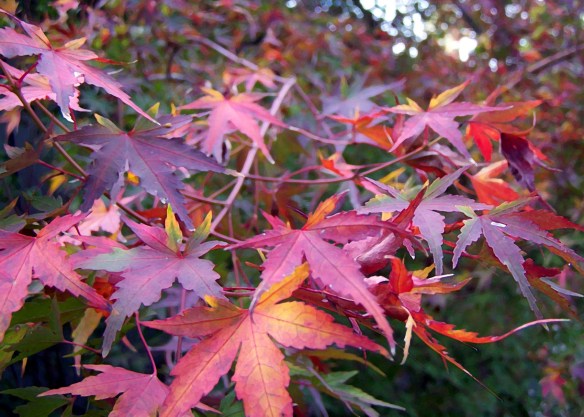
AutumnMapleLeaves

Last night was rough. Hands bitched and moaned. My right ankle joined the chorus, as did both hip joints. I was too hot. Then I was too cold. I tossed and turned, trying to get comfortable, trying (with great sighing and grumbling) to fall into a deep, restful sleep.

No go.

When dawn finally arrived, I rolled out of bed stiff and sore, but relieved to be done with the battle, at least until bedtime again. I shivered. I’d sweated through my thin pajamas several times during the night; they were still a little damp. Jeez. I thought I was finished with menopause. I guess I was wrong. I pulled on my warm house robe, slid my griping feet into my old wool slippers, and padded into the kitchen to make a cup of coffee.

I’m on my second cuppa now. I’ve eaten a bowl of steaming-hot oatmeal jazzed up with cinnamon, a little brown sugar and a drizzle of evaporated milk. I’m finally warm and it seems I’ve finished with the “power surges” for now. When I’m done writing this I’m headed for a hot shower and clean, warm clothes.

Autumn has arrived about three weeks early here in my little part of Northern California. In spite of the chill – or really, because of it – I’m glad. I’ve always loved this time of year best no matter where in the world I’ve lived. I love the clear, slanty sunlight, the cold nights and the surprise of the first frost, the change in the trees from slightly worn-out green to brilliant yellow, orange and scarlet. I love the snap in the air and the chill on my cheeks, the breezes that pick up, carrying hints of ice in them, and an excuse to wear a sweater and fuzzy socks.

Fall energizes me. October is my birth month, so maybe that has something to do with it. But I don’t look forward to my birthdays anymore. When I reach the Big Day this month, I’ll be 53. One-half century plus three years.

It’s funny. When I hit the Big 5-0 it didn’t bother me much. It gave me pause, sure. Fifty years on Earth, I understood, gave me a slightly more nuanced take on the world than those younger than me. My children were grown. I’d lived through personal hard times and through troubles that affected the rest of the world as well. We hadn’t, after all, been vaporized or irradiated to death by a Soviet nuclear bomb, though we’d discovered we faced other man-made dangers equally as serious. I’d endured more than 10 years of severe, agonizing rheumatoid arthritis – but then enjoyed nearly that long again free of RA pain after the disease went into “remission.” I’d done a lot of the things I’d always wanted to do and a probably a lot more that I hadn’t, too. And I was good with all of it.  

My outlook is less rosy these days. The rheuma is back. As it did the first time I had it, it’s slowly, slowly ramping up, even though this time my arsenal of medical weapons is much better. The enemy advances anyway. This time, I’m not in my 30s. I don’t have the same energy level as I did then, and when I remember how the relentless, grinding pain of the disease flattened me in spite of being younger and stronger, I quake a little inside. Don’t get me wrong – I’m grateful that it hasn’t reached that level of severity yet this time, and I haven’t lost all hope. But living awhile has also made me a lot more pragmatic. The reality is that the rheuma’s getting a shade more painful and debilitating each day in spite of the powerful medications I’m taking. The reality is that only a small percentage of those who take these drugs get great results. I know they have the potential of slowing the progression of the disease, but to me it means that instead of finding myself crippled next year or in five years, I can maybe put that off for some longer period of time. Or maybe not. Rheumatoid arthritis is notoriously fickle.

So, as the 53rd anniversary of my birth and the 23rd anniversary of my diagnosis of RA approach, I find myself pondering the future in a way I never have before. Will I be able to work outside my home for much longer? If I can’t, will I be able to find a way to make a living from home in spite of my disability? Will I have someone in my life able to help me get through the days if I end up in a wheelchair? What if my hands are ruined?  I already know what it’s like to be occasionally disabled by pain and stiffness. I cope. I smile and work hard not to let it destroy my love of life or to affect how I treat and interact with my loved ones and the world at large. I smile in spite of rheuma, but I’m sure not fond of it.

The far-off future was always a mystery to me, but to my mind, it was an exciting one. I’ve always loved adventures and I’ve never feared being lost. I’ve always found my way back home, relatively unscathed. The unknown beckoned to me, even during the hardest years. It still does, but this time I’m wandering down the road of my future with a certain apprehension instead of running ahead heedless. I know there are hard climbs and high cliffs out there in the mists. There are dragons to fight, so I must be ready and well-armed. I know I need to conserve my energy for those times when I’ll need it.

And then, just as the drama is closing down around me, I remember that there will also be good times on the road to my future. There will be warm fires and sunny days, times of love and comfort among friends, family and even strangers. I’ll make new friends and find new pastimes, and because I’ve grown a thicker hide and I’m tougher than I look, I’ll get by. More than just get by – I’ll live as well as I can, as gently as I can, and with all the love and courage I can muster. I’ll enjoy the colors of autumn, the renewal of winter solstice, the hope of spring and the comfort of many more summers to come.

You know, it really is still an adventure, isn’t it.

Cross-posted to Blue Wren  // Photo copyright Leslie Vandever, 2007.

Posted in RA

Invisible? Maybe. Real? Absolutely.

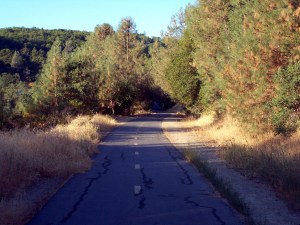
When you have rheuma, it can hard to explain to others why you can’t just “hurry up” or “do” like anyone else. If you’re like me, you prefer to keep quiet about the pain you’re in – you don’t want people to think you’re a wimp, or a whiner, or that you’re angling for attention and sympathy.  Or maybe you just don’t want to have to launch into the whole complicated, mind-numbing explanation about your disease.EDTrail1

Again.

The trouble is that people usually can’t see rheumatoid arthritis. Those who have it generally don’t “look” disabled, even though the disease may eventually confine us wheelchairs or leave us bedbound and helpless. We hope that the cocktail of drugs we take each day will prevent that unwanted denouement – even as we hope they don’t prevent the proper functioning of our stomach, liver and kidneys. We dream that a cure will be found in our lifetimes, and that maybe it will happen in time to help us, too.

We’re pessimistic optimists.

Rheuma is an invisible disease. But we who have it frequently have to cope with the very real and varied disabilities that it causes. The inflammation and pain of RA often moves from joint to joint in our bodies. It’s if the disease is consciously malicious, going out of its way to conjure up new challenges for us to overcome.

Here’s an example: A few days ago, one of the metatarsal joints in my foot was painfully flared. I limped around all day like I’d broken several toes but didn’t have enough sense to go to a doctor. Yesterday it was my shoulder joint. The flare waited until late in the day to manifest, so when it was time for bed, I had a hell of a time getting my stretchy, pullover blouse off. Then had trouble sleeping because I couldn’t get comfortable. Today (and just about every day, if I’m honest) my hands are achy and twinge-y. When I went to hang a small fry pan on the pot rack after washing up my breakfastOverlookStorm mess this morning, just reaching up and fumbling the handle loop over the hook made me yelp, groan and, once I’d accomplished the task, cuss ferociously under my breath.

Rheumatoid arthritis pain is real. It can be, at times, absolutely excruciating. At other times it’s bearable, but it’s always exhausting. You have to move carefully. Slowly. You can’t just “do.” A flared joint is stiff. It “screams” when it’s forced to move. It won’t willingly bear weight. And there’s not much you can do about it but wait it out and take painkillers in the meantime.

Of course, painkillers constitute their own, exclusive little corner of hell.

But back to the “invisible” disease. When our daughters were young, my husband loved to take them hiking and fishing with him. Sometimes I went with them. If it was a “good” rheuma day, hey, no problem. I could tramp around and cast a lure with the best of them. But if it wasn’t, it meant bringing up the distant rear during the hike. I simply couldn’t walk fast enough to keep up. Each step – literally – hurt like a you-know-what. That I was walking at all – and even taking on a three- or four-mile hike in spite of my feet hurting like they’d been beaten with bamboo sticks all night – was a source of an odd and private pride for me.

After a while I’d fall so far behind that I was hiking alone, hoping to God that I didn’t trip and fall or twist an ankle, and that my family would notice my absence and maybe come find me if I did. Because I didn’t complain, they weren’t concerned about me. Once at our destination, the day would stretch out interminably. There was usually no place to sit down. I’d endure hours and hours of standing or gimping along the shore on my painful feet, casting for fish that, naturally, were totally uninterested in being caught and cooked for supper.

Still, I didn’t talk about how much I was hurting. I’d chosen to come along, so I did my best to smile and laugh. I really enjoyed being out in the wilds with my family. I enjoyed basking in the fresh air and bright sunshine, resting my office eyes on the pretty, natural surroundings. I’d spot flocks of Sandhill cranes passing high overhead, their weird calls finally reaching my ears like whispering ghosts. I’d watch great blue herons stalk tiny fish in the shallows (far more successful fishers than I could ever hope to be). I’d stare down the occasional herd of slow-moving cattle that wandered by.

And then there’d be the long, long hike home. I’d bring up the rear again.

Invisible illness. I remember one night in Germany when my hands were so painful that I couldn’t work the door lever to my bedroom. I could push it down with my elbow, but I couldn’t bear to pull it open once it was unlatched. The agony that little bit of pressure caused was simply more than I could bear. So I stood at the door and cried like a baby. Finally, I worked up the courage to take hold of it and pull. There was no choice. I had to go to the bathroom.

And taking care of that was another almost impossible obstacle.

I was fortunate enough to have the disease go into “remission” for a long time. While it was, I began to forget how painful my life had been before. I got used to being able to do what I wanted to do again. I backpacked. I canoed. I fished. I gardened. As a journalist, I covered local wildfires and kayak rodeos, bow-hunters and bears that had wandered into the suburbs. All of these required a lot of walking and sometimes, running. I did it. I even participated in whitewater rescue training with the local fire department, wetsuit and all.

Now the rheuma is back and steadily ramping up. This time, I’m speaking out when I hurt. I’m asking for help when I need it instead of suffering in silence. I’m researching the disease, learning all I can about it and talking with my rheumatologist, asking lots of questions, making him prove his stuff. Most of all, I’m learning to be my own advocate. I’m not whining. I’m not lazy. I’m sure not a wimp. Rheuma may be “invisible” to others, but it’s still disabling.

That’s a lonely, isolating condition to be in. Speaking up – and speaking out – is vital.

Posted in RA

30 Things about my invisible illness you may not know

National Invisible Chronic Illness Awareness Week  was Sept. 14-18. I missed it. One of the things bloggers who suffer from chronic illnesses did was post their responses to the statements below in an attempt to help the “well” world understand that these illnesses are common and that the people who suffer with them are human beings, not dry statistics.

Rheumatoid arthritis is very poorly understood by the general public. It’s considered a disease of the aged. Because of advertisements for over-the-counter remedies and painkillers, people think that it’s an easily treated disease. It’s not. And it affects children and young adults as often as it does older people.

So I’ve decided that even though I missed National Invisible Chronic Illness Week when it happened, I’m going to participate now anyway. And hopefully, someone out there will have a better understanding of what RA is because of it.

1. The illness I live with is:  Rheumatoid Arthritis.SwellyHand2

2. I was diagnosed with it in the year: 1987.

3. But I had symptoms since: 1987. I was one of the lucky ones. My doctor diagnosed RA quickly. I didn’t have to suffer with it for years like a lot of people do before getting a diagnosis and treatment.

4. The biggest adjustment I’ve had to make is: accepting the frustrating disability RA causes periodically.

5. Most people assume: That RA is a disease mainly of the elderly and that it’s easily treated. It isn’t and it’s not.

6. The hardest part about mornings are: putting my feet on the floor and standing up. My feet ache like I’ve been standing on them all night, even though I haven’t. My joints, all over my body, are also stiff in the morning. It takes a while to warm everything up and get moving.

7. My favorite medical TV show is: ER. I loved the character development and the excellent writing.

8. A gadget I couldn’t live without is: my hands-free can opener. RA affects my hands nearly every day to some degree, and sometimes they hurt badly enough that I can’t grasp things like manual can openers or even a cup of coffee. I also love my indoor grill because it helps me cook easily and healthily.

9. The hardest part about nights are: When I’m suffering a flare in a joint, the pain keeps me awake. I can’t get comfortable. So I don’t feel rested when morning finally arrives.

10. Each day I take four sulfasalazine tablets, one half of an Arava tablet, folic acid, magnesium, and Tylenol. Sometimes I take several doses of tramadol, a synthetic opiate painkiller, too. And I take fish oil and other vitamins in the hopes that they’ll keep me healthier and help my joints.

11. Regarding alternative treatments I: have tried many. They don’t work for me. I think mainly the people who sell these things are making money off the suffering of others, which makes me angry.

12. If I had to choose between an invisible illness or visible I would choose: Neither one, frankly. Both types of illness are difficult to deal with in their own ways.

13. Regarding working and career: Working is often very hard, even though I love the work I do. It’s tough to concentrate when I’m in pain. And sometimes, when I’m having a flare it keeps me from moving around easily and sometimes, from moving at all. That doesn’t help the career in any way.

14. People would be surprised to know: How truly difficult it can be to live with excruciating, disabling pain day after day and how much determination and courage it takes to keep on doing – and smiling – in spite of it.

15. The hardest thing to accept about my new reality has been: that there is no cure for rheumatoid arthritis and that even though the drugs to treat it have improved, they mostly don’t deal with the pain. I will always have RA. I will always have to deal with it. And it will continue to disable me as time passes in spite of everything I try.

16. Something I never thought I could do with my illness that I did was: Going skiing in the Alps and hiking in the Desolation Wilderness. It hurt and I was slow, but I did it anyway, and I was proud of myself.

17. The commercials about my illness: give the general public the impression that RA is easily treatable and controlled by drugs. It’s true that some drugs may help some people, but it varies from person to person and often, the effects of the drug don’t last. In addition, they all come with potentially serious side effects, some of which are worse than the disease the drug is supposed to treat. This is very frustrating as it makes people think that those of us who have RA are just not trying hard enough or that we’re whiners.

18. Something I really miss doing since I was diagnosed is: getting through whole days without any kind of persistent, chronic pain.

19. It was really hard to have to give up: I’ve been fortunate in that I haven’t had to give up much because of RA. I can’t do as much as I used to, and often mundane tasks like grocery shopping are much, much harder than they should be. I’ve had to learn to pace myself and accept that sometimes, I just can’t do what I want to do.

20. A new hobby I have taken up since my diagnosis is: I write all the time. I have two blogs and I write fiction. None of it’s been published yet, but writing is one of the things I can do that distracts me from pain. It’s a good and beneficial thing.

21. If I could have one day of feeling normal again I would: go cross-country skiing or snowshoeing.

22. My illness has taught me: to be aware of the courage people with disabling illnesses and injuries have, and to be grateful for and mindful of the good things in my life.

23. Want to know a secret? One thing people say that gets under my skin is:  when people say that I should walk more, or exercise more, and then I’d feel all better. The assumption is that my pain and disability is my own fault. I also get frustrated when people say, “But you’re too young to have arthritis” or “Oh, I know how you feel. I hurt my knee the other day …” They don’t have any real idea how I feel.

24. But I love it when people: try to understand and show compassion and kindness. And I love it when they don’t act like I’m just whining for the attention it brings me. Honestly, why would anyone pretend to hurt all the time?

25. My favorite motto, scripture, quote that gets me through tough times is:  This too will pass.

26. When someone is diagnosed I’d like to tell them: Try to keep a positive attitude and don’t suffer in silence. Speak up about your illness and educate your loved ones and the people around you. Don’t feel guilty when you can’t do everything you used to, or when you have to say no to invitations because you’re hurting. You are your own best advocate. And be sure to find others to talk to, even if it’s just online, who also have RA and can understand what you’re going through and offer moral support. It helps a lot.

27. Something that has surprised me about living with an illness is: how tough I am. I keep going with pain that I know would floor my loved ones and friends if they could feel it. I’m also surprised sometimes at how I can still smile and have a sense of humor in spite of feeling terrible.

28. The nicest thing someone did for me when I wasn’t feeling well was: when a co-worker stopped by one day when I’d stayed home from work because of a flare. He asked if there was anything I needed from the store or if I’d like him to bring me a meal. I was very touched by his kindness.

29. I’m involved with Invisible Illness Week because: even though I’m a few weeks late, I think this is a good way to raise awareness of RA and other invisible but debilitating and disabling diseases. Having RA can be very lonely, and because most people don’t understand what it is and what it means to the person who suffers from it, there’s a lot of guilt that goes along with not being able to do as much as you want to. It’s frustrating and sometimes humiliating. So anything that makes people more aware is good.

30. The fact that you read this list makes me feel: good that you’d take the time to learn more about me and about rheumatoid arthritis. I hope you’ll pass it along to other people you know so they’ll understand more, too. People with RA are people just like you. We love, we laugh, we hurt, we weep, and we keep going, just like everyone else.

Posted in RA

Taking my life back

Kelly Young, who writes the excellent blog “Rheumatoid Arthritis Warrior” posted a piece about cooking with RA and invited her readers to send her their stories, their tips and their recipes.

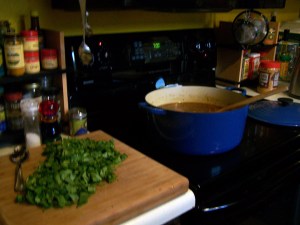
The idea intrigued me. So I responded. But I also decided to post my response here:HomeCooking1

A little over a year ago I made some massive changes to my diet. Why? My annual check-up with my GP produced this sobering news: My blood sugar was high — I was borderline diabetic; and I was obese and getting obese-er. With a family history of heart disease, I was a living, breathing example of “metabolic syndrome,” the popular term for those of us who are over 50, live sedentary lives and overeat. We’re walking time-bombs. That we will be sick sooner than later is a given.

On top of that, the RA that had been in remission for about 10 years was back, mainly as stiffness and mild pain in my hands. I knew from past experience that it wouldn’t stay mild, that eventually I’d be facing disabling pain and deterioration of my joints.

My doctor suggested changing my diet, both to lose weight and bring my blood sugar under control. She hoped, as I did, that by doing this I’d avoid Type 2 Diabetes and avoid having to take drugs to control it. I’d also be doing my heart and my joints a great favor.

I walked out of her office truly scared. My weight gain had taken place over a period of about 15 years; I’d pretty much given up trying to keep it in check. Coming home tired from a full day of work each evening had made me a rather lazy cook, depending more often than not on processed foods out of boxes and cans, or fast foods picked up on the way home because these were quick and easy. And while I tried to avoid snacking, it was a losing proposition. I loved my crackers and chips too much to give them up in the evenings and loved the donuts and other goodies my co-workers (and I) brought to work most mornings to share.

Yet I knew, now, this was serious. I had to face it. I could become very ill. Diabetes could blind me or cause me to lose a limb. My weight, along with making me feel ugly and blob-like, could trigger a heart attack. It could cause, with the RA, terrible damage to my joints. I might end up in an extra-wide wheelchair or worse, bedbound and dependent upon others for everything in my life.

And scariest of all: I could die. It wouldn’t be a dignified, painless or gentle death, either.

So I started researching diets. Oh, I knew how to diet — I was a chronic and chronically defeated dieter. But this time I looked into nutrition. I looked into the ingredients in processed foods. I learned how the sugar I ate (in many forms in many products) destroyed my body’s ability to use it efficiently, and how that excess sugar in my blood was damaging my body. I learned that “giving up sugar”  would take more than just saying “no” to a couple of donuts with my coffee each morning.

I didn’t want to have to weigh everything I put into my mouth, or count calories obsessively. I didn’t want to feel like I was missing out on tasty foods, restricted to bland salads dressed with rice vinegar. Ugh. But after reading and learning, thinking hard about it all and readying myself for the change, I knew what to do.

Basically, I simplified the whole shebang.

Today, I eat only fresh chicken breasts, pork loin or fresh fish. If I eat red meat, it’s lean lamb stew meat, cooked into soup. I’ve given up “white” foods — white flour, white rice, white pasta, potatoes — in favor of whole grain flour in bread and pasta, and brown basmati rice. The reason? These “white” foods all turn into sugar once you eat them, making the body’s blood glucose level spike way up. Whole grains take a lot longer to digest, so they don’t cause that dangerous spike in blood glucose. They also provide excellent fiber. I eat beans of all kinds. And I eat a lot of fresh fruit and vegetables. The fruit I make into smoothies with yogurt and soy milk; the veggies are steamed, stir-fried or made into salads. Snacks consist of a piece of fruit or a handful of almonds or other nuts.

Yes, it seems restrictive, all written down like this. But what was amazing, to me, was how easy and quick cooking this way was. I use an indoor, electric grill for cooking the meats and fish. While they cook, I steam or wok the veggies, or perhaps make a salad. The other amazing thing was that I liked what I was eating. Grilled foods, subtly seasoned, are scrumptuous.

By making my portions smaller (except for veggies, which I eat as much as I want) and eating everything fresh, I started losing weight. It was slow. There were a lot of plateaus during which I lost nothing. But I kept with it, learning new ways of cooking and trying new recipes. I discovered Indian food, which I love. And a little over a year later, I weigh 50 pounds less.

My doctor is pleased with me. I am no longer a “metabolic syndrome” patient. My blood glucose levels are normal. I’ve lowered my risk of heart disease. And while I still have RA (and as I expected, it has slowly ramped up in terms of pain levels) I feel confident that at least, I’m keeping my weight from doing even more damage to the joints in my hips, knees, ankles and feet. I take Arava and sulfasalazine for the RA, see a rheumatologist every three months, and have my blood tested every six weeks. I’m a healthy work in progress.

And, to my surprise, I don’t miss donuts, candy bars, potato chips or crackers. If I want something sweet, I put Splenda in my coffee or I treat myself to an occasional “no sugar added” fudgesicle, which lets me enjoy the sublime taste of sweet milk chocolate while not causing my blood sugar to go through the roof.

I don’t eat out very often any more, it’s true. But guess what? I spend less money that way. And when I do go out for a meal (once a week or less) it’s a treat. I eat what I want for that one meal, and then I go back to my healthy food.  I take healthy leftovers from home for lunch rather than buying fast food. I spend less overall on groceries since I no longer buy snacks and processed foods in boxes, cans, and out of the freezer section. Goodbye, Hot Pockets and Red Baron!

As a result I feel much, much better. My clothes are smaller, they feel less restrictive, they’re prettier and I’m enjoying looking nice again. I can bend down and pick something up off the floor without cutting off my own breath. I have more energy. My self-esteem has improved greatly. And even showers take less time — I have less of me to wash!

Most of all, I feel as in control of my life as I can be. I know I can sustain this diet, this lifestyle, indefinitely, keeping my weight down while eating mindfully and with my own overall health at the top of my agenda. I don’t know what new problems RA will face me with in the future — only that it will. But at least I will be able to face them with a stronger, healthier body and a positive attitude. I’ve taken my dignity back.