Cussing in cadence

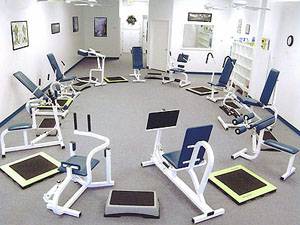
hydraulic exercise equipmentI was up early this morning, heading for the local Curves gym. It was my first time there, and, I’m almost embarrassed to admit, my first time trying any sort of gym workout since I was in Germany. There I tried to take advantage of the Nautilus machines at the U.S. Army post gym, but the rheuma was just too severe at the time. There wasn’t a single machine I could use without causing myself excruciating pain. So I gave that up.

I didn’t feel too bad about it. I got a decent amount of exercise anyway — I walked just about everywhere. We had a wire-haired dachshund, Max, who needed his walkies every morning and every evening — and more often on weekends. Nothing like a dog for motivation, right? And rather than drive and fight for parking when I needed to go downtown, I’d ride the bus and then walk and walk, doing my shopping. On Saturday mornings, if the weather allowed, I’d walk the 10 or so blocks to the little store where I bought my coffee, trying to converse with the proprieter in my truly awful German while she put the coffee beans through the grinder for me. Lots of laughter resulted. I walked to a big, nearby park at least once a week, and then walked all over it, following the wide footpaths through the forested grounds. There was a large pond — almost a lake — with ducks, geese and a pair of grouchy, dangerous and beautiful swans. There was the rose garden. The little boathouse where you could buy a cup of strong, delicious coffee and a slice of cake. The towns and cities in Germany, and the other parts of Europe I visited, were made for walking, built before cars came along.

And I walked during and in spite of bad flares in my feet, ankles and knees. Man, it hurt. I limped and gimped. When I was in basic training for the Air Force, way back in 1979, they taught us to march as the instructor counted cadence. After a while (and I learned my right from my left), it was easy. There was a sublime rhythm to marching. To my surprise, I liked it.

When I was walking along the sidewalks and roads in Germany, walking Max or to a bus stop or to a shop I wanted to visit, I used that training to help myself keep on going in spite of the pain each time I stepped on the flared foot or put my weight on the flared knee.  “Hup-two-three-four, hup-two-three-four …” over and over I’d mutter the words to myself, setting up a pace, a rhythm. Sometimes (OK, frequently) I’d sprinkle cuss words into the cadence. Doing that helped me vent my anger and frustration at my body, which was doing its best to keep me from moving, to make me miserable.
 
Today, here at home, I can’t just take a walk. The roads are narrow and twisty. There are no shoulders, just steep drop offs or ditches. Most of the roads aren’t very busy — we’re in a small mountain town — which is nice, but the locals are used to them and tend to drive fast, flying around curves. For a walker, it’s a fright a minute. So if I want to walk, first I have to get into my car and drive several miles to a walking trail. Or I can drive down into town and walk Main Street.

It’s not the same. I miss walking around the German city I lived in for six years. I miss the sidewalks. I miss all the other walkers, of all shapes and ages, because there, everyone walked. Footpower worked well. Here, not so much.

But back to this morning. Curves. I learned how to use each of the hydraulic exercise machines. It’s early evening now and the only part of me that hurts are my hands. I was able to do all the exercises. I enjoyed it. And yes, I had to drive to get there, but I guess I should either just accept that or move to a big city, like San Francisco or maybe New York City. There’d be busses. Places to walk. Other walkers.

I’ll be working out at Curves three times a week. I want to keep my joints moving as much as I can, and I figure the exercise can’t hurt my continuing program of weight-loss. I’ll get stronger, lighter, more flexible. It will be very good for me. Very good for my mind and my mood. And on the days that I have flares, I’ll just skip the machines that irritate my flared joints.

Wish me luck. I’m determined. Counting cadence and cussing a mile a minute.

I have RA. Should I get a flu shot?

I’ve seen this question pop up all over the Internet these last several months. I’ve asked the question myself. But it was only today that I discovered, while perusing the weekly Centers for Disease Control (CDC) H1N1 Flu Update I get by email, that CDC now has instructions aimed specifically at those of us whose immune systems are suppressed by disease or medications, or both.

The answer? Yes. Absolutely get the H1N1 (swine) flu shot just as soon as it’s available through your rheumatologist or primary csymptoms_of_swine_flu_svgare physician. Get the normal, seasonal flu shot, too.You’re at a much higher risk for complications from either or both flu types.

However, do NOT get the type of vaccine that has the live virus in it. Only get the type with the dead virus. Be careful. Ask before you get jabbed. This is important, as your body might not be able to fight off the live virus and you could possibly get sick.

According to the CDC, “Medications that can weaken the immune system and increase the risk of influenza-related complications include corticosteroids, disease modifying anti-rheumatic drugs (DMARDs), and biological response modifiers.” Lots of us who fight the day-by-day battle with rheuma take these medications. They help us battle the disease but leave our bodies far more vulnerable to infections, both viral and bacterial.

“Although the exact type and severity of immune dysfunction that correlates with risk of influenza-associated complications has not been well defined, patients with more severe immunosuppression are predisposed to serious complications such as prolonged or increased severity of illness,” states the CDC on its website.

If you have any of the following rheumatological diseases:
•Rheumatoid arthritis (RA)
•Systemic lupus erythematosus (SLE)
•Psoriatic arthritis
•Anti-phospholipid syndrome
•Polymyalgia rheumatica
•Systemic sclerosis/scleroderma
•Spondyloarthropathies
•Sjögren’s syndrome
•Polymyositis/dermatomyositis
•Vasculitis (e.g., giant cell arteritis)
•Necrotising arteritis
•Sarcoidosis
•Polyarteritis nodosa
be sure to get both the seasonal and swine flu shots as soon as they’re available in your area.

H1N1 (swine) flu is widespread all over the United States now. Take precautionary measures to prevent yourself from catching or spreading the flu:

–Try to avoid contact with people who have the flu.
–Wash your hands frequently with soap and hot water, or with antibacterial gel.

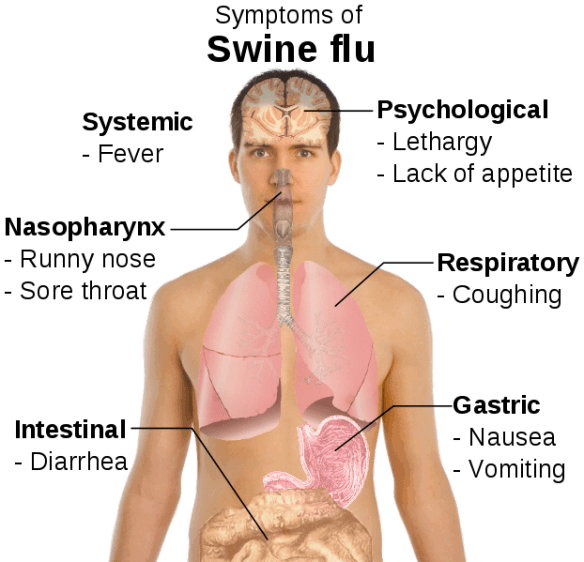
Symptoms of the flu may include:
•fever *
•cough
•sore throat
•runny or stuffy nose
•body aches
•headache
•chills
•fatigue
•sometimes diarrhea and vomiting
*It’s important to note that not everyone with flu will have a fever.

If you develop flu-like symptoms:
•Contact your healthcare provider.
•Avoid contact with others. Seek medical care early. You should stay home and avoid travel, including not going to work or school, until at least 24 hours after your fever is gone except to get medical care or necessities. Your fever should be gone without using fever-reducing medications.
•If you leave the house to seek medical care, wear a facemask, if available and tolerable, and cover your coughs and sneezes with a tissue.
•Do not stop taking any medicine you take for your arthritis unless told to do so by your physician.
•Seek medical attention early. Treatment is available for persons with severe disease and those at high risk for complications. Persons with inflammatory rheumatic disease are considered high risk for complications from the flu; therefore, your health care provider may choose to prescribe antiviral medications for you if you get the flu.
•If you are exposed to someone who has flu, consult your health care provider.  They may prescribe medication to help prevent you from getting the flu or watch you closely to see if you develop flu symptoms.

Note: People with osteoarthritis are likely not at increased risk for influenza-related complications unless they also have another high risk condition such as asthma, diabetes, heart disease, or cancer.

For more information, visit the CDC website page specific to those with rheumatalogical diseases: http://www.cdc.gov/h1n1flu/arthritis_clinicians.htm

For more general information about the H1N1 flu, visit http://www.cdc.gov/h1n1flu/general_info.htm

Here’s hoping that all of us stay strong and healthy throughout the 2009/10 flu season.

Preparing for battle

MistyDogwoods

It’s one of those interesting autumn days when the sun and the clouds battle for dominance overhead. Indoors, the light from the windows shifts from yellow and warm to gray and cold, back and forth, back and forth. There’s a breeze that puffs up and moves the wind chimes enough to make zen-like notes that hang on the air and die away until the next time. My dog, now in his old age and arthritic like me, sighs and does that grumpy-old-dog groan in his sleep.

It’s early afternoon, mild and in the mid-60s. I have the windows open so the good, clean, fresh air can waft through the rooms. The temperature is so soft I’m comfortable wearing an oversized T-shirt and jeans; there’s no need for anything warmer. My beloved mechanical clock, the gears run by a weight and pendulum, tock-ticks the quiet minutes away.

I’m thinking about my renewed struggle with rheuma. I’d gotten accustomed to getting through my days without coping with painful joints, without limping, without that sudden, sharp knife of pain and surprise when I try to open a jar or pick up a book. I’d forgotten what it was like before the disease went into its long remission.

In a way, forgetting was a mercy. It’s good that our minds blunt memories of pain.

Now the rheuma is back. The evidence is everywhere. It’s in my blood test results. It shows up as pain in my wrists, hands and fingers. As twinges in my knees and shoulders. And it shows itself in the 5-inch-long, zig-zag scar I’ll always have along the outside edge my right wrist, the visible aftermath of surgery four years ago to slice away an ominous deposit of synovial pannus. A mis-shapen, hard, completely painless lump that appeared as if out of nowhere over my wristbones, it was potentially, even iminently, disabling. It was the first clue I’d had in nearly a decade that the disease still active in my body.

I’ve learned a great deal since I was first diagnosed with rheumatoid arthritis. Back then, there was no Internet. No Google. I was living in N. Germany, working as a civilian on a U.S. Army post. It was only because I’d been experiencing bewildering bouts of increasingly intense, persistent pain in my hands, shoulders and feet for more than six months that I finally went to my doctor, a U.S. Army internal medicine physician. Major Tom. He ordered blood tests. They came back with a positive Rh factor. I had my diagnosis.

Maj. Tom put me on NSAIDs. He told me a little about the disease — it was an autoimmune disease, mainly — and prescribed painkillers when I needed them. With no other resources, unsure of what to questions to ask, I went to the post library, looking for books about rheumatoid arthritis. There weren’t any, but the librarian found the address of the American Arthritis Foundation, so I wrote them for information. A few months later they sent a pamphlet.

And that’s how I learned the disease was, and is still, incurable. That it affects more woman than men by three to one; that it affects children and young adults and isn’t, as I’d always thought, an afflication of the elderly. I learned that some people felt better if they stopped eating foods from the nightshade family (potatoes, tomatoes, eggplants), but that there was no scientific proof of it. I learned that exercise was strongly encouraged, yet I knew for a fact than when one of my joints was flared, I could barely endure moving it a few inches, let alone exercising it. I learned that the well-meaning people in that foundation who seemed so knowledgeable about rheumatoid arthritis thought of the agony I frequently experienced as “aches and pains.”

I felt very, very alone. But as the years passed, I learned more. My doctor tried drug after drug on me, hoping to relieve my pain. I took the whole gamut of NSAIDs. I tried plaquenil, but stopped taking it after the opthalmologist discovered a small tear in  my retina that hadn’t been there before. I took oral gold. I had blood tests every two weeks for so long that the veins in my elbows collapsed and they had to draw blood from my forearms and backs of my hands.

None of it helped. The only relief I had was when I took narcotic pain relievers, and those I only took with great care, and only at home.

I had to take a couple of sick days off from work each month; when the flares got really bad, sometimes I had to take more. My supervisor and my boss were sweet and understanding. They saw me cover stories (I was a writer-editor with the post’s public affairs office) while gimping along with a cane or on crutches; they saw me type those stories up in spite of hands so painful I had to do it slowly, doggedly. They gave me no trouble over the days I took off as long as I got my work done. I did get it done. I was proud of that.

When I came back to live in the States again, I’d had all I could take of doctors and endless drugs and bloodtests. Nothing helped. I resigned myself to living with the disease without treating it. The side effects of all those drugs frightened me. And eventually, as slowly as it had come on, the rheuma went into remission. The flares became less and less frequent. The continuous, annoying twinges finally stopped. I went back to living a “normal” life, one free of canes and crutches, drugs and needles, of pain.

I knew that “remission” didn’t mean that the rheuma was gone. But I didn’t really understand that it meant, even if I couldn’t feel it, that it was still doing damage inside me. I guess I thought that it was in some sort of suspended animation. I was wrong.

Today, as the autumn sun slides down the sky toward night my hip hurts when I move, stabs me when I walk. My hands, as usual, twinge and ache. The disease hasn’t reached the terrible, excruciating intensity that it did before, at least not yet, and I’m taking an old drug — sulfasalazine — and a new drug — Arava — as weapons in my arsenal against my back-from-the-dead enemy. My rheumatologist says they’re working.

I have to believe him, even though so far (as before) the drugs aren’t doing anything to stop the creeping advance of pain. But I know a lot more about the disease now. I’m educated. I’m not isolated on an Army post on another continent, the only person I know who has it. The latest information about rheumatoid arthritis is today always available, right at my fingertips as I search the Internet. I search with great hunger for more. I want to learn and learn.

And this time, I don’t feel quite so alone. There’s a whole, online community of people who, as they battle this disease, are talking about it, writing about their experiences, and who are offering anyone who needs and wants it their compassion, understanding and support. Inspired by them, I’m doing the same.

And as I think about moving, about working for a while in the kitchen, making supper for myself and my family, I feel as if I’m waiting, almost holding my breath. I know what it is I’m waiting for: the dragon called Rheuma. I’m mentally streaking myself with blue woad. I’m conserving my strength.

I’m preparing for the inevitable battle ahead, knowing I won’t win it, but that I’ll survive it. Knowing that each skirmish will make me stronger.

Knowing that I’ll lose only if I give up.

Photo of autumn dogwoods copyright Leslie Vandever, 2009.

Rain dance

Yesterday's fog heralded today's storm ...

Yesterday's fog heralded today's storm ...

It’s raining, it’s pouring,
The old man is snoring.
He went to bed and
bumped his head
And couldn’t get up
in the morning.

Water is falling from the gray sky here in the Sierra mountains of Northern California. I’m not an old man, I didn’t bump my head, and I got up this morning, but oh, I’m creaky. Someone find my oil can!

After three years of drought, the world around me is dry, dry, dry. But now the rain is here. It’s right on schedule. I couldn’t be happier.

The damp, negative-ion-charged air is refreshing. The wind that came with the storm is belling and jingling the wind chimes on the eaves. Rain spatters the windows, thrums on the roof. I can almost hear the earth sighing with relief.

While the shift in air pressure the change in the weather brought with it has made me twinge and ache, I don’t mind. That happens regardless of the weather, and I’ll tell you a little secret. I love rain. I love storms. Yesterday my daughter, her fiance and I covered the stacked firewood, purchased in June, with tarps to keep it dry. Matt filled the wood-ring next to the woodstove with seasoned, spicy-smelling almond-wood. And as soon as I get up enough gumption to dump last year’s ash-can and clean the old ash out of the stove (a chore I forgot all about!), I’ll start the first fire of the season. There’s something incredibly comforting about a crackling fire in the hearth. The warmth is like no other. The scent conjures images of hats and mittens, cold noses and hot cocoa.

I like wrapping my achy fingers around a cup of cocoa. It feels wonderful. I hope that this first, early storm of the season isn’t the last. Let it rain. Let it snow when the time comes. Let this be the fall and winter that finally breaks the long drought. Oh, I’m ready. I have my rice-and-lavender-filled hot packs. I have my rheuma-gloves. I have thick, warm socks. And through my window, open a crack to let in the fresh, rain-charged air, I can hear the tall pines all around the house whispering in the wind. If I close my eyes, I can hear the soft roar of the ocean surf in their voices.

Oh, yes. Let it rain.

Photo copyright Leslie Vandever 2009.

World Arthritis Day 2009

work_together_logo_animToday is World Arthritis Day. People with arthritis from around the world join together to make their voices heard on this day. The aims of World Arthritis Day are:
  • To raise awareness of arthritis in all its forms among the medical community, people with arthritis and the general public;
  • To influence public policy by making decision-makers aware of the burden of arthritis and the steps which can be taken to ease it;
  • To ensure all people with arthritis and their caregivers are aware of the vast support network available to them.

www.worldarthritisday.org

I have rheumatoid arthritis. It’s not a disease of the elderly, as is commonly thought. It can strike children, teenagers and young adults as well. I’ve had it for more than 20 years, and while modern medicine has come a long way in treating the disease and making it, for some, more bearable, there is still no cure. Please tell others about World Arthritis Day. Offer your concern, compassion and support to those who suffer with it all over the world. And perhaps, working together, we can find a cure.

Harvest time

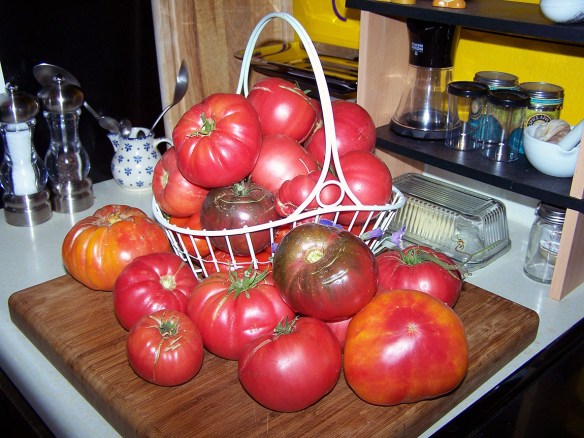
Now that's a slew o'tomatoes. Envision spaghetti sauce ...

Now that's a slew o'tomatoes. Envision spaghetti sauce ...

Decided to wander out to the vegetable garden this afternoon. Last time I was out there, about a week ago, there were two — count ‘em — two ripe tomatoes ready to pick off the thick, sprawling vines. The rest were all green. It hasn’t been the greatest summer for tomatoes; most of May and June were overcast and cool, so nothing much happened, garden-wise. By mid-July it was finally growing nicely, but many of the veggies we’d planted had died off. No eggplants, no red, yellow or orange bell peppers. Sigh. August got nice and hot. More growth, but no fruit. Same for most of September.

So you can imagine my surprise when I discovered RIPE TOMATOES everywhere. There were these gigantic heirloom toms and a whole slew of small romas (my favorites). I picked two basketsful and heh, here they are, ready to eat or make into spaghetti sauce immediately. I’m going to call my sweet next door neighbor and offer her as many as she’d like. Tommorow I’ll get busy making savory sauce to freeze.

And there are scads more tomatoes out there, nearly ready to pick. I figure by Tuesday I’ll have this many to work with again. It’s supposed to be chilly and rain buckets on Tuesday and Wednesday (yay!!). We sure need that rain. It’s time.

I also spent most of the afternoon out raking leaves and carting dry straw to the chicken pen and down beneath the red oak tree. The chickens like the straw for bedding and bugs; the stuff under the tree I spread out hoping to discourage foxtail weeds next spring. Now my wrists and hands are yelling at me, but my daughter Cary and almost-son-in-law, Matt,  and I will be going out again in a little bit to cover the firewood piles with tarps so the wood stays dry when the rain comes. Matt,  the love, has already brought a good load of sweet, dry firewood inside so we can stoke up the woodstove when it gets chilly and damp in a couple of days.

Then I’m making chicken soup. I love autumn.

Update: I changed my mind. I didn’t make chicken soup. I made fresh spaghetti sauce with four big chopped up tomatoes, a big handful of chopped pimiento olives, basil, oregano, garlic, a bit of salt and a couple of generous grinds of pepper. Spooned it over whole wheat spaghetti noodles cooked al dente and dusted shredded romano cheese over the top. Oh, my. yummmm.

Disability: Mind over matter

Steven Kuusisto and CorkyOne of the blogs I’ve come to deeply respect is Planet of the Blind, written by Stephen Kuusisto, who has been “blind” since he was born prematurely in the mid-1950s.

I put the word blind into quotes because Kuusisto does have some vision. It’s just enough to allow him to see colors and shapes, “a kalaidoscope” in his words; and after a recent breakthrough surgery, he can now see more of the world than he’s ever been able to before, though he is still “legally” blind.

But Kuusisto’s vision transends the physical. His figurative vision is as sharp, clear and breathtakingly beautiful as a bell.

Kuusisto’s disability is a result of too much oxygen pumped into his hospital incubator. At the time doctors thought they were doing the right thing for tiny babies born weeks before the end of the third trimester by enriching the air they breathed. But for Kuusisto and many thousands of other children, the additional oxygen sometimes caused blindness.

His story strikes a singular chord in my heart. I was also born many weeks prematurely, and only the year after he was. But the use of extra oxygen had recently been stopped as a routine practice because doctors had finally discovered the damage it could potentially do to a premature infant’s delicate and developing eyes.

Kuusisto is a scholar, a poet, a writer, and a professor of creative writing and disability studies at the University of Iowa. His imagination and insight, the incredible images he creates with words and his deep honesty and real passion for the rights of the disabled are both eye-opening and inspiring. He “sees” the world in ways most of us never have — and perhaps never will. He’s an activist and advocate, and I’m glad he’s here to give all of us a voice and a map toward positive change.

Here’s one of Stephen Kuusisto’s poems, taken from his book of poetry, Only Bread, Only Light:

Terra Incognita

When I walked in the yard
Before sunrise,
I made my way among patches of dew —
Those constellations on the darkened grass.

The webs drifted like anemones,
And I thought of lifting them
As if they were skeins of brilliant yarn
That I could give to my  mother
Who’d keep them
Until we knew what to make.

I pictured a shirt —
How I’d pull it over my head
And vanish in the sudden light.

Whoa. So much for disability, eh? I’m inspired and challenged by his talent, his art, his tireless work on behalf of others, and his joy. You can visit Kuusisto’s blog by clicking on “Planet of the Blind” in the blogroll to the right, or by clicking right here.

Wise words

Rheumatoid Arthritis Guy has got to be the best bloggers about this disease I’ve read yet. His observations, his attitude, his humanity and empathy all work together to make his writing compelling, educational and — delightfully — humorous. Laughter is truly great medicine.

Today he’s talking about “disability” — what it used to mean to him and what it means to him now, after several years of living with rheuma. Here’s a taste:

When I was diagnosed with rheumatoid arthritis, I clashed against the label of “disability”. (Having just been diagnosed, this was not the only thing I was fighting against.) For all of the grief that I sometimes give others about comments suggesting that I am too young to have arthritis, I found myself doing the exact same thing to myself. “I am only in my 30’s…I am too young to have a disabling disease.” Silly me, as if disability had anything to do with age! So, along with many other aspects of my illness, I shelved any thoughts related to disability. My perception of a) who I was and b) what it meant to be disabled just did not match up in my head. (Never mind that I had completely lost the use of my left knee and was only able to walk short distances with the aid of my crutches.)

I was also diagnosed with rheuma when I was in my early 30s. I know exactly of which he speaks. Do hop over to his blog and read the rest. This is a young man with insight and wisdom beyond his years.

Slapped

“Ow!”

I’m sitting on my sofa, my laptop on my lap-desk. I shift to get more comfortable. Now the computer is too close – my elbows are sticking out. I stop typing, grasp the laptop and lift it up to move it back a little.

Although I’ve been typing for quite some time without pain, the slight weightarthrits flare up of the computer on the joints in my fingers make them feel like they’re being shoved rudely sideways inside my skin. I yelp and let go of the laptop. I stare at my fingers. They look the same as always. Of course.
“Ow!”

Last night. Supper time. My sweet son-in-law-to-be, Matt, has prepared a lovely rack of barbecued ribs, baked potatoes, green beans and toasty garlic bread for us (he’s a keeper, that young man). I pick up a knife to slice between two of the smaller ribs. I start to cut. Pain – instant, shocking – shoots through my knife hand. I yelp. Drop the knife. OK, I give. I ask Matt to cut my meat for me. He does it cheerfully, but I’m humiliated. I feel like a child.

Is this disability? While the pain in my hands is mostly mild today, it feels disabling even though it hasn’t really stopped me for long. Had I been alone at supper time last night, I could have gritted my teeth and cut my meat myself (or I’d have skipped the ribs altogether). Today I was able to move my laptop even though it hurt. So what’s the big deal?

See, that sudden, wrenching pain, even after years of dealing with it, always catches me by surprise. It’s like a slap out of nowhere, for no reason. It reminds me that I’m not right, that I have to be careful or I’ll get smacked again. It hurts. It makes me tentative about just doing.

And, it’s insidious. My apprehension builds up over time, under the surface, working quietly but treacherously just like the rheuma itself. Not only do I become tentative regarding how I use my hands, my mood shifts. I get grumbly, at least to myself. And I also start to fear that a larger, more severe flare in my hands (or whichever joint is “twinging”) is imminent.

Sometimes I’m right. Sometimes I’m not. I’m grateful when it doesn’t get worse, but the harm to my psyche has already been done. I’ve been cowed again. Slowed down. The smile has been wiped off my face, even if just for a moment. And I’ve been reminded again (as if I’d forgotten) that even when the rheuma isn’t so bad that I want to cut the offending limb off entirely, it’s doing its sneaky, silent work, slowly breaking down and ruining my joints. It has one goal: to truly disable me.

I talked with my mom on the phone this morning. She asked how I was, so I told her. My hands hurt. She asked, “isn’t that medicine you’re taking helping at all?” Yes, I said, the doctor says my sed rate is lower than it was. He says that means there’s not as much inflammation in my body as there was before, which in turn indicates that the drug is doing what it’s supposed to do, which is slow the progression of the disease and perhaps save me from disablement down the road.

What the drug doesn’t do is relieve the constant pain, whether it’s low grade, like now, or terrible, which it has been in the past and I know will be again. Maybe later today. I never know, really. It’s like limbo. And that constant reminder, that knowledge, that big pain is waiting in the wings eventually starts grinding me down. It affects how I make my plans for the day, for the week. It affects my mood. I do my best to grin and bear it, but sometimes my grins are more like clown masks. They don’t reflect how I’m really feeling because to show that would be to give in, to let the hurt, crying child I feel like down inside come out into the open.

I don’t tell my mom all of this, of course. I don’t want to worry her any more than she already is. She’s long familiar with my disease, though she doesn’t understand it very well. “Can’t you take something for the pain?” she asks.

Yes, I can. I can take Tylenol (which I have, today) and tramadol, which blunts mild to moderate pain (which I haven’t, yet). If the rheuma decides (yes, I think of it as a thinking, malevolent, sentient being) to gift me with a really severe, nasty flare, I have a bottle of Vicodin in my medicine cabinet. It helps some, but not as well as I’d like, and it comes with a dark price. It makes my brain floaty. Drowsy. I don’t dare drive in that condition. I don’t dare pick up a sharp knife for fear of cutting my fingers off by accident. I also dislike the after effect they have on me. I feel like I’m slow and foggy-brained for half a day after I take them.

But worst of all, even though they work the best to relieve the pain, opiates like Vicodin are addicting. We build up a resistance to them after a while, so we need increasingly higher doses or more powerful drugs in the same family to get the same effect.

That scares me. How will I cope with severe flares when opiates don’t work anymore for me? As a result of that fear, I take them as seldom as I can.

I know this post is whiney. It helps, though, to put my feelings about rheuma and its affects on me in writing. It’s a rant, I guess, and there’s some relief in ranting, even just to myself and the few people who happen to read this blog. If you’re reading this, at least you probably know exactly what I’m talking about. It’s nice to know that we’re not alone in battling this disease, isn’t it.

Mystery


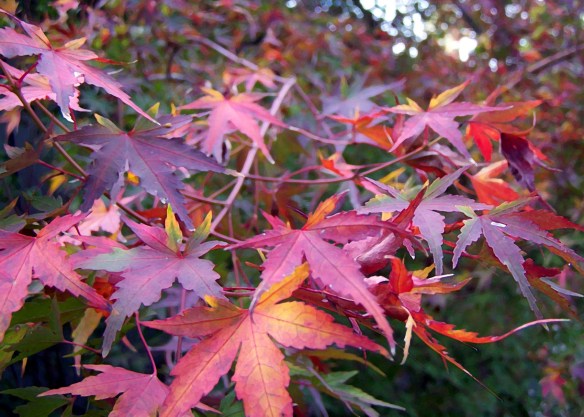
AutumnMapleLeaves

Last night was rough. Hands bitched and moaned. My right ankle joined the chorus, as did both hip joints. I was too hot. Then I was too cold. I tossed and turned, trying to get comfortable, trying (with great sighing and grumbling) to fall into a deep, restful sleep.

No go.

When dawn finally arrived, I rolled out of bed stiff and sore, but relieved to be done with the battle, at least until bedtime again. I shivered. I’d sweated through my thin pajamas several times during the night; they were still a little damp. Jeez. I thought I was finished with menopause. I guess I was wrong. I pulled on my warm house robe, slid my griping feet into my old wool slippers, and padded into the kitchen to make a cup of coffee.

I’m on my second cuppa now. I’ve eaten a bowl of steaming-hot oatmeal jazzed up with cinnamon, a little brown sugar and a drizzle of evaporated milk. I’m finally warm and it seems I’ve finished with the “power surges” for now. When I’m done writing this I’m headed for a hot shower and clean, warm clothes.

Autumn has arrived about three weeks early here in my little part of Northern California. In spite of the chill – or really, because of it – I’m glad. I’ve always loved this time of year best no matter where in the world I’ve lived. I love the clear, slanty sunlight, the cold nights and the surprise of the first frost, the change in the trees from slightly worn-out green to brilliant yellow, orange and scarlet. I love the snap in the air and the chill on my cheeks, the breezes that pick up, carrying hints of ice in them, and an excuse to wear a sweater and fuzzy socks.

Fall energizes me. October is my birth month, so maybe that has something to do with it. But I don’t look forward to my birthdays anymore. When I reach the Big Day this month, I’ll be 53. One-half century plus three years.

It’s funny. When I hit the Big 5-0 it didn’t bother me much. It gave me pause, sure. Fifty years on Earth, I understood, gave me a slightly more nuanced take on the world than those younger than me. My children were grown. I’d lived through personal hard times and through troubles that affected the rest of the world as well. We hadn’t, after all, been vaporized or irradiated to death by a Soviet nuclear bomb, though we’d discovered we faced other man-made dangers equally as serious. I’d endured more than 10 years of severe, agonizing rheumatoid arthritis – but then enjoyed nearly that long again free of RA pain after the disease went into “remission.” I’d done a lot of the things I’d always wanted to do and a probably a lot more that I hadn’t, too. And I was good with all of it.  

My outlook is less rosy these days. The rheuma is back. As it did the first time I had it, it’s slowly, slowly ramping up, even though this time my arsenal of medical weapons is much better. The enemy advances anyway. This time, I’m not in my 30s. I don’t have the same energy level as I did then, and when I remember how the relentless, grinding pain of the disease flattened me in spite of being younger and stronger, I quake a little inside. Don’t get me wrong – I’m grateful that it hasn’t reached that level of severity yet this time, and I haven’t lost all hope. But living awhile has also made me a lot more pragmatic. The reality is that the rheuma’s getting a shade more painful and debilitating each day in spite of the powerful medications I’m taking. The reality is that only a small percentage of those who take these drugs get great results. I know they have the potential of slowing the progression of the disease, but to me it means that instead of finding myself crippled next year or in five years, I can maybe put that off for some longer period of time. Or maybe not. Rheumatoid arthritis is notoriously fickle.

So, as the 53rd anniversary of my birth and the 23rd anniversary of my diagnosis of RA approach, I find myself pondering the future in a way I never have before. Will I be able to work outside my home for much longer? If I can’t, will I be able to find a way to make a living from home in spite of my disability? Will I have someone in my life able to help me get through the days if I end up in a wheelchair? What if my hands are ruined?  I already know what it’s like to be occasionally disabled by pain and stiffness. I cope. I smile and work hard not to let it destroy my love of life or to affect how I treat and interact with my loved ones and the world at large. I smile in spite of rheuma, but I’m sure not fond of it.

The far-off future was always a mystery to me, but to my mind, it was an exciting one. I’ve always loved adventures and I’ve never feared being lost. I’ve always found my way back home, relatively unscathed. The unknown beckoned to me, even during the hardest years. It still does, but this time I’m wandering down the road of my future with a certain apprehension instead of running ahead heedless. I know there are hard climbs and high cliffs out there in the mists. There are dragons to fight, so I must be ready and well-armed. I know I need to conserve my energy for those times when I’ll need it.

And then, just as the drama is closing down around me, I remember that there will also be good times on the road to my future. There will be warm fires and sunny days, times of love and comfort among friends, family and even strangers. I’ll make new friends and find new pastimes, and because I’ve grown a thicker hide and I’m tougher than I look, I’ll get by. More than just get by – I’ll live as well as I can, as gently as I can, and with all the love and courage I can muster. I’ll enjoy the colors of autumn, the renewal of winter solstice, the hope of spring and the comfort of many more summers to come.

You know, it really is still an adventure, isn’t it.

Cross-posted to Blue Wren  // Photo copyright Leslie Vandever, 2007.

Posted in RA