Yeah, but my mind is still young…

Today is my birthday.birthday firecake

I can hardly believe it, but I’m just three years shy of 60—an age I’ve always associated with grandmothers, polyester outfits in pastels and flower patterns, scented bath powder, support hose and thick, blocky, sensible shoes.

But I’m not a grandma, have no polyester in my wardrobe, no bath powder in my bathroom cabinet, and I’ve never worn support hose in my life. I guess there’s still time…

I do have thick, blocky, sensible shoes—but not because I’m elderly, but because I have rheumatoid disease and pretty, thin, narrow shoes with elevated heels cause me pain. I’ve been wearing ugly shoes since I was 31 years old. They look OK to me now.

When I turned 50 a friend said, “Hey, don’t worry! Fifty is the new 30.” I laughed. “Yeah, right.” Talk about a boomer cliché! We’re the Peter Pan generation. We’ll never grow up. I rolled my eyes and blew out the candles.

But now that I’m closing in on 60, I’m beginning to change my mind. If “50 is the new 30,” then isn’t 60 the new 40? Because while I didn’t feel a bit like I was 30 years old when I turned 50, I do feel about like I did when I turned 40.

Well, minus the active RA. When I was 40, my ol’ rheuma-dragon was dozing.

And that’s the point of this silly post. I don’t feel like I’m 57, even though my re-awakened rheumatoid arthritis often makes my joints feel stiff and achy, my daughter is now in her 30s and my husband has gone almost completely gray. No, I feel like the 40-ish woman who went backpacking in the Desolation Wilderness and hiked the California foothills back-country, photographing firefighters battling wildfires.

But most of all, I just feel like myself—the same self I was at 10, 20, 30, 40 and 50 years old, that same curious, knowledge-hungry child I’ve always been, still gazing at this wild, wonderful world from the same big blue eyes.

Maybe I’m Peter Pan after all.

RA and beneficial foods

Rheumatoid arthritis is a serious disease. It’s called an autoimmune disease because its symptoms are brought about by the body’s defensive antibodies attacking its own tissues.

In RA, they attack the synovium, a fluid-filled capsule that surrounds the joints, causing inflammation and often, severe pain. As it destroys these tissues, RA may eventually cause joint deformation and disability.

But RA is also systemic. It affects the entire body, sometimes attacking organs like the heart and lungs, the eyes, other soft tissues such as the tendons and ligaments, and even the veins.

The good news is that it’s treatable. Modern medicine has developed several types of medications that, while they cannot cure this incurable disease, can slow its progress to a crawl and help to relieve pain and stiffness.

There are several simple lifestyle changes that can have a beneficial effect regarding rheumatoid arthritis as well. These include a healthy diet to keep body weight under control, stopping smoking and getting adequate, gentle exercise to build and maintain muscle mass in weight-bearing joints and to preserve range of motion.

In my previous post I wrote about the controversy over nightshade foods as to whether they cause increased disease activity. Now I’d like to talk about foods that can be beneficial.

foodsthatreducearthritisFirst up is extra-virgin olive oil. It’s rich in oleic acid, an omega-9 fatty acid that keeps inflammation down. It doesn’t hurt that EVOO is also considered a “good” fat to use if you’re trying to keep your cholesterol levels under control. It also tastes really good.

Certain types of fish, like salmon, tuna or bass are also beneficial—they’re packed with omega-3 fatty acid. The anti-inflammatory activity of long-chain omega-3 fatty acids may be beneficial. These are also wise fish choices for healthy weight loss or maintenance.

Eat several servings of fruits and vegetables each day. Many of them have anti-inflammatory properties, and it doesn’t hurt that they’re generally low in calories and high in nutrition. Green tea can have an anti-inflammatory effect, too. It’s also been shown to reduce the risk of heart disease and cancer. Nuts and seeds like almonds, hazelnuts, sunflower seeds help to reduce inflammation and have the added benefit of providing healthy fats in your diet.

Herbs and spices flavor up food and help reduce inflammation, too. Ginger and turmeric are particularly good for that, and garlic is wonderful. Low-fat dairy foods are rich in bone-building calcium, which is vital in regards to RA. Whole-grain breads, brown rice and other products made with whole grains provide fiber and help to keep your blood-sugar (glycemic) level under control.

For more information about treating your RA naturally through the foods you eat, check out this Healthline slideshow.


Nightshade nightmares …

After being diagnosed with rheumatoid arthritis, one of the first “facts” I ran across was that I should avoid eating foods from the nightshade family. Although nightshade is a deadly poison derived from atrope belladonna, an inedible weed, its distant relatives just happen to be potatoes, tomatoes, eggplant and peppers. In Nightshade vegetablessome people, I read, they might trigger flares.

Of course I was devastated. Those are just about the only veggies I’ve ever liked, other than lettuce and green beans and corn. OK, and carrots. And maybe celery, once in a while.

Here’s the thing: I heart potatoes just about any way you can make ‘em: potato chips, mashed potatoes, spuds baked in their jackets. Fried potatoes—oh, my. Roasted taties—delectable! And there are so many, many dishes that include potatoes. How in the world could I ever cut such a humble but mighty food out of my diet?

And … tomatoes. Really??  What’s a tossed salad without tomatoes? Is a hamburger still a hamburger without a thick slice of beefsteak tomato tucked between the onion and melted cheese? You can eat a pizza without tomato-based pizza sauce, I guess (there are pizzas out there made with that white garlic sauce stuff, but they don’t really deserve the name). I prefer the traditional version, myself. And without the lovely tomato in all its many varieties, how can you eat spaghetti? Or chicken cacciatore? What would you dip your French fries in? There are entire categories of cuisine that wouldn’t exist without the humble tomato.

Then there’s eggplant—or aubergine, to you foodies out there. It’s an odd vegetable, I’ll admit that. It’s a rich, lovely purple, only vaguely resembles an egg, and it makes me giggle. But what would eggplant parmesan be without it? Just plain ol’ parmesan. Meh. What about ratatiouille, that fabulous French Provençal rat—I mean veggie dish—that was the subject of that delightful animated movie a few years back? And let’s not forget the surprisingly scrumptious Middle Eastern dish called babaganoush. Not only would we not get to say that really-fun-to-say word, but it wouldn’t even exist without eggplant.

Finally, there’s the pepper. Most Hungarian, Serbian, Italian, Chinese, Indian and Mexican dishes would be dull, bland and blah without peppers. I’m probably missing several countries that revere peppers in all their fiery grandeur, but you get my gist. What would we do—I mean, what would I do—without peppers to keep me on the straight and narrow?

So you can imagine that I was deeply, greatly, incredibly relieved to learn that I didn’t actually have to avoid eating potatoes, tomatoes, eggplants and peppers just because I had RA. There’s no hard scientific evidence that those veggies cause RA flares, or make it worse or whatever. It’s just a myth, repeated so often and by so many people that it has become a pseudo-fact.

Here’s the truth: “Nightshade” the weed (atrope belladonna), potatoes, tomatoes, eggplants and peppers are distant members of the same family, but it’s Solanaceae, not nightshade. And contrary to what alternative medicine/foods texts and websites may state, those veggies do not contain evil oxalic acid, which inhibits the absorption of calcium. Nor do they contain the toxic alkaloid compound called solanine, a defense mechanism found in some Solanaceae plants that protects  them against natural threats such as insects.

What it all comes down to is this: If “nightshade” family foods seem to trigger a flare if you eat them, then don’t eat them. Same with cake and ice cream. If it makes you hurt, avoid it. When you eat foods that have wheat gluten in them, and you flare soon afterward, well, try not eating them and see if it helps.

The fact is that in most people, most foods have little if anything to do with their rheumatoid arthritis, unless they eat too much of it and become overweight, which can place more stress on weight-bearing joints. RA is, after all, an autoimmune disease. No one knows what triggers it or what triggers its characteristic inflammatory flares. The food we eat? The weather? Mitch McConnell? Maybe all of the above?

There are foods that have been proven to be anti-inflammatory, though, and they can be beneficial when it comes to RA. Click right here to read all about them.

Bon appétit!

Editor’s Note: I’m aware that some readers will heartily disagree with this post; the belief that vegetables in the Solanaceae family (and related to nightshade) trigger arthritic flares is pervasive. I did search for solid evidence regarding the phenomena. I found a few studies, but none produced any hard scientific evidence. That said: if you find that potatoes, tomatoes, peppers or eggplants seem to trigger painful osteoarthritis or RA flares, it is always your right to avoid eating them. I’d be the last person to blame you.

Wren meets the rheuma-dragon

February, 1987:

I thought I’d “slept wrong.” I’d wakened that morning with an inexplicably sore right shoulder. I hadn’t injured it—I’d done nothing that could possibly injure a shoulder, and it was fine when I went to bed the night before—so I figured I must have slept on it wrong for hours.

Or something.

That was the only reason that my right shoulder could be so sore. (And it was pretty lame, as explanations go.) I had trouble washing my hair in the shower, trouble drying it and putting my makeup on, and trouble getting dressed. The shoulder hurt appallinshoulder-paingly when I moved it. I could barely raise my arm above my waist.

To make matters worse, I was in a rush. I had to catch a train to Frankfurt, a six-hour, north-to-south ride down the middle of West Germany, something I’d never done before. To add insult to injury, I also had to carry a suitcase (the old kind with no wheels or extendible handles), a carry-on shoulder bag, and my purse. Under normal circumstances, lugging all that stuff would be a hassle, no more. But with my shoulder so sore that even walking made me wince … well, let’s just say I wasn’t looking forward to the experience.

And all because I’d “slept wrong.”

Over the next six months I somehow “slept wrong” on the other shoulder several times, too. I “slept wrong” on both my hands. I also somehow hurt both my knees without realizing it.

THE FAMOUS Holstentor Lübeck in northern Germany near the Baltic Sea. It once formed the gate to the city.

THE FAMOUS Holstentor Lübeck in northern Germany near the Baltic Sea. It once formed the gate to the city.

And then there was the long weekend in the Baltic harbor city of Lübeck, near the East German border, that was ruined by this strange pain. My husband and I drove northeast from Bremerhaven, headed for the old city near the sea. We arrived in the late afternoon and decided to do a little wandering before finding a restaurant for dinner (for which we’d dressed up a bit).  We’d walked all of two blocks when my feet began to hurt. Within minutes, the right foot was so bad—and swollen—that I could barely put my weight down on it. The left foot simply ached sharply, as if I’d been standing on it all day. (I hadn’t been, of course. I’d been in the car, enjoying the north-German countryside.)

We went ahead and ate a fine meal at a magnificent, old restaurant, but I was in so much pain I didn’t enjoy it much. And the next morning, even though I’d rested all night and wore my good ol’, cushiony walking shoes, my feet still hurt so much that wandering the old city on foot was out of the question. We didn’t want to spend the weekend sitting in our hotel room, so we went back home. The pain vanished by the middle of the following day, just as quickly and mysteriously as it started.

I blamed the whole fiasco on a new pair of neat, pretty, low-heeled black patentblack patent pumps leather pumps I’d purchased just for the trip. I swore I’d never, ever wear new shoes for walking again. Whatever had I been thinking of? What a silly goose!

A week later it happened again. As before, both feet were involved, but this time it was my left foot that was so horrendously painful—and I wasn’t wearing new shoes. I was completely mystified. And it sounds weird, but I finally associated this freaky foot pain with the freaky shoulder pain, the freaky hand pain, and the freaky knee pain I’d been plagued with, off and on, for six months.

I made a doctor appointment.

He agreed that something was going on. So, he wrapped my swollen left foot in an ace bandage, then got me a cane and showed me how to use it.  He told me to take a couple of days off work, staying off my feet as much as I could, alternating ice packs and a heating pad. He prescribed Tylenol with codeine for the pain. (I’d already tried both aspirin and regular Tylenol, without relief.) Finally, he told me to go to the lab for a blood test and come back in three days for a follow-up appointment.

What he didn’t do was speculate.

blood drawWhen I saw him again, he had the answer. My blood test showed a high sedimentation rate, which indicated systemic inflammation. In addition, they’d found a protein antibody in my blood called the Rh factor. Both of those, along with my recent history of mystery pain and stiffness in various, symmetric joints, indicated that I had rheumatoid arthritis, an autoimmune disease.

The doctor asked if I had stiffness when I got up in the morning. Yes, now that I thought about it, I did—even when there was no significant pain. Most of the time the hot shower I took every morning helped to relieve it. By the time I got to work two hours later, it was usually gone. He nodded. That, too, pointed to RA.

And thus started my long, frequently rocky relationship with rheumatoidblack-dragon-sinister-evil arthritis—my “rheuma-dragon,” as I call it. We’re still together today.

But in some ways, I’ve been lucky. I’ve rarely felt the crushing fatigue and “flu-like” illness and fever that many people with RA frequently experience. And in spite of our 25-year relationship, my rheuma-dragon hasn’t deformed my fingers and hands or destroyed any of my larger joints. (Not that he hasn’t tried!) My RA has never caused me to lose weight or become anemic, either. Instead, I’ve slowly gained weight over the years. That’s mainly because I’ve often been reluctant to exercise, afraid of triggering a flare.

So. That’s my RA onset story. To learn more about the early signs of rheumatoid arthritis, check out this Healthline slideshow. It’s both concise and informative.


RA and weight loss: giving it a kick-start

Six-thirty a.m. I sit up, struggle from under the covers and roll out of bed. I hobble, my joints stiff and achy, to the bathroom. During morning ablutions, I gaze at my knuckles. They’re only a little swollen this morning, I note. I flex my hands. Only a little stiff and a little sore, too. This is nice.

As I get dressed, I look at my body in the full-length mirror (that evil thing!). I make a face at my wide hips. I know I haven’t gained any weight! In fact, since the middle of August, I’ve lost eight whole pounds. Maybe, I grumble, my hips look extra-wide this morning because they’re swollen. My here-again, gone-again hip bursitis is definitely here again this morning. Still, those teensy bursae over my hip-joints probably aren’t swollen enough to make my already-wide hips look even wider. I can thank my Scandinavian ancestors and 30 years worth of chronic cookie-binges for that.

THE ABOVE BEHAVIOR does not strengthen joint-supporting muscles or rev up weight loss.

THE ABOVE BEHAVIOR does not strengthen joint-supporting muscles or rev up weight loss.

Mondays are my weigh-in days, so with my breath held I step onto the bathroom scale. To my disappointment it shows the same weight as Monday a week ago. I sigh again. OK, Saturday night I splurged and had fish and chips instead of salad for dinner when Mom and I went out. But I only ate half the meal—and I’d been mindful and disciplined all week up to that point. The fish and chips undoubtedly put me over my daily calorie-quota, but I’d gone right back to it Sunday.

Waiting for my breakfast egg to boil, I think about exercise. Because exercise

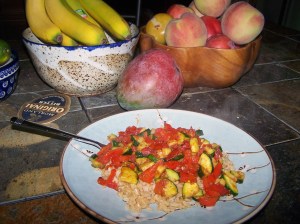
BROWN BASMATI RICE and a quick stir fry of tomatoes, zucchini, yellow crookneck squash, onion, garlic and chunks of chicken breast is a healthy, low calorie meal. Fruit is good for you, too.

BROWN BASMATI RICE and a quick stir fry of tomatoes, zucchini, yellow crookneck squash, onion and garlic make a healthy, low calorie meal. Season to taste. And fruit is good for you, too.

can jar the body into burning off fat and help sink the number on the scale. I know this.

But of all the things I’ve done to improve my health over the years—including tossing out the smokes—exercise has always been the hardest. Like others who battle rheumatoid arthritis, it seems like a lot of the time I’m just plain too sore and achy to exercise. And when I’m not, I’m afraid to rock the boat. If I exercise, I convince myself, I’ll just bring on a new flare. It’s a catch-22.

But I know better. I only trigger new flares when my enthusiasm overflows my good sense. If I stick to gentle exercise, like stretching, using resistance bands and walking—not too far, at first—I’m fine. When I do that each day, exercise jump-starts my weight loss. I know, because I’ve done it.

There are lots of RA-friendly types of exercise that not only increase muscle strength (which helps to support the joints), but also promote heart health, safe weight loss, balance and even mental health. Click this slide-show at Healthline.com: http://www.healthline.com/health-slideshow/8-essential-everyday-exercises-for-RA-pain for a great overview.

Surprise! You have RA!

This post is especially for people who’ve just been diagnosed with RA:

You’ve just discovered you have rheumatoid arthritis. Your doctor talked to you about it, but now you’re at home, and you can’t really remember much of what a_daa-small-Surprised-Catshe said. You were so shocked! “Arthritis!” you mutter to yourself, staring at the sore, swollen knuckles that prompted your initial visit to the doctor in the first place. Now, the results of the blood test in hand along with your list of symptoms, she’s given you the news and referred you to a rheumatologist.
Naturally, you’re feeling a bit bewildered. Angry, too, now that the shock is wearing off. “That can’t be right. I’m too young! And I’m healthy! I go to the gym almost every day!”

Don’t feel alone. The fact is, most people who’re given a diagnosis of rheumatoid arthritis are baffled—at least initially. There’s a good reason: We tend to think of arthritis as a disease that older people get—maybe even very old people. But anyone of any age can get RA, from infants to octegenarians, though three times more women than men get it. The “arthritis” we hear the most about is actually osteoarthritis, the common “wear andu tear” arthritis that sometimes strikes middle-to-older-aged people.

But you’re only 26! The doctor has to be wrong!

She’s not. Rheumatoid arthritis is an autoimmune disease. With RA, your own immune system—your body’s natural defense against foreign invaders like bacteria and viruses—attacks it’s own tissues by mistake. RA generally goes after the lining and fluid between the joints. It causes inflammation, which in turn causes heat, swelling and pain. That sore shoulder you had last week? The one that made washing your hair, blowing it dry and getting dressed before work in the morning a study in courage and determination?

Yep. Rheumatoid arthritis.

RA also attacks the soft tissues of the body. It can go after the heart, the lungs, the eyes, even the veins. It affect joints on both sides of the body in a symmetrical manner. And leaving it untreated just invites it to do its worst: cause awful joint deformity and permanent disability—not to mention pain.

As things stand today, rheumatoid arthritis is still incurable. That doesn’t mean it’s untreatable, because you can treat this disease. The medications available today can greatly decrease the pain and disability of the disease while slowing it’s progress down to a snail’s pace. They can even—and sometimes do—put the disease into remission.

So, newbie: Here’s your assignment. Learn as much as you can about rheumatoid arthritis. The more you know, the better off you’ll be. Click to watch this short, thorough video about what rheumatoid arthritis is, how it affects those who are diagnosed with it and how it’s treated: www.healthline.com/health/rheumatoid-arthritis .


Autumn equinox

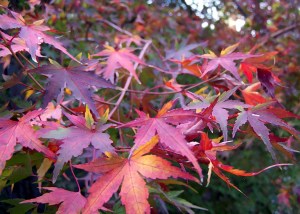
From the Japanese maple just outside my kitchen window at home in the mountains...

From the Japanese maple just outside my kitchen window at home in the mountains…

I can hardly express how pleased I am that, as of today, fall has officially begun in the Western Hemisphere. With a couple of exceptions (several days here and there of over 100 degrees Fahrenheit, and in July a full week of them) it’s been a rather mild summer for northern California, so I can’t really complain. Still, well, fall.

And it’s off to a lovely start. Yesterday dawned with gray skies and a soaking overnight rain; by mid-day, that gentle rain had whipped up into an actual storm,

Sweet-gum leaves in early fall, just after a storm.

Sweet-gum leaves in early fall, just after a storm.

complete with lightning and explosions of thunder. It blew in and blew out just as quickly, and this morning greeted us with sunshine. A month ago it would have been hot sunshine, but now, with autumn underway, the sunlight is coming from a different angle, a cooler one that casts more shadows. The temperature barely topped 80 today, and the forecast for the coming week will stay about the same. I’m delighted.

Autumn has been my favorite season since I was a small child. I’ve always loved

Fall and winter blend by late November in the Sierras...

Fall and winter blend by late November in the Sierras…

that crisp, cool feel to the mornings and the brisk breeze that livens up the afternoons in the fall. And that first frost! Mmmm. I love pumpkins and Halloween–that my birthday is in the middle of the season hasn’t hurt a bit–and taking a long walk, scuffling through the crunchy fallen leaves after Thanksgiving dinner is almost better than the dinner itself.

Here in California, the trees haven’t started putting on their fall colors, yet. That won’t happen until late October and November. By then it will be even cooler outdoors–maybe as low as the 60s during the day. I know that doesn’t sound like much to those of you who live in colder climes, but for me it will be nice to finally put away the summer clothes and bring out long pants, socks and maybe even sweaters!

Happy Autumn, everyone!

One of the dragon-slayers

There are some weapons in the battle against RA that I consider “dragon-

Illustration by Howard David Johnson

Illustration by Howard David Johnson

slayers.” Unfortunately, I was unable to tolerate the one I’ll be telling you about, but from everything I’ve learned over the years, it’s one of the best.

It’s a Disease Modifying Anti-Rheumatic Drug (DMARD) that’s considered the “gold standard” in rheumatoid arthritis treatment. At some point, most rheumatologists prescribe it to their patients who have moderate to severe RA. In many of them, this drug causes their disease symptoms to greatly improve—or even disappear entirely. RA is incurable, but this rheuma-dragon slayer can send it yelping off with its tail between its legs.

What is this miracle drug?

It’s methotrexate—MTX for short—a powerful chemotherapy drug developed in 1950 to treat a variety of different cancers, including acute lymphoblastic leukemia in children. It works by keeping the body’s cells from metabolizing folic acid, a substance that is integral to cell growth and reproduction. Without adequate folic acid, cells die—in particular, fast-multiplying cancer cells. With methotrexate, many people who suffer from cancer may have a much better chance of surviving.

Methotrexate was quickly discovered to have a beneficial effect against several autoimmune diseases, including psoriasis, psoriatic arthritis, lupus, Crohn’s disease and many form of vasculitis. It was first used to treat rheumatoid arthritis in 1951. Generally safe, well-tolerated and effective in lower doses, methotrexate was approved by the FDA for use in treating RA in 1988.

As it does in treating cancers, MTX inhibits cells from metabolizing some of the folic acid found in the foods we eat, so most rheumatologists have their RA patients take a folic acid supplement along with their methotrexate. Doing so helps to relieve some of this powerful drug’s more common side effects (which occur in a small percentage of patients) such as nausea, headaches, fatigue and hair loss.

While it doesn’t work for everyone, methotrexate has been effective enough that it’s become the first line of treatment for rheumatoid arthritis. When it does work, it reduces the number of swollen, painful and tender joints patients report and, often, slows or even stops the progress of the disease altogether.

Methotrexate can be hard on the liver, so patients taking it must undergo frequent blood tests, monitored by their rheumatologists. In addition, because of the potential danger of liver damage, those who take it are asked to avoid alcoholic beverages. Women who wish to have a baby must stop taking the drug before becoming pregnant; men who are taking the drug should continue using birth control for three months after they stop taking MTX. Otherwise, the drug may cause harm or death to the fetus.

Sometimes, methotrexate alone isn’t enough to affect RA, so it’s given along with one or two other DMARDs. Usually, it’s taken in tablet form: several tablets just once a week. For those who cannot tolerate the oral form because of nausea, methotrexate can also be given by self-injection.

For more information about this “dragon slaying” drug, visit www.healthline.com/health-slideshow/rheumatoid-arthritis-methotrexate .


Describing RA pain


RA bloggers often describe their joint pain as “burning,” as if the affected joint is on fire.

I’ve had RA for a little over half my lifetime, but my joint pain has never felt that way. Aching, throbbing, and/or stabbing, yes. Burning, no. It has been hard for me to imagine. Just like my pain is hard for someone—a friend, a family member, a concerned stranger—to imagine. She’s sympathetic, but has never felt it herself.

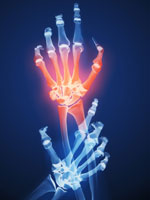
As I write this, however, my left palm, knuckles and fingers feel as if a fire ishand-joint-pain smoldering inside them. While this pain, on the ubiquitous zero-to-10 pain scale, is just a “five” and only halfway to “the worst pain I can imagine,” it’s very unpleasant. I have no experience of this sort of pain beyond times when I’ve actually burnt myself on a hot iron or while cooking.

My personal “worst,” my “10” on the scale, is the pain in my left hip that hospitalized me for three days way back in 1989, just two years after I was diagnosed. This pain came on suddenly, like most of my flares. Within an hour I could barely walk. I couldn’t sit or lie down, and even standing was indescribably painful. Narcotic painkiller tablets were, for the first time ever, ineffective. I waited 24 hours for the flare to go away. When it didn’t, I crashed my doctor’s office without an appointment and begged the nurse to ask him to see me. I promised I wouldn’t take up much of his time.

Kind and concerned, he saw me a half-hour later. It turned out that he couldn’t prescribe me any stronger painkillers that I could safely take at home. So, alarmed at the intensity of the pain I was in, he admitted me to hospital and ordered intravenous morphine.

I remember very little about those three days other than several separate, floating moments of agony that dissolved into a pleasant mist as a nurse emptied a syringe into my IV tubing. I slept almost continuously. I must have eaten meals and used the bathroom and had visitors, but I don’t remember any of that. Finally, in the early evening of the third day the pain disappeared. Poof, it was gone. I went home the following morning with nothing but the sharp memory of an extended nightmare to show for my three lost days.

Today, I can fully empathize with my fellow RA bloggers who describe their joint pain as “burning.”  And I hope that the sensation doesn’t—now or ever—approach my personal “10.”

NOTE: For an excellent explanatory, animated slideshow on what rheumatoid arthritis is and how it affects the joints, click here.


Weapons against RA

Rheumatoid arthritis can be devastating disease. The daily joint stiffness, the frequent, sometimes terrible and disabling pain naturally affect every part of the affected person’s life, from career to parenting to having fun and being sociable.

Fortunately, medical science has made several amazing, breakthrough discoveries over the last twenty years. The result? A double handful of sometimes near-miraculous medications. In addition to a number of non-steroidal anti-inflammatory drugs (NSAIDs) like naproxen, ibuprofen and diclofenac, there are now medications known as disease-modifying anti-rheumatic drugs (DMARDs). These include hydrochloroquine (Plaquenil), methotrexate (the “gold standard” in the treatment of RA) and leflunomide. They slow or inhibit the disease’s progression. Often, DMARDs are used in two- or three-drug “cocktails” that pack a powerful punch.

When NSAIDs and DMARDs are ineffective, a third new group of medications have joined the arsenal. These are called ‘Biologics,” because they inhibit RA’s progression at a biological, cellular level, affecting T-cells, etc. Biologics are taken by injection or infusion.

But pharmaceuticals aren’t the only weapons in the battle against RA. Many people turn to more natural remedies, including acupuncture and massage; herbal remedies such as turmeric, ginger, burdock, white willow bark extract and a myriad of others.

Exercise is also important. Because RA is often so painful and debilitating, gentle exercise, like stretching and light repetitions of range-of-motion exercises—are best. Avoid working flared joints, but don’t neglect the unaffected ones. Swimming is wonderful because water takes the pressure off the joints while moving them against light resistance.

Other exercise includes gentle stretching and weight-bearing activities. Walking, the brisker the better, is excellent. Repetitive motion strengthens the muscles surrounding the joints, which can help to increase your general mobility. It also contributes to a healthy heart, lungs and digestive system, and aids in weight loss or weight maintenance. Both are important in life with RA.

Finally, the things we choose to eat may have beneficial effect on rheumatoid arthritis. While the jury remains out on the debilitating effects of eating plants in the nightshade family—tomatoes, potatoes and eggplant, for instance—a healthy diet is beneficial to anyone, including those who’re battling RA.

Some vitamins found in foods are particularly helpful against RA. Citrus, broccoli and spinach are good sources of Vit. C; whole grains, avocados and nuts are rich in Vit. E. And Vit. B6 can be found in bananas, beans and fish. Vit. D, which helps build bone, can be found in tuna and egg yolks.

Try to follow a low-carbohydrate, high protein diet. Eat plenty of fresh vegetables. Stick to whole grain breads and cereals. Avoid processed and fast-foods. There are many ways to fight RA. Click here for a smart seven-day meal plan from Healthline.com.