Back on the wagon

Image

Owie hands. Boring. Aggravating. Again.

Yesterday was a really rough day. I was hurting all over, but the RA was hitting my hands and wrists the hardest. Along with that, the chronic trochenteric bursitis I’ve had for several years now showed up again, making my hips feel like I had spikes in them.
So, I wore my compression gloves all day long. I counted down the hours between painkiller doses and wished, fervently, that they’d work better. I sat with ice-packs jammed against each hip and toddled around like an old lady.

It was no fun, but I’ve had worse flares. For instance, I was able to do most of what I needed to do in spite of the pain yesterday. I even managed to make a fresh salad for lunch by limiting the ingredients to Romaine lettuce, tomatoes and cucumbers because those veggies don’t require much effort to chop. Still, it was a long, miserable day. The RA and bursitis pain was constant and nagging. Ignoring it was a pipe dream. And pain like that simply wears me down.

What brought this nasty flare on? Hmm. The weather was clear and hot. I kept checking the barometric pressure, convinved that it must be rising or falling, prodding my rheuma-dragon and making him restless and irritable. Making him bite. But the barometer was dead-steady. That wasn’t it.

(An aside: I used to just accept that there was no rhyme or reason for flares. They just came and went, random as clouds. Since those early days I’ve learned that there may be triggers for RA flares, such as barometric pressure changes or fatigue, so I tend to look to those before I just give up and blame the pain on fate alone.)

So, the barometer was out. What else could have caused me to flare? Well, I took my uncle to the VA medical center to see his doctor and have some tests done the day before yesterday. I wore myself out. Could that be it?
Maybe, but with the exception of hefting unc’s wheelchair into and out of my car’s trunk a couple of times, most of the day was spent wheeling him from clinic to clinic, waiting through appointments, and driving there and back again. And then back home. It wasn’t exactly strenuous, though it did end up being a full, 8-hour day. Now that I look at it all written down like this, I’m not really surprised that I was pretty much whupped by the time I got home.
I went to bed about an hour early and fell asleep the moment I laid down. But I woke several times during the night. And when dawn arrived, my hands were stiff and throbbing, and the bursitis was shooting darts through both hips.

So, maybe I can blame Uncle’s Doctor Day for yesterday’s flare. But I can’t just quit helping him to avoid rousing the dragon. Beyond that fact that I love my uncle, helping him means that I help my sweet aunt (whom I love even more), too. She also has tronchanteric bursitis, she’s 79 years old, and caring for him has just about run her ragged. I can’t leave her without help.

Today, the bursitis pain is there but mild, thank goodness. And my hands are somewhat better. I’m glad the concentrated rest helped, but I’m not totally convinced that getting so tired the other day was the sole reason this flare happened.

There are other culprits.

Number One: I stopped being mindful about my nutrition and calories some time back. Like I’ve done time and time before, I was pleased with what I weighed and how I looked and felt, so I started cheating. I hate to admit this, because it’s just an excuse, but my mom is one of those lucky people who can eat anything she wants and never gain weight. She loves sweets and potato chips and fast food and keeps them on hand all the time. I got tired of always denying myself those goodies, and I got lazy, too. It’s a lot easier to eat like she does than make myself special meals (she doesn’t like what I eat when I’m being good to myself). It’s just plain hard to resist the constant temptation those cookies and bags of candy in the cupboard present me with, not to mention the ease of KFC and Carl’s Jr.

The result? I’ve once again regained the weight I worked so hard to lose—plus a little more for good measure. And while I don’t know what my blood-sugar levels are at the moment, I’m sure they’re high. I imagine the lipids and cholesterol levels don’t look very good, either. My blood pressure has been up a bit for awhile now, though my doc hasn’t suggested medication for it yet. And I know I’m once again looking squarely at the dreaded Metabolic Syndrome—excess fat around the mid-section, a proven cause of heart trouble (which RA can cause, as well)—complete with pre-diabetes, at least. Type 2 is waving coyly from the wings.
Crud. I’m frustrated—no, angry—with myself for being such a weakling, such a slacker. Sure, I know I’m not alone. Plenty of Americans are obese, their health compromised by their penchant for French fries and Keebler’s cookies, McMuffins and candy bars instead of nutritious breakfasts and lunches, and chips and microwave popcorn after dinner from Pizza Hut, munched in front of the TV at night. Still, being one of the crowd isn’t much to be proud of, is it.
So, today marks my first day back on the Real Food wagon. I know that the poor diet I’ve allowed myself to eat, and the excess poundage it packed back onto my smallish, five-foot-four-inch frame, has only made the rheuma-dragon stronger, meaner and harder to fight off. Yesterday’s flare was just a taste of what lies ahead unless I take action. Now.

Getting it all back under control is fairly simple (though much harder to do than it is to say): just cut out the processed foods; the junk and fast foods; the flour-and-simple-carbohydrate-based white foods; and of course, nix anything with sugar or high-fructose corn syrup in it. Eat whole grains only, but limit even those to as little as possible. Eat lots of green veggies—the darker green the better—along with veggies in most of the other colors, too. Severely limit dairy foods. Eat fruit,

Image

A good meal for RA, and easy to make.

but watch the sugar content. Since I like meat and don’t really want to give it up completely, I’ll limit it to fish and chicken breasts, which I like best anyway. And I think I’ll try chef Mark Bittman’s suggestion and only eat meat after 5 p.m. and choose one day a week to go completely meatless. It can only help.

The Number Two Culprit: I stopped even trying to exercise. Along with that, I spend a big chunk of each day planted squarely on my broadening behind. So I’ve got to get my body moving again. I’ll start out with a short walk early each morning, adding more time and distance as my body strengthens. I’ll do some gentle stretching and resistance exercise each day as well, including the ones I learned at physical therapy for the bursitis. Maybe it will help that, at least. And if I’m careful, it shouldn’t aggravate the RA much, if any. In fact, I keep reading that exercise helps RA, even if it’s just to strengthen the muscles that support the joints. That hasn’t really been my experience, but I tend to give up exercising easily if I start to flare. This time I’ll squash my inner-wimp and try to stick with it.
Diet and exercise really do have a beneficial affect on rheumatoid arthritis (and its co-morbidities, like bursitis). I’m only human—I’m good at denial and prefer the easy path to the hard. But I’d also like to live a long and productive life with a minimal amount of illness and disability. I know how. It’s time to get busy again.

NOTE: Andrew, who writes the blog Living With RA has written a three-part series of posts about RA and Metabolic Syndrome. They’re excellent: meticulously researched and written so that they’re easily understandable for the non-medical-type person, which most of us are. He’s also a very good writer, so do take a look at http://livingwithra.wordpress.com/2013/06/27/metabolic-syndrome-and-ra-increased-cardiovascular-and-diabetes-risks/

A busy summertime

You know how it is when you’re busy but the things you’re doing don’t really rate a blog post?

That’s how it’s been for me this summer. Still, I’m going to try to break the silence right now.

First, my mom. She’s doing well. So well, in fact, that she’s finally made up her mind about selling her condo. It’s a decision that she’s been mulling for a long time. The Great Recession was the main factor in waiting, but her health also came into play when it went south on her. Now, though, she’s greatly improved—and so is the local real estate market, thank goodness. So this condominium, which is gobbling up her nest egg like some voracious, never-satisfied beast, is now up for sale.

Preparing to sell has meant a lot of activity around here. Lots of cleaning of

Packing has been interesting with three cats obsessed with boxes...

Packing has been interesting with three cats obsessed with boxes…

closets. Lots of deciding what to keep and what to toss, what to donate to hospice or maybe try to sell. It’s meant perusing real estate websites for decent condo/apartment rentals in the area where she’d like to live. It’s meant doing a fair amount of deep cleaning, and, as of last Monday when the place was listed, of keeping the house absolutely pristine all the time, just in case random realtors drop by with prospective buyers.

Remember, my mom is half Finnish. Genetically prone to neatnik-ness and trained from infancy to react with horrified dismay to dust or clutter, showing her house means that it must constantly resemble a glossy photo spread in House Beautiful magazine. Mom totally resents Nature because She keeps carelessly dropping dead leaves on the back patio and making it look “messy.”

And putting her home up for sale means that I frequently need to buck her up when she starts feeling overwhelmed or low about moving. She and my dad chose this place together back in 2003. They loved it. He died, unexpectedly, in 2005. There are memories permeating the walls here, and at 81 years old, mom’s a bit apprehensive about starting over again somewhere else.

Me, too. When she moves, I’ll have to move with her and be even further away from my own home. I wish she’d come live with me there, but she hates the climate in the mountains. The winters are too cold. Even the summers feel uncomfortably cool to her. Then there’s the fact that the Finnish neatnik-ness didn’t rub off on me so much. My house will never make the pages of House Beautiful. Mom would never be happy there.

Still, she’s become too frail and forgetful to live alone. She has enough money to live comfortably, but certainly not enough to pay the outrageous price of assisted living in a retirement community. We checked. Wow.

So, I’ll stay with her.

Then there’s my uncle. He now has a studio apartment in an assisted living facility. During the last month and a half, I was either visiting him in the rehab facility following his hospitalization or helping my aunt move his things to his new home. I’ve also been taking him to medical appointments and for lab visits—it looks like he’ll be having parathyroid surgery soon. Since all of this has been taking place down in the Sacramento area, I’ve been doing a fair amount of commuting back and forth.

I’ve also been doing some freelance writing, which has been very satisfying. I hope to continue it, too, as it’s work I can always do from home.

And my own health? My old rheuma-dragon continues gnawing on the joints in my hands, causing constant low-level pain and swelling. “Low-level” is key, though. It hasn’t kept me from functioning at all.

During the last couple of days the pain has intensified enough, though, to slow me down markedly. Along with that, the bursitis in my hips, which had finally eased off, is back again.

Although I don’t feel especially stressed, I know that it can trigger RA flares, so I’m trying to stay calm, cool and collected, eat carefully and get plenty of sleep. So far, so good. Barometric pressure can also affect the dragon. The barometer has been all over the place lately, rising and falling like a roller-coaster from one day to the next—even from one hour to the next. The upside of this particular ride is that the temperature, which is usually very hot this time of year in California, has actually been rather comfortable. A gift, and I’m grateful.

I just have to remind myself that there’s always a price.

RA top 20Oh! I was just notified that RheumaBlog, despite my neglect, has been chosen as one of Healthline’s Top 20 Rheumatoid Arthritis Blogs for 2013. I’m blown away and honored, all at the same time! I’d like to offer my congratulations to the other 19 RA blogs that were chosen, too. Visit them all—they’re worth your time and attention. I’m proud of us all!


Splints and dragons and canes, oh my…

Remember the movie Alien? To me, rheumatoid arthritis can sometimes seem like the movie’s namesake: a ferocious sentient being that’s taken up malevolent residence inside my joints. Naming the beast helps me cope. I’ve written a short, freelance post for Healthline.com about naming; pop on over there and take a gander. I’d love to know what you think.

And while you’re at Healthline.com, check out my other post, too. It’s about discarding any embarrassment about using mobility and other RA tools to get along better each day. Comments are welcome!

I’ve long been a fan of Healthline.com, and not only because RheumaBlog was voted one of their top health blogs in 2012. I like it because it’s simply chock-full of well-written, accurate educational information about many health-related subjects, rheumatoid arthritis. Go take a look. It’ll be well worth your time.

Puzzled but pleased …

Despite more than 26 years of living day-to-day with rheumatoid arthritis, I am still learning.

Learning and struggling.

I don’t want anyone to think I’m sicker or in more pain than I actually am. TheWrenHand reality is that, say, if I were to rate my wellness on a scale of one to 10, one being in perfect physical health and 10 being near death’s door, I hover daily between three and five. Same goes for the joint pain.

Not too bad, really, given how horrific the disease and its accompanying pain has been in the past and could be again, should the RA meds I take every day stop working. And most of the time I can blunt any worse pain with painkilling drugs of varying strength: Tylenol, tramadol and vicodin.

And yet … and yet.

I finally saw my rheumatologist yesterday. I’d had to cancel this appointment twice because of ill-timed family emergencies, so now I was two months late. My doc gently pointed out that my labs were outdated by three months, since I’d done them in March for the original April appointment I’d missed. Please, he said, have them done again this week. I promised I would.

With the little scolding out of the way, he perused the lab results and said everything looked good. My sedimentation rate was somewhat higher than “normal,” but not bad given my RA. In fact, for someone with RA the sed rate was good. My CRP was good, too. My liver remains as healthy as can be. And there’s no anemia or any other problem to be concerned with.

Of course I was glad the test result was so glowing. Except… well… it was also confusing and even a little frustrating.

Why? Because I’ve had increasing pain and some swelling in my hands—enough to keep me taking tramadol regularly—and increased incidences of sudden, brief, sharply painful, way-up-there-on-the-pain-scale flares in my knees and feet near the small toes. In the early years of my experience with RA, these small flares nearly always announced a massive, days-long, crippling flare. Today, the awful flares don’t follow those sudden stabs. Instead, they fade away to nothing, rarely lasting for more than 30 minutes.

Well, yay, right? Sure, except that each time it happens, the pain wrenches my mind off whatever I’m doing and ohgodsitsabadflare! takes center stage in my consciousness for awhile. It’s like waiting for a bullet in the back every single time it happens.

The other exception to “yay” is that the daily hand pain is slowly, slowly getting worse, rising in tiny increments. Maybe that’s why no significant disease activity shows up in the labs. I swear, rheumatoid arthritis has to be one of the most maddening autoimmune diseases out there. Its symptoms—gnawing or shocking pain, fatigue, and malaise—can be constant and even debilitating without any worrisome disease activity showing up in blood tests. That leaves only the sufferer’s word to prove that he’s under attack by adverse symptoms.

And we do know what often follows such a claim: the words faker and shirker and malingerer come to mind first, closely followed by hypochondriac and even drug-seeker. Even if the doctor, friend or family member doesn’t say them out loud, their eyes shout them. It’s demoralizing. Embarrassing. Humiliating.

My doc checked my hands methodically. Naturally, yesterday morning was a “good” one. I’d awakened with no pain or swelling in my knuckles or wrists, and my appointment was at 8:20 a.m. My doc said my hands looked “good.” There was no telltale swelling, heat or redness. (Never mind that outside a clinical setting, swelling often doesn’t accompany RA pain.)

Nevertheless, he said he’d renew my painkiller prescriptions. I sighed, defeated again.

He also said that given my fabulous lab results, I could rest assured that my present RA medication cocktail is working to keep the disease under clinical control, even if it doesn’t necessarily relieve all my symptoms. He also reminded me that my particular cocktail—sulfasalazine, leflunomide and plaquenil—is just about the safest one he can prescribe.

How can I complain?

I did remember to ask him about that long-ago diagnosis of palindromic rheumatism I’d had. Could it have been true? That snooty, disdainful doctor—did he only seem that way? Was he right?

Oh, yes, said my doctor. Not only does palindromic arthritis frequently precede a diagnosis of RA, it can be present along with RA. And it’s treated with RA drugs. The diagnosis didn’t surprise him at all.

So, I continue to learn even as I struggle to cope with my old dragon. His teeth remain blunted, thankfully, but he still has a heck-of-a bite, one that reminds me of his latent strength and power.

And as for the family? Mom is doing well. My uncle, after succumbing to a bad case of c.difficile diarrhea and dangerously heightened blood calcium levels, is now living in a local senior care/rehab facility, where he’s regaining his strength and getting better each day. After a long course of strong IV and oral antibiotics, the c.diff has been vanquished. And because we’d already been practicing careful hand hygiene, neither my aunt nor I caught it or, we hope, spread it to anyone else.

It’s been an interesting couple of months.

Wild morning surprise

Sleepy, at 6:30 this morning, I went to raise the blinds in the living room.  As I reached for the pull-cord, I saw in the gap between the blind and the windowsill a most luxuriant tail, waving slowly back and forth. Wow! What a cat! I thought. I pulled the cord and raised the shade. Whoa. Not a cat.

skunk

Juvenile skunk

Less than a foot away, thankfully outside the window, was a skunk. It was jet black with two wide, snow-white stripes along its back, and man, that tail! Black with the white stripes until it reached the last four or five inches at the tip, where it fanned out in a wild party spray of black, white and gray.

The skunk startled a little at the movement of the shade but continued its leisurely stroll along the walk and around the corner of the house. It seemed quite unconcerned. No wonder, though. Armed as they are with that noxious stink-bomb, not much worries skunks.

scrub jay

Western scrub jay

I don’t often see much wildlife here at Mom’s house, what with the busy road close by and the suburban neighborhood all around. It’s not like at my own house up the mountain, where any given morning might start with a raccoon or possum, a skunk or a deer, or even a coyote sighting, and nearly all mornings begin with our local gang of rowdy Stellar’s jays yelling up the sunrise from their perches in the tall pines.

Birds are rare around Mom’s place, too. I’ve seen all of one robin this spring, and no sparrows or finches whatever. Even the ubiquitous scrub jays that make the foothill live-oak glens their home are scarce.

This little dawn skunk was a gift. I hope I get to see it again.

A true story

molarIt was a good tooth. It held its important position as First Molar, Lower Left, for more than half a century. Sure, when it was 10 it came under attack and was wounded, but the tooth was strong and it recovered. It bore the scar of its battle, a fine, silver amalgam filling, proudly.
For many years it worked hard every day, doing its part. It never complained. It stood up under the onslaught of Pez and jawbreakers and sour apple bubblegum. It masticated countless hamburgers and French fries, Cokes and chocolate milkshakes. It cracked ice and crunched up potato chips and Cheetos and worked over pepperoni pizza and burritos. Later there were steaks and Chicken Kiev and steamed vegetables and brown rice and tofu, but the good tooth never once complained.

But in its 55th year, it developed a deep crack in its foundation. For quite a long time it said nothing. It just soldiered on, maintaining a stiff upper lip. The crack worsened, however, and finally one day the tooth broke. It died and abscessed. Its long life was over.

Yesterday, with the whole left side of my face swollen up balloon-like and startling, I went to an emergency dentist. He wasted no time pulling that good old tooth right out of my head. It was done in minutes and with a minimum of pain and trauma. Shuddering, I left my old tooth, sawed into pieces, in a sterile silver kidney pan in the clinic. There will be no funeral.

But its memory remains. The gap the old tooth left in my jaw is deep. It feels far larger than the tooth itself. I miss the little fellow. It was a dear and trustworthy friend. Once the tissues heal, I’ll be fine, but chewing will always be a little bit harder. A good memorial.

Farewell, my old friend. And thank you.

RA or PR? Or both?

Polyanna Penguin’s post today snagged my attention. In it, she asks people who’ve been diagnosed with palindromic rheumatism to get in touch with Arthritis Research UK, an organization in Great Britain that’s researching the disease.

The term set a bell jingling in my mind, so I googled it.

Palindromic Rheumatism (PR) is a rare autoimmune disease. “The descriptor ‘palindromic’ is used based on its Greek root palindromos, which means ‘to come and to come again,’ which aptly describes this phenomenon,” states Dr. Gordon Lam in a paper he wrote about the disease for Johns Hopkins. “… palindromic rheumatism is an idiopathic, periodic arthritis characterized by multiple, transient, recurring episodes of mono [single joint]- or oligo-[up to four joints] arthritis associated with tissue swelling around the involved joints. Episodes last for a few hours or a few days and then spontaneously resolve. Between episodes, there are no residual effects.”

SwellyHand2Bingo. I read Dr. Lam’s paper with growing recognition—and astonishment. His description of the disease, along with the story of one of the patients he’d diagnosed with PR, sounded incredibly familiar.

I was diagnosed with RA in 1987 after nearly a year of transitory, often disabling joint pain that came and went without warning and without, as far as I could tell, reason. The flares affected one joint at a time and could occur on either side of my body. They moved around. One day, it would be one of the knuckles on my left hand that was hot, swollen and so painful that I couldn’t bear to move it. The next day it would be my right knee, or my left great toe, or my right shoulder, or my left jaw or… or… or. You catch my drift. The flares started suddenly, lasted anywhere from two hours to four days, and ended just as abruptly. I never knew from one day to the next what to expect. Usually there would be a break—sometimes of up to two weeks, and the flares could vary in intensity.

The only continuous pain I experienced was on the bottoms of my feet. From the moment I got out of bed in the morning, my feet would feel as if I’d been standing on them all night long. They were sore and tender, and the first steps I took usually elicited groans of pain. Throughout the day, walking hurt, but standing for any length of time hurt even more. Still, I functioned, forcing myself to endure the pain and get on with my day, my professional work, and my life as a wife and mom.

When one of my joints flared, it would be exquisitely, excruciatingly painful. I could not move it nor bear much if any weight on it. Sometimes even the lightest pressure could be agonizing. For instance, if the flare was in one of the joints in my foot, I would have to hang it off the edge of the bed, uncovered, in order to rest or sleep at night. Even a sheet was too much. I often had to use a cane and, more than once, was prescribed crutches by my doctor for a week or two at a time.

I was a civilian married to a soldier and worked for the U.S. Army in Germany at the time, so my medical care was provided by the military. I was very lucky. My doctor, a young internal medicine specialist, believed me regarding the strange, awful pain I was experiencing and tested my blood for the rheumatoid factor first thing. There it was. He diagnosed me with rheumatoid arthritis and began treating me with NSAIDs, starting with high-dose aspirin.

Over the next five years I had blood test after blood test. Sometimes the Rf factor showed up, sometimes it didn’t. I learned that a diagnosis of RA required the satisfaction of several criteria: that the Rf factor show up in the blood; that there was symmetrical involvement of several different joints; and that flares would last for three weeks or more.

None of them ever really applied to me, as far as I could tell. My flares never occurred in the same joints on both sides of my body at the same time (re: flares in both knees or both wrists or both ankles at the same time). My flares didn’t last for weeks, but for hours or days, usually with short, flare-free periods that lasted a day or a week in between.

I also didn’t have any of the other criteria: I wasn’t unduly fatigued, I suffered no weight loss (darn!) and I never ran a low-grade fever or experienced any flu-like symptoms.

The exception was my near-continuous foot pain, which was symmetrical and long-lasting. But my doctor had no explanation for that.

It has always niggled at me that my symptoms didn’t exactly match the RA diagnostic criteria. But my doctor was the only expert I knew. He said I had rheumatoid arthritis. I believed him.

During those years, none of the NSAIDs or DMARDs—gold salts and plaquenil—ever worked to relieve my pain. The only drugs that did were narcotic pain relievers, and those were doled out with great caution, just 10 pills at a time. I was very frustrated and in a great deal of pain, and I missed a fair amount of work.

When we left Germany in 1992 and resettled in Washington state, I went to a new Army doctor. After a quick examination—I have no idea if he even looked at my medical records—he told me that my prior doctor had been wrong. I didn’t have rheumatoid arthritis, I had palindromic arthritis.

I was floored. What does that mean, I asked. He said that it meant that I had a type of arthritis that occurred in many different joints at different times, sort of a catch-all type of arthritis, and after all, there were many, many different types and they were all hard to diagnose. Anyway, since there was basically nothing they could do to relieve it, I’d just have to live with it. He didn’t offer any treatment or follow-up appointments. He was hostile and dismissive. And I was embarrassed to ask for narcotic pain relief, figuring he’d just think I was drug-seeking. He probably already did.

I left his clinic stunned… and after a while, absolutely furious. I was convinced that this new doctor had no real idea what I had and that he’d basically blown me off. Since the many different RA drugs I’d tried hadn’t had any effect on my RA (if that was even what I had!), I decided then and there that I’d never bother with another doctor, ever again, about my pain. I’d just, as the good doctor said, learn to live with it.

And that’s what I did for the next six years. Naproxen, the NSAID, was released as the over-the-counter pain reliever Aleve. I took it now and then. And by some stroke of luck, as time passed I had fewer and fewer flares. The pain gradually lessened in intensity. And finally, in 1999, the flares stopped entirely. I had achieved that fabled state, “remission.”

It lasted until 2005, when I developed two large, long, firm, mostly painless lumps beneath the skin along the outside of my right wrist. I consulted my PCP, who had no idea what they could be and who quickly referred me to an orthopedic surgeon. After X-raying my wrist, he asked if I’d ever had arthritis. I told him about my old struggle with “RA.” “Ah!” he said. “That explains it.” He said the lump was thickened, excess synovial fluid that had leaked out of the wrist joints and slowly hardened in place. Even though my RA was quiet, he explained, it was still in my body doing damage. If left alone, the lump would probably continue to grow and, eventually, impair the free movement of my wrist and hand. The other option would be to have it surgically removed. And he urged me to see my PCP again for a referral to a rheumatologist.

I had him remove the lump. Today I have a five-inch-long, flattened M-shaped scar that runs from the base of my palm up the outside of my wrist along my forearm. It healed without incident in about six weeks.

I was still angry and frustrated with doctors, however. I didn’t ask for that referral. I wanted nothing to do with rheumatology. I wasn’t having any flares or pain. Why bother?

It was in the years following the surgery that my hands began to swell and ache. And as that happened more and more often, and the pain slowly intensified, I finally broke down and went to a rheumatologist for treatment. I’d heard that new RA drugs had been developed. Maybe there would be something that worked, a wonder drug that would be worth the risk of the dangerous side effects.

My VA rheumy comfirmed my original doctor’s diagnosis of rheumatoid arthritis. He’s never once mentioned any other kind of arthritis to me. He treats my disease with a cocktail of DMARDs and tests my blood for the usual RA markers, including the Rf factor, which still shows up whenever he includes it in the tests. I’m not in remission anymore, but my disease activity is low.

As I’ve written here before, my old rheuma-dragon changed while we were in the Land of Remission. Instead of viciously sinking his long fangs into one joint at a time, he just chews and gnaws like a monster puppy at my knuckles and wrists—both hands at the same time. Once in a while he’ll give me a sharp nip in a knee or ankle, or he’ll sink his teeth into a shoulder for a while. The pain has only rarely been as intense as it was in the early years. Instead it’s mild to moderate and—a major difference—it’s constant. My hands always hurt. There is frequently some swelling around my knuckles, too. It’s like I’ve had a single, low-grade flare going on since about 2007.

I still don’t have fevers or mysteriously lose weight (darn it, again! If I have to have this disease, at least there might be one good thing about it!). I still don’t experience any flu-like symptoms. I do, however, become fatigued much more easily than I used to. It could be RA, but it could also be due to age—I’m 26 years older than I was when I was first diagnosed. And it could be from the hip bursitis my old rheuma-dragon brought with him when he woke from his long remission sleep. Some of the bursitis pain is a feeling of fatigued weakness in my hips.

So. What was my point about palindromic rheumatism?

As I read Dr. Lam’s paper on it this morning, it was like bells and whistles started going off in my head. I now believe that I probably did have palindromic rheumatism during those first, really bad five years. The Army doc I saw in Washington—the one that blew me off—was right, after all. I really wish he’d taken the time to explain to me how he came to that diagnosis, and I wish he’d had the patience, kindness and empathy to at least try to treat it, instead of telling me I just had to live with it. If he had, maybe I’d have gotten started on more effective treatments for it and for RA back in the early 90s.

Dr. Lam’s paper states that PR frequently precedes RA. It often goes into remission for a period of time and then reappears as full-blown RA. The Rf factor often shows up in blood tests in PR.

Finally, one of the puzzles about my RA is that I’ve had only very minor joint erosion over the years, mainly in my thumb knuckles. So many people with RA end up with terribly deformed, disabled joints.

It turns out that palindromic rheumatism never causes joint erosion. How about that!

I have an appointment with my VA rheumatologist later this month. I’m going to ask him about all this and see what he has to say. If I’m right, and I did have PR either alone or with my RA, questions I’ve had about my RA for years and years will finally be answered.


Double vision

l337-eye-chartI’m puzzled.

Over the last year or so I’ve experienced a noticeable change in my eyesight. At first, I chalked it up to the “normal” deterioration that most of us experience as we age—I am, after all, 56 years old, and I’ve needed prescription eyeglasses for the last 15 years or so. I have mild astigmatism and need some help reading close-up.

So, when I saw my rheumatologist a couple of months ago, I mentioned that I hadn’t received a notice for an eye appointment in more than a year. As I’m taking plaquenil, a rheumatoid arthritis drug that can cause, as a side effect, changes in the retina that can lead to blindness, he was surprised and concerned that I hadn’t been contacted. He put a flagged referral into the computer.

What are the changes? Vertical double vision is the one that has me worried. Less upsetting (and probably more normal) is that reading small VerticalDiplopiaprint is nearly impossible now. Heh. Hand me a microwave dinner, tell me to read the cooking directions on the back, and I’ll have to go looking for my drugstore reading glasses first. Now, really, this is no big deal—lots of  boomers have this problem these days. My prescription glasses used to correct for it. Now they don’t.
The double vision is the scarier of the two.

I finally saw the ophthalmologist about a week ago. He checked for plaquenil-caused changes in my retinas. Holes, for instance. There were none, thank goodness. He dilated my eyes and studied them through the slitlamp. Everything looked good, he said. He had me read the eye chart, adjusted my eyeglass prescription a little and told me all was well.

“But what about the double vision?” I asked, trying not to sound plaintive.

“That’s most likely because of changes in the shape of the lens. It’s caused by aging,” he said. “Nothing to worry about.”

Right. I’m trying not to worry as I wait for my new glasses to arrive in the mail. Perhaps they’ll fix the problem. But if they don’t, what then? Do I just accept that my world now includes a ghost image slightly above and to the right of all the text I read? That all objects I see that are more than a foot away also have doubles?

My eyes also frequently feel gritty and itchy. Now, I have a grass allergy that’s most active in spring and fall, so red, burny eyes and I are old acquaintances, and that’s very likely the reason.

But for good or bad, I always look things up on the Intertubes.  Sjogren’s Syndrome, a common co-morbidity of RA, also causes abnormal dryness in the eyes, mouth and other mucous membranes. It makes the eyes  red and feel gritty and itchy.  Can it also cause double and/or blurred vision? I don’t have a dry mouth or nasal passages.

Being practical, I bought some allergy eye drops along with some that simply lubricate the eyes. I’ve been using them both each day, the latter as needed. They make my eyes feel better, for sure, but the double vision remains the same. Nevertheless, if I have Sjogren’s—or even just dry eyes for whatever reason—shouldn’t the ophthalmologist have noticed that? Surely he’s familiar with it?

I’ll be visiting my rheumatologist again in about four weeks. By then I’ll have my new glasses. If I’m still experiencing double vision and irritated eyes, I’m going to be a lot more vocal about it than I was last time. It probably has nothing to do with the plaquenil—a good thing—but it’s definitely affecting my daily life. It’s hard to drive (at night, especially) when the yellow line in the middle of the road doubles and floats.

Anyway. I know that some of you have Sjogren’s along with RA. Was your experience before your diagnosis anything like mine?


Review: LivRelief cream

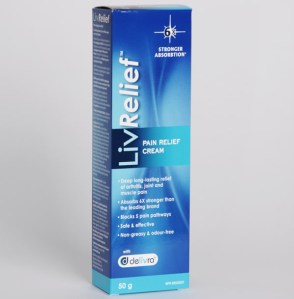
LivCorp Inc’s Delivra, the company that makes LivRelief homeopathic pain relief cream, claims that its product relieves arthritis pain by delivering the active ingredient, a topical analgesic called Ruta 3X through a new process also called Delivra ™.

I’ll be upfront, here: I’ve always been seriously skeptical about homeopathic remedies. But I agreed to try LivRelief cream and review it because, well, as someone who’s lived with rheumatoid arthritis for close to a quarter century, I still dream of finding something—anything—thalivpainrelieft might relieve the pain this intractable autoimmune disease causes. Maybe, I thought, just maybe, LivRelief cream will be the one.

Since it came in the mail, I’ve used LivRelief cream several times on mild-to-moderately painful RA-inflamed joints in my hands, fingers and wrists. I’ve also used it at the base of my small toes on my left foot and on my right knee. Finally, I’ve tried the cream on both my hips. They ache frequently—and almost constantly—from RA’s co-morbid condition, trochanteric bursitis, and I figured why not?

That first time, I tried it on my hands and wrists. Within 10 minutes of using the recommended amount of cream—two short squirts from the pump-bottle—the sharp, twingy pain I was experiencing eased up. A couple of minutes later it was completely gone. As a nice bonus, the cream made my skin feel well-moisturized and silky-soft.

Whoa, thought I. This stuff works!

I was delighted—and genuinely surprised. I’ve tried and tossed out so many topical pain relievers over the years. Most of them had either capsicum (cayenne pepper) or menthol as the active ingredients in them. The menthol ones were pleasant but had no “relieving” effect on my pain. The ones with capsicum added the intense sensation of scorching, blistering skin to the already aching joints that lay just beneath it. I always ended up washing it off. Frantically.

So, discovering that LivRelief cream worked was wonderful.

Unfortunately, it only worked that one time. When I tried it again on my hands the next day, nothing but softened skin happened. LivRelief also had no effect on the small joints at the base of my toes, or on my knees. Finally, it did nothing for the bursitis pain in my hips.

Well, except for softening and moisturizing my skin.

Why did it seem to work that first time? I really don’t know. Maybe the pain in my hands would have gone away shortly, anyway. Rheuma is weird—the pain almost always comes and goes suddenly and without reason or warning. One time the flare will last three minutes, the next time, three-quarters of a day. Or maybe the gentle massage I gave my joints as I was rubbing the cream into my skin helped to relieve the pain.

Here’s what I know: the cream worked miraculously well once, but my wily old rheuma-dragon figured out how to overcome and disable the beneficial effect after that, no matter which joint or part of my body I used it on.

BobbyOrrSo, do I recommend that you try LivRelief cream on your achy, painful RA joints? The legendary hockey star Bobby Orr certainly does, stating on the website PRWeb that “LivRelief has improved my quality of life … I would recommend it to anyone suffering with pain.”

You can purchase the cream online in its 2 oz. pump bottle through Amazon for $27.86 or GNC for $29.99.

Cookware that’s made for rheuma hands

I’ve got a product review for you today: the Tremontina All Generations line of cookware. The company asked me to give their 10-inch Teflon©  Platinum Nonstick Sauté Pan a try, then write a review for RheumaBlog. The idea was to

THE TRAMONTINA All Generations 10-inch Porcelain Enamel Nonstick Saute Pan has earned the Arthritis Foundation's Ease-of-Use Commendation.

THE TRAMONTINA All Generations 10-inch Porcelain Enamel Nonstick Saute Pan has earned the Arthritis Foundation’s Ease-of-Use Commendation.

point out the pan’s pluses for people with diseases that attack the joints, making them stiff and painful. “Why not?” I thought.

When the pan arrived in the mail, I was impressed by its weight–and a bit worried. One of the biggest challenges I face when I cook is lifting hot, heavy pots and pans. I fear that the rheuma will make my grip suddenly dicey; I do not want to drop pans full of boiling or searing food.

I know I’m not alone in this.

But I do love to cook, and heavier, high quality cookware tends to stand up to frequent use and can last for years, even decades. A pan with a correctly made, heavy bottom conducts and distributes heat better, which allows the food to cook more evenly. This is a good thing, you know? It saves time. It means less stirring and less gripping of utensils in sore, twingy hands. And you don’t end up with some parts of the dish overcooked and some undercooked.

Still, maneuvering a heavy pan with arthritis-wracked hands can be truly daunting. But Tremontina planned for that. Instead of just the traditional, single long handle on the sauté pan, they’ve added a second, smaller one directly opposite the long one. I found that I could lift the full pan easily with both hands, dividing the weight evenly. It balances perfectly, regardless of the amount of food inside.

That is a big deal.

Here’s another really nice thing about the Tremontina sauté pan: it’s that smooth, Teflon© Platinum nonstick coating. You don’t really need any butter or oil to keep food from sticking to this pan, but if you do want to use some for flavor, a dab will do quite nicely. Watching your weight? This pan will make it a little easier.

And clean-up is simple. Just tip the pan and whatever remains inside will slide out smooth as a belly-down penguin on an ice-flow. Scrambled eggs, sautéed onions, reduction sauces and gravies–all come off the pan in a jiffy, without scrubbing, even if the food was accidentally overcooked and you expect it to be a real chore to clean the pan. I really appreciate this perc. Scrubbing can be downright painful.

You do need to season the pan before you use it the first time, but it’s a simple process that takes all of a minute. You should use wooden, plastic or silicone utensils to avoid scratching the non-stick surface. And to avoid damaging the pan, you must always cook on medium heat. No biggie, though: the pan conducts heat so quickly and evenly there’s no need to turn the burner up any higher.

The handles have comfy, ergonomic,  silicone-covered grips. You don’t need a pot-holder in each hand to avoid burning yourself. And the lid is made of clear tempered glass so you can see the food as it cooks. It also has a silicone-covered handle.

I’m trying not to gush. Really. But this is, honestly, about the best sauté pan I’ve ever used. There’s this, too: the Tremontina All Generations line of cookware Ease of Use Logohas been given the Arthritis Foundation’s Ease-of-Use Commendation.

You can buy Tremontina cookware at Target, Wal-Mart, and online. The seven-piece set runs about $60, which dropped my jaw, it’s so amazingly inexpensive. It comes with a lifetime warranty. And finally, it’s made in the USA. (cue the patriotic music!)

If you’d like to take a better look at this great cookware and learn more about it, visit this website. And don’t forget to scroll down and watch the short CNN news video on the right-hand side. It explains how products like the Tremontina All Generations line of cookware are tested for use by people with diseases that cause joint pain and weakness.

Next time:  my review of the homeopathic pain-relief lotion, LivRelief.